PerMix Mayonnaise Production
PerMix News
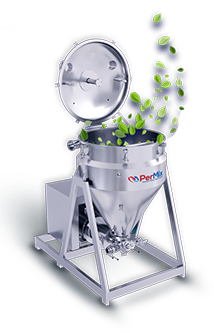

A mayonnaise batch can look fully mixed at the surface while still carrying unhydrated starch, poorly dispersed gums, or unstable oil droplets below. That is why the bottom entry versus top entry decision is not a minor equipment detail. It directly affects circulation, powder incorporation, emulsion droplet size, cleanability, and the repeatability of every commercial batch.
For mayonnaise, dressings, sauces, and other high-viscosity emulsions, the correct answer is rarely based on motor location alone. It depends on formulation, vessel geometry, batch size, process sequence, and the level of shear required. In many high-performance systems, bottom-entry and top-entry devices perform different jobs in the same vessel.
A bottom-entry mixer or homogenizer is installed through the lower head of the vessel. In vacuum emulsifying systems, this position commonly places a high-shear rotor-stator head where the product is densest and where recirculation through the active shear zone is most effective. The unit draws material into the mixing head, subjects it to intensive mechanical shear, and discharges it back into the batch at velocity.
A top-entry mixer is mounted through the vessel cover. It is typically used as the primary agitator, with an anchor, sweep, propeller, disperser, or combination impeller selected for viscosity and vessel dimensions. Its main role is broad-batch movement: maintaining circulation, sweeping the wall, moving ingredients from the surface into the bulk, and preventing stagnant zones during heating, cooling, or hold periods.
The distinction matters because mayonnaise is not one mixing task. It is a sequence of mixing tasks. Water-phase ingredients must dissolve and hydrate, powders must wet out without fish eyes, oil must be introduced at a controlled rate, and the final emulsion must be reduced to a stable, uniform droplet distribution. One tool may not deliver every result efficiently.
Bottom-entry high-shear homogenization is especially effective when the product requires tight emulsion control. As oil enters a mayonnaise batch, the process needs enough shear to break droplets quickly and distribute them consistently through the aqueous phase. If droplet size is too large or broadly distributed, the product can develop weak body, oil separation, inconsistent viscosity, or a shortened shelf-life window.
The lower-vessel position offers a practical advantage: it works in the area where product naturally collects, including at lower batch volumes. This can make bottom-entry systems valuable for manufacturers producing multiple product sizes or operating pilot-to-production lines. A properly sized homogenizer can maintain active processing even when a top-mounted impeller alone cannot generate sufficient local shear.
Bottom entry is also well suited to vacuum processing. Vacuum helps remove entrained air, improves product appearance, and supports efficient powder incorporation. For mayonnaise and dressings, minimizing air is not cosmetic. Excess air can affect density, filling accuracy, oxidation exposure, and visual quality.
For difficult formulations, bottom-entry homogenization provides a controlled processing zone for ingredients that challenge conventional agitation. Modified starches, hydrocolloids, egg replacers, plant proteins, and high-solids seasoning systems all demand reliable dispersion. The goal is not simply to spin faster. It is to expose every portion of the batch to the right shear at the right stage.
Bottom-entry equipment is not automatically the best answer for every vessel or every formula. The lower mechanical seal is a critical engineered component because it operates in direct contact with the product. Seal selection, cooling requirements, inspection access, and maintenance practices must match the operating temperature, vacuum level, product abrasiveness, and production schedule.
A bottom-entry homogenizer also does not replace low-speed wall sweeping in a high-viscosity batch. It may deliver exceptional local shear while leaving heat-transfer surfaces insufficiently refreshed if the vessel lacks an effective anchor or scraper system. For heat-sensitive emulsions, this can create temperature variation and localized buildup.
Top-entry agitation is often the foundation of vessel-wide movement. A well-designed anchor agitator can sweep the vessel wall and bottom profile, move viscous mayonnaise toward the center, and maintain uniform temperature during heating and cooling. This matters when processing low-fat mayonnaise, fat-free mayonnaise, or vegan mayonnaise, where higher water content and stabilizer systems can create very different flow behavior than full-fat formulas.
Top entry also supports controlled addition from above. Liquids, minor ingredients, and selected powders can be introduced through the cover area while the agitator establishes a predictable vortex or circulation pattern. In larger vessels, the top drive can be engineered with multiple impellers or specialized blade geometries to reach the upper, middle, and lower portions of the batch.
From a maintenance perspective, top-mounted drives are often easier to access from the production floor or service platform. The mechanical arrangement can simplify inspection of the gearbox, motor, and shaft assembly. However, easy external access should not be confused with easier sanitation. The shaft, impeller, cover penetrations, and vessel internals still need a hygienic design that supports validated cleaning procedures.
A top-entry agitator can provide excellent circulation, but it may not create enough shear to form a fine, stable mayonnaise emulsion by itself. Raising agitator speed is not always the solution. Excessive surface vortexing can pull air into the product, while higher rotational speed may still fail to achieve the intense rotor-stator action needed for droplet reduction.
Top entry can also become less effective at low fill levels, depending on impeller location and vessel geometry. If the impeller is designed for a full production batch, a reduced batch may not receive equivalent circulation. That limitation is particularly relevant for co-manufacturers and R&D teams running frequent product changeovers and varied batch sizes.
For commercial mayonnaise production, bottom entry versus top entry is frequently the wrong final question. The more productive question is: which function belongs at the bottom, and which belongs at the top?
A combined vacuum emulsifying system typically uses a top-entry anchor or sweep agitator for bulk circulation and heat transfer, paired with a bottom-entry high-shear homogenizer for emulsification and dispersion. The agitator continuously moves product through the vessel and refreshes the jacketed wall. The homogenizer creates the intense shear needed to refine the emulsion. Together, they reduce the risk of dead zones, uneven temperature, poor powder wetting, and unstable texture.
This arrangement is particularly valuable when the production line must handle a broad formulation range. A standard full-fat mayonnaise may be relatively forgiving compared with an egg-free or reduced-fat formula containing starches, gums, proteins, and salt-sensitive hydrocolloids. Process flexibility becomes a commercial advantage when one system can support both established SKUs and new product development.
Powder induction is another major consideration. Adding powders through an open manway often creates dust, fisheyes, and lengthy mixing cycles. A vacuum-capable powder induction arrangement can pull dry ingredients into the liquid phase under controlled conditions, while the agitator and homogenizer work together to disperse them. For plants managing high-throughput sauce or dressing production, that can improve both operator efficiency and batch consistency.
Equipment selection should begin with the product and process, not a preferred drive location. Four questions normally define the correct configuration:
The answers determine rotor-stator size, agitator style, motor power, vessel aspect ratio, jacket design, seal arrangement, and control strategy. A system sized only for total vessel volume can underperform if it ignores viscosity, processing time, and formulation behavior.
For example, a manufacturer making one high-volume, full-fat mayonnaise may prioritize fast emulsification at a fixed batch size. A producer developing vegan mayonnaise, ranch dressing, aioli, and low-fat sauce may need broader operating flexibility, more precise speed control, and a powder-handling solution that prevents lump formation across different recipes.
PerMix designs vacuum emulsifying mixer systems around these operating realities, combining agitation, homogenization, vacuum capability, and powder induction according to the product target rather than forcing every formula into a standard machine layout.
Vessel geometry deserves as much attention as motor horsepower. A shallow, wide vessel and a tall, narrow vessel circulate differently even with the same agitator. Bottom contour, baffle strategy, scraper clearance, and the relationship between the homogenizer head and product level all influence batch movement.
Control also matters. Variable-frequency drives allow operators to use lower agitation during ingredient charging, increase shear during emulsification, and reduce speed during final deaeration. Recipe-driven controls can repeat those stages from batch to batch, reducing dependence on individual operator judgment. For plants scaling from pilot batches to industrial output, this repeatability is often where equipment investment pays back.
The right configuration should make the process easier to control, not harder to explain. When circulation, shear, vacuum, and ingredient addition work as one system, mayonnaise production becomes more predictable – even when the formulation does not.

Get in touch with us today and learn how to we can help your business.