PerMix Mayonnaise Production
PerMix News
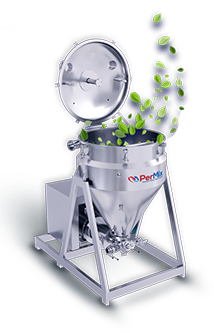

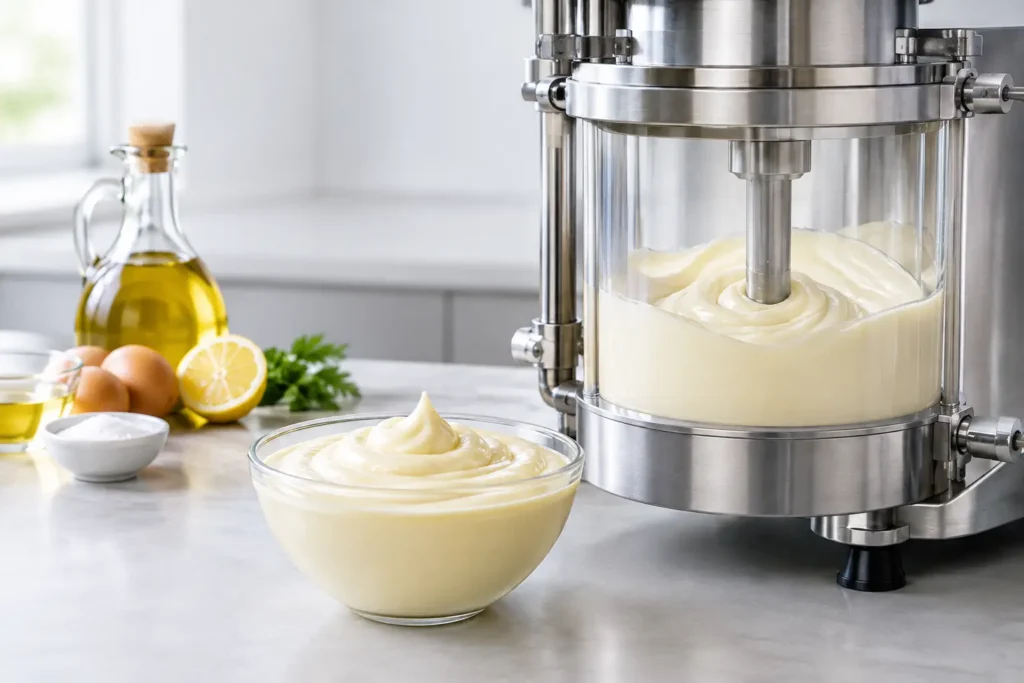
Air is easy to introduce into a mayonnaise batch and difficult to remove after the emulsion has set. Powder charging, high-speed shear, recirculation, and aggressive agitation can all pull air below the product surface. The question is: can vacuum mixers reduce bubbles without sacrificing the dispersion and emulsification required for a stable commercial product? In most mayonnaise, dressing, ketchup, and sauce applications, the answer is yes – when the mixer is designed to combine vacuum control with the right shear, vessel geometry, and process sequence.
For food manufacturers, bubble reduction is not merely a cosmetic improvement. Entrained air can create unstable fill weights, a lighter-than-target appearance, inaccurate volume measurements, poor texture, oxidation concerns, and inconsistent packaging performance. In viscous emulsions, those defects can carry through the entire batch, making effective deaeration a production requirement rather than an optional finishing step.
Bubbles enter a batch whenever the product surface is disturbed or ingredients are added in a way that traps air. This is particularly common during the initial water-phase preparation, when starches, gums, proteins, sugar, salt, or acidulants are introduced. Dry powders can form floating rafts or agglomerates, requiring additional agitation that increases air incorporation.
Oil addition creates another risk point. If the oil is fed too quickly, too far above the liquid level, or without sufficient circulation, the process can create vortexing and entrain air. High-speed rotor-stator mixing is essential for forming a fine oil-in-water emulsion, but shear alone does not remove air. In some cases, it can break larger air pockets into smaller bubbles that are harder to release.
Product viscosity matters as well. A thin sauce may release air naturally if given enough residence time. A thick mayonnaise, vegan emulsion, or starch-stabilized dressing holds bubbles more firmly. The higher the viscosity, the less effective simple holding time becomes. Manufacturers need controlled vacuum exposure while the product is still mobile enough for trapped gas to migrate and escape.
A properly engineered vacuum mixer reduces bubbles by lowering the pressure inside the processing vessel. As pressure drops, entrained gases expand and rise out of the product. The system then evacuates those gases from the vessel rather than allowing them to remain dispersed in the emulsion.
The result is a denser, smoother-looking product with more consistent physical behavior at the filler. For mayonnaise and dressings, vacuum processing can help improve gloss, reduce visible pinholes, stabilize net weight control, and create a cleaner cut or spread. It may also reduce oxidation risk by limiting oxygen exposure during mixing, although vacuum should not be treated as a substitute for a validated shelf-life program.
The strongest results occur when vacuum is applied as part of the full process, not simply switched on at the end of the batch. A mixer needs to disperse powders efficiently, build the emulsion under controlled shear, and deaerate the product without boiling away water or damaging a heat-sensitive formulation. This balance is what separates a vacuum-capable vessel from a true vacuum emulsifying mixer.
More vacuum is not automatically better. Very deep vacuum can cause rapid expansion, foaming, or excessive moisture loss if the product temperature is too high. Acidic, volatile, or flavor-sensitive formulations also require careful process control. A plant producing conventional full-fat mayonnaise may use a different vacuum profile than one producing a low-fat dressing with high levels of starch and hydrocolloids.
The practical objective is stable, repeatable deaeration. Operators should be able to pull vacuum at the correct stage, hold it long enough to release entrained air, and regulate the system based on batch size, temperature, viscosity, and formulation behavior. A reliable vacuum pump, sanitary seals, and an airtight vessel are fundamental. A small leak can reduce vacuum performance and turn a predictable process into a variable one.
A vacuum mixer does not eliminate the need for effective emulsification. Mayonnaise depends on creating small, uniform oil droplets and distributing stabilizers throughout the water phase. Without adequate shear, the batch can still suffer from poor texture, oil separation, or weak viscosity even if the product looks free of bubbles.
The best production approach combines an anchor or sweep agitator with a high-shear emulsifying head and vacuum control. The anchor keeps high-viscosity product moving across the vessel wall and prevents stagnant zones. The high-shear head disperses powders and reduces droplet size. The vacuum system removes air introduced during those steps.
This combination is especially valuable for formulations that are difficult to process, including fat-free mayonnaise, egg-free mayonnaise, vegan mayonnaise, and dressings containing dry starches. These products often require more intensive powder dispersion and have narrower process windows than traditional emulsions.
Equipment capability sets the foundation, but operating practice determines whether that capability is realized. Manufacturers should avoid charging ingredients in ways that create a deep vortex or splash against the vessel wall. Subsurface liquid addition and controlled powder induction can significantly reduce initial air entrainment.
Temperature control is equally important. Lower viscosity helps bubbles escape, but excessive heat can affect emulsion structure, flavor, and volatile components. The ideal processing temperature depends on the formula and whether the batch requires hydration, pasteurization, or cooling before filling.
A typical vacuum mixing sequence may include preparing the water phase, inducting and fully hydrating powders, creating the emulsion through controlled oil addition, then applying or intensifying vacuum during final homogenization and finishing. Some products benefit from vacuum throughout much of the cycle; others perform better with vacuum concentrated after the most air-intensive ingredient additions. Trial work is necessary because formulation behavior varies.
Plants should also look beyond the mixer. Air can be reintroduced through transfer pumps, poorly designed piping, loose fittings, high-drop discharge points, or the filler. A deaerated batch can lose its advantage if the downstream system pulls air back into the product. For critical products, review the entire route from vessel discharge to package.
Vacuum mixing has the clearest commercial value when visible bubbles, variable density, or aerated texture are creating product or packaging losses. It is particularly relevant for premium mayonnaise, thick dressings, emulsified sauces, and high-viscosity condiments where consumers expect a dense, glossy appearance.
It can also support better batch-to-batch consistency at scale. In pilot production, a small open tank may allow air to dissipate over time. At industrial scale, larger volumes, faster cycle targets, and higher powder loads make that approach inefficient. Vacuum processing helps manufacturers maintain a controlled result without relying on extended holding periods.
For operations managing multiple SKUs, the benefit extends to repeatability. A well-sized vacuum emulsifying system can be configured around the formulation range, expected batch volume, powder handling requirements, heating and cooling needs, and sanitation standards. PerMix designs this type of equipment around the actual processing challenge, not a one-size-fits-all mixing claim.
Vacuum mixing will not correct every cause of bubbles. If the formula is excessively foamy, the emulsifier system may need review. If fill weights remain inconsistent, the problem may be at the filler rather than in the mixing vessel. If the emulsion breaks, the root cause could be oil addition rate, insufficient hydration, incorrect pH, temperature variation, or inadequate shear.
Likewise, a vacuum mixer must be properly sized. An oversized vessel with insufficient product depth may not generate the circulation pattern needed for efficient processing. An undersized unit can create poor turnover, extended cycle times, and limited headspace for foam expansion. Batch volume and product rheology should guide equipment selection.
The right question is not simply whether vacuum can remove bubbles. It is whether the complete mixing system can produce the target texture, emulsion stability, density, and throughput every shift. When vacuum, shear, powder induction, and thermal control are engineered as one process, manufacturers gain a more predictable path to cleaner, more consistent mayonnaise and sauce production.

Get in touch with us today and learn how to we can help your business.