PerMix Mayonnaise Production
PerMix News
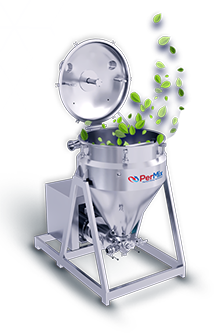


A batch of mayonnaise can be on specification until dry starch, stabilizer, salt, egg powder, or protein enters the vessel. Then the process can slow down, form fisheyes, trap air, or leave undispersed material that compromises texture and shelf stability. The best powder induction methods are not defined by how quickly powder disappears below the liquid surface. They are defined by complete wet-out, repeatable dispersion, clean operation, and a process that performs the same way at commercial scale.
For mayonnaise, dressings, ketchup, and other viscous food products, powder handling is a formulation and equipment decision. The right approach depends on powder characteristics, batch size, viscosity curve, sanitation requirements, and the level of emulsion quality required at the end of the cycle.
Most difficult powders are not difficult because they cannot be mixed. They are difficult because they hydrate or agglomerate before the liquid reaches every particle. Modified starches, gums, pectin, milk proteins, plant proteins, hydrocolloids, and certain sweeteners can form a surface gel almost immediately. Once that outer layer forms, dry powder remains protected inside the lump.
Simply increasing agitator speed rarely solves the problem. High surface agitation can pull air into the batch, particularly when the vessel is partially filled or operators add powder too quickly. In mayonnaise and emulsified dressings, entrained air can reduce apparent density, affect filling performance, and make vacuum deaeration take longer. It may also contribute to an inconsistent finished appearance.
Manual addition brings another risk: operator variability. One person may add a dry blend gradually and another may charge it in large portions. The formula is unchanged, but dispersion time, lumping, dust exposure, and final product consistency can shift from batch to batch. At higher output, those variables become expensive.
There is no single best method for every formula. The strongest solution matches the induction method to the powder’s hydration behavior and the product’s final viscosity. In practical food manufacturing, four approaches are most common.
Direct addition into an open or closed mixing vessel is the simplest method. Powders are introduced through a manway, hopper, or charging port while the batch is under agitation. It can work well for free-flowing, easy-to-wet ingredients such as salt, sugar, some acids, and premixed dry blends used at modest inclusion rates.
Its limitation is control. The powder contacts the liquid surface before it is fully wetted, which creates an opportunity for floating, dusting, and agglomeration. Direct addition becomes less reliable as viscosity rises or when the formula contains fast-hydrating gums and starches. It may be acceptable for small pilot batches, but it is often not the preferred method for high-volume production of low-fat mayonnaise, vegan mayonnaise, or starch-thickened sauces.
Vacuum induction uses negative pressure to draw powder from a hopper or feed station into a closed processing vessel. The method is especially effective when manufacturers need dust containment, controlled transfer, and reduced air incorporation. In a vacuum emulsifying mixer, powder can be pulled into the liquid under controlled conditions rather than being dropped onto an exposed batch surface.
The main advantage is operational discipline. A properly designed system can bring ingredients into the vessel without opening the process to the room environment, while vacuum supports deaeration during mixing. For mayonnaise and dressings, this helps protect product appearance and can improve batch-to-batch consistency.
Vacuum alone does not guarantee dispersion. The vessel must provide enough circulation, shear, and product turnover to distribute the powder immediately after entry. For difficult hydrocolloids, the induction point and the homogenizing zone must be designed as one system.
An inline eductor creates suction by accelerating a liquid stream through a venturi. Powder is metered into the suction point, wetted by the moving liquid, and recirculated back to the vessel or sent downstream for further processing. This method is highly effective for many powders because wetting occurs in a controlled, high-velocity zone rather than at the batch surface.
Inline induction is a strong choice when rapid powder incorporation and repeatable addition rates are priorities. It can reduce dust, shorten addition time, and minimize the formation of lumps before they enter the main batch. It is particularly useful for sauces and dressings where dry ingredients must be introduced into a water phase before oil addition or final emulsification.
The trade-off is that eductors depend on correct flow and pressure. If the recirculation loop is undersized, if viscosity rises too early, or if the powder feed rate exceeds the liquid’s wetting capacity, the system can plug or lose induction performance. Engineering must account for the full process sequence, not only water-like startup conditions.
For highly functional powders, an inline rotor-stator mixer combined with a powder induction hopper provides intense wetting and dispersion. The rotor-stator generates high localized shear as the liquid and powder pass through the mixing head. This can break apart agglomerates and produce a smoother pre-mix before the material returns to the main vessel.
This method is often justified for formulations containing xanthan gum, starches, proteins, stabilizer systems, and ingredients that are prone to fisheyes. It is also valuable when manufacturers want to reduce hydration time without relying on prolonged batch mixing.
High shear must be applied with purpose. Some products benefit from it early in the process but can be damaged by excessive shear later, especially if the finished product requires a specific body, particle profile, or delicate inclusion. A good system allows operators to control recirculation time, shear intensity, and the point at which powder is introduced.
Start with the powder, not the equipment brochure. Free-flowing crystalline ingredients generally need controlled transfer and basic circulation. Low-bulk-density powders require more attention because they can bridge in hoppers, become airborne, and feed inconsistently. Fast-hydrating hydrocolloids need immediate wetting and strong dispersion before they form a gel layer.
Oil-loving powders and dry emulsifier blends may perform better when introduced into the oil phase or into a prepared premix, depending on the formulation. Vegan mayonnaise often brings additional complexity because plant proteins and modified starches can require specific hydration conditions to deliver the desired viscosity and emulsion stability. A process that works for conventional egg-based mayonnaise should not be assumed to perform identically with a vegan formula.
Temperature also matters. Some starches require a heated phase for full functionality, while gums may disperse best before the batch becomes too viscous. The proper powder induction method must fit the recipe order, heating profile, and emulsification stage.
A productive powder induction system is more than a hopper connected to a pipe. The feed hopper should prevent bridging and give operators a controlled addition point. The transfer path should be sanitary, accessible for cleaning, and sized to avoid dead zones. When powders are supplied in bags, the loading station should contain dust without making the operator’s task slow or awkward.
Automation can further improve control. Load cells, timed addition recipes, and flow monitoring help maintain a repeatable powder-to-liquid ratio. For high-value formulations, this reduces the risk of overfeeding a gum or starch that cannot be corrected once hydrated.
Cleaning is equally important. Powder residue in an induction line can harden between batches, contaminate subsequent products, or disrupt clean-in-place performance. Systems should be designed for full drainage, effective CIP flow, and minimal areas where dry material can accumulate. This is especially relevant for allergen changeovers and facilities producing multiple dressing and sauce varieties.
A process proven in a 100-gallon pilot vessel may fail in a 1,000-gallon system if powder feed rate and circulation are scaled incorrectly. Larger vessels have different surface velocities, liquid head pressures, recirculation distances, and batch turnover times. Increasing the powder charge at the same rate used in a small batch can overwhelm the wetting zone.
Scale-up should evaluate powder addition rate, recirculation flow, vacuum capacity, homogenizer performance, and the viscosity profile at each stage. The most reliable approach is to define measurable acceptance criteria before commissioning: no visible agglomerates, defined dispersion time, target density, stable viscosity, and repeatable emulsion quality after storage testing.
PerMix designs vacuum emulsifying and universal vacuum mixer processor systems around these real production conditions, combining controlled powder induction with mixing, homogenization, vacuum operation, and sanitary process design. The objective is not merely to move powder into a tank. It is to produce a consistent commercial batch with less rework and less operator dependence.
Before selecting equipment, run representative trials using the actual powder suppliers, water temperature, oil phase, and target batch size planned for production. A method that proves complete wetting and stable finished texture under those conditions will provide far more value than a fast powder transfer demonstration alone.

Get in touch with us today and learn how to we can help your business.