PerMix Mayonnaise Production
PerMix News
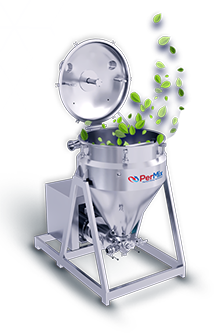


When starch fisheyes, gums clump, or protein powders float on the surface instead of wetting in, production slows fast. A powder induction mixing system is designed to solve that exact problem by pulling dry ingredients directly into the liquid phase under controlled conditions, reducing agglomeration, shortening batch times, and improving consistency from one run to the next.
For mayonnaise, dressings, sauces, and other viscous food products, powder handling is not a small step in the process. It affects hydration, viscosity build, emulsion stability, mouthfeel, and line efficiency. If powders are added poorly, the result is usually familiar to any plant team – longer mixing times, wasted ingredients, manual intervention, inconsistent texture, and avoidable downtime.
A properly engineered induction system changes that equation. Instead of relying on top-entry dumping or slow manual feeding, it uses vacuum or high-shear flow principles to draw powders into the mix quickly and disperse them where they can be wetted immediately. That matters most when working with ingredients that resist incorporation, including starches, xanthan gum, guar gum, milk powders, proteins, stabilizers, and seasoning blends.
At its core, a powder induction mixing system transfers dry ingredients into a moving liquid stream and disperses them before they have time to form lumps. The system creates a pressure differential or recirculation effect that pulls powders from a hopper or feed point into the mixing zone. Once there, shear and flow work together to break apart clusters and distribute particles more uniformly.
This is different from basic agitation. A conventional agitator may move the batch, but it often does not generate enough local shear at the point of powder entry. That is why operators end up chasing floating rafts of powder or scraping vessel walls. Induction technology improves the point where dry and liquid phases meet, which is often where the real process problem begins.
In food manufacturing, that improvement has direct production value. Better powder incorporation means faster hydration, more predictable viscosity development, and fewer defects carried downstream. In emulsified products, it also supports a more stable structure because the aqueous phase is prepared more consistently before or during emulsification.
Mayonnaise production puts unusual pressure on mixing equipment because the process is not only about blending. It is about building and protecting an emulsion while also managing texture, viscosity, and ingredient functionality. Powders often play a critical role in that balance.
Modified starches, hydrocolloids, proteins, sugar, salt, acidulants, and functional blends all need proper dispersion. If a gum enters too fast and hydrates unevenly, it can form gels on contact and trap dry material inside. If starch is not wetted properly, it can remain as undispersed particles and create texture defects. If seasoning blends are added inconsistently, flavor and appearance can shift from batch to batch.
That is even more critical in low-fat, fat-free, and vegan formulations. These products depend heavily on functional dry ingredients to replace the body, stability, and mouthfeel that oil and egg would otherwise provide. In these applications, powder addition is not just a handling issue. It is a formulation control issue.
A well-matched powder induction mixing system helps manufacturers keep those formulations repeatable at scale. It supports rapid incorporation without overloading operators or extending the batch cycle. For plants running multiple SKUs, that can make the difference between flexible production and a daily bottleneck.
The most immediate gain is usually time. Faster powder drawdown means less waiting at the vessel and less operator involvement. But the bigger advantage is often consistency. When powders are incorporated under the same controlled conditions each batch, process variability drops.
That can show up in several ways across the plant. Viscosity targets are easier to hit. Product appearance becomes more uniform. Yield losses from off-spec texture or incomplete hydration are reduced. Cleaning can also improve if there is less powder buildup around the vessel rim, platform, or charging area.
There are trade-offs, though. Not every powder behaves the same way, and not every formulation wants maximum shear. Some ingredients require aggressive dispersion to eliminate lumps, while others may be sensitive to overprocessing, heat buildup, or air incorporation if the system is poorly configured. The right solution depends on the recipe, batch size, production rate, and overall process sequence.
The first question is not equipment size. It is ingredient behavior. A system that works well for salt and sugar may not be enough for gums or starches, and a setup that handles one mayonnaise formula may struggle with a vegan line using multiple stabilizers and proteins.
Start with the powder profile. Consider bulk density, flowability, dusting tendency, hydration rate, and sensitivity to shear. Then look at the liquid side – viscosity, temperature, recirculation rate, and whether the powders are being added into water, premix, or a partly built emulsion.
System integration matters just as much. A powder induction unit should work with the mixer, vessel geometry, vacuum capability, and control strategy rather than operate as an isolated component. In many food plants, the best result comes from pairing powder induction with vacuum emulsifying technology so powders can be drawn in cleanly while air is minimized and dispersion quality remains high.
Sanitary design is another non-negotiable. Food manufacturers need hygienic construction, reliable seals, easy cleaning access, and a layout that supports efficient washdown or CIP. A high-performance system that is difficult to clean will create problems elsewhere in the plant.
One of the most common mistakes is assuming faster powder feeding always means better performance. If powders are introduced faster than the liquid phase can wet and disperse them, clumping will still occur. Feed rate has to match the system’s actual induction and shear capacity.
Another issue is using a powder induction system without adjusting the process order. Some ingredients should be added early for full hydration, while others perform better after viscosity has developed or after pH has been adjusted. Equipment can improve incorporation, but it cannot fix an unsuitable process sequence.
Undersized recirculation loops are also a frequent limitation. If the flow through the induction zone is too low, powders may not disperse efficiently, especially in thicker products. The result is a system that looks good on paper but struggles under real production load.
Scale-up is where many mixing decisions are tested. A bench or pilot batch can tolerate manual intervention. A commercial line cannot. What looks manageable in development often becomes inefficient once operators are handling larger powder volumes, tighter production windows, and more demanding consistency targets.
That is why powder induction equipment should be evaluated based on commercial behavior, not just lab success. Can it maintain powder incorporation rates at full batch size? Can it support the viscosity curve of the actual product? Can it handle difficult ingredients without extending cycle time or increasing rejects?
For growing manufacturers, this is often where investment makes sense. A stronger powder induction mixing system can reduce labor dependence, support SKU expansion, and improve repeatability across shifts and sites. It is not just a mixing upgrade. It is process control that pays back through throughput, quality, and fewer production disruptions.
PerMix addresses this need with application-focused systems built around emulsification performance, powder handling, and scalable food production. For manufacturers producing mayonnaise and related emulsified products, that specialization matters because the process demands more than general-purpose mixing.
The best powder induction mixing system is the one that fits the formulation, the plant, and the production target. That may mean a vacuum emulsifying mixer with integrated powder induction for one facility, while another may need a different recirculation setup to manage batch size, ingredient complexity, or cleaning requirements.
What matters is measurable performance – how quickly powders wet out, how consistently viscosity develops, how cleanly the system runs, and how reliably the final product meets spec. For food manufacturers under pressure to improve throughput while protecting quality, powder induction is one of the clearest places where engineering directly affects the bottom line.
If powder addition is still slowing your batches, forcing rework, or creating texture inconsistency, the issue is usually not the ingredient. It is the way the ingredient meets the process, and that is exactly where the right system earns its value.

Get in touch with us today and learn how to we can help your business.