PerMix Mayonnaise Production
PerMix News
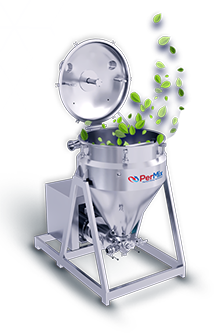


Vegan mayonnaise production gets difficult fast when the formula looks simple on paper but behaves unpredictably in the tank. Remove egg yolk and the process loses a familiar emulsifying system, so manufacturers have less room for error in hydration, oil addition rate, shear control, and air management. At bench scale, a formula may appear stable. At commercial scale, the same product can show poor viscosity build, weak texture, trapped air, or phase separation after filling.
That gap between formulation intent and plant performance is where process design matters. Vegan mayonnaise is not just a recipe challenge. It is an emulsification challenge, a powder incorporation challenge, and a scale-up challenge all at once.
Traditional mayonnaise relies heavily on egg yolk for emulsification, mouthfeel, and product stability. In vegan systems, those functions are usually replaced by combinations of starches, hydrocolloids, proteins, fibers, and specialty emulsifiers. Each substitute changes how the batch responds under shear and how the finished emulsion behaves over time.
This is why vegan mayonnaise production often demands tighter control than standard mayonnaise. The margin for process variation is narrower. A small deviation in vacuum level, ingredient sequencing, or oil feed rate can affect droplet size distribution and final texture. If powders are not fully dispersed before viscosity rises, fisheyes and undissolved particles can remain in the batch. If the emulsion forms too aggressively at the wrong stage, the system may become harder to pump and more difficult to standardize from batch to batch.
The target is not simply a stable emulsion. It is a repeatable product with the right sheen, body, spreadability, and shelf performance.
In most commercial plants, the biggest production issues in vegan mayonnaise come from three areas: powder wet-out, emulsification efficiency, and air control.
Powder wet-out is often underestimated. Vegan formulations commonly include modified starches, gums, plant proteins, sugar, salt, acids, and other dry ingredients that do not all hydrate at the same speed. When these materials are added into a poorly designed mixing environment, they can float, clump, or stick to vessel walls. Once viscosity starts to build, recovery becomes harder, and the batch may never fully smooth out.
Emulsification efficiency is the next pressure point. Oil must be incorporated in a controlled way so the aqueous phase can support stable droplet formation. Too fast, and the emulsion may break or build unevenly. Too slow, and cycle time suffers. The mixer must generate sufficient shear to create a fine, stable emulsion without overheating or overstressing the product.
Air control matters because entrained air affects both process behavior and final quality. Aerated mayonnaise can show lower apparent density, inconsistent filling weights, lighter color, unstable texture, and shorter shelf-life performance. Vacuum processing helps reduce air inclusion during mixing and improves emulsion appearance and consistency.
Ingredient order is not a minor detail. In vegan mayonnaise production, sequencing often determines whether the batch develops cleanly or fights the operator from the start.
The water phase typically needs to be established first, followed by controlled dispersion of dry ingredients and full hydration of functional components before aggressive oil loading begins. Acids may need to be introduced at a specific stage depending on the starch system, protein source, and desired viscosity curve. Some hydrocolloids disperse better before acidification. Some proteins respond poorly if pH drops too early. These are formulation-specific decisions, but the equipment must be able to execute them consistently.
That is one reason integrated powder induction and vacuum mixing are so valuable in production environments. They reduce operator dependency and improve repeatability, especially when batches are scaled across shifts, product variants, or multiple manufacturing sites.
For industrial manufacturers, vegan mayonnaise is not an R&D exercise once the product moves into production. It becomes a throughput, quality, and cost-control issue. The mixing system has to support all three.
A well-designed production platform for vegan mayonnaise should combine vacuum processing, high-shear emulsification, efficient powder induction, and reliable vessel geometry. These features work together, not separately. Vacuum helps minimize air and improve product finish. High shear supports droplet reduction and emulsion stability. Powder induction accelerates ingredient incorporation and reduces agglomeration. Proper vessel and agitator design keep the entire batch moving so there are no dead zones or inconsistent hydration pockets.
This is where specialized systems outperform general-purpose mixers. A standard tank with an agitator may blend ingredients, but blending is not the same as building a stable, commercially viable emulsion. For products that must meet strict texture and shelf expectations, process capability has to match formulation complexity.
PerMix addresses this with application-specific systems such as vacuum emulsifying mixers and universal vacuum mixer processors built for mayonnaise, dressings, and similar viscous emulsions. For manufacturers running vegan lines alongside standard, low-fat, or fat-free products, that flexibility matters.
A vegan mayonnaise can look excellent in the lab and still fail on the floor. The reason is simple: shear profile, ingredient exposure time, and oil incorporation behavior change with scale.
In small batches, operators can often compensate manually. In larger vessels, inconsistency becomes expensive. The batch may take longer to hydrate, viscosity may rise at a different point, and powder incorporation may become less uniform. Oil addition that worked in a pilot mixer may overload the emulsion zone in a larger production unit. The result is often a product that is either too thin, too elastic, too aerated, or not stable enough for distribution.
Good scale-up depends on matching process mechanics to formulation behavior. That includes rotor-stator performance, recirculation efficiency, vacuum stability, batch size range, and residence time through the shear zone. It also includes practical plant concerns such as CIP compatibility, operator control, and line integration.
When vegan mayonnaise shows inconsistent viscosity, the cause is often incomplete powder hydration, poor ingredient order, or inadequate shear during the critical build phase. When the product breaks, the issue may be excessive oil feed rate, weak emulsification, or unstable pH control during processing. When texture feels rough or grainy, undispersed powders or poorly solubilized proteins are usually involved.
If the batch looks too light or foamy, air entrainment is a likely factor. If yield varies or filler performance is inconsistent, density fluctuations and trapped air may be contributing. These problems are rarely solved by changing one ingredient alone. More often, they require a process review that looks at both formula and equipment.
That is why the best results usually come from treating vegan mayonnaise as a full system, not a single machine purchase and not a formula-only project.
The right question is not whether a mixer can produce vegan mayonnaise. Many machines can produce a batch. The better question is whether the system can produce the same batch reliably, efficiently, and at commercial quality targets.
Manufacturers should evaluate cycle time, emulsion stability, powder handling capability, vacuum performance, batch repeatability, and scalability across product variants. They should also consider how the system handles difficult formulations with starches, proteins, and gums that tend to agglomerate or build viscosity early.
A lower-cost mixing platform may appear attractive at purchase, but if it increases batch time, rework, waste, or variability, the real production cost rises quickly. For plants managing multiple SKUs and tight schedules, equipment performance shows up directly in throughput and customer satisfaction.
The fastest route to better vegan mayonnaise production is usually not adding more processing steps. It is improving control at the steps that already matter most: powder induction, hydration, emulsification, and deaeration.
When those stages are engineered correctly, manufacturers gain more than product stability. They gain cleaner texture, more predictable filling, shorter cycle times, and a process that is easier to scale and repeat. That matters whether the goal is launching a new vegan SKU, improving an underperforming line, or building capacity for broader plant-based demand.
Vegan mayonnaise will keep evolving as formulations change and label expectations shift. The producers that stay competitive will be the ones that pair smart formulation work with equipment built for real emulsification demands, because in this category, process discipline is what turns a promising formula into a dependable product.

Get in touch with us today and learn how to we can help your business.