PerMix Mayonnaise Production
PerMix News
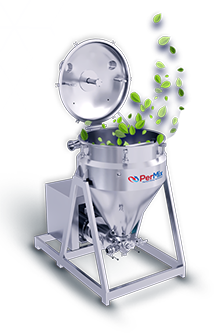


A gum system can make or break a sauce, dressing, or mayonnaise-style product long before emulsification is complete. If you are troubleshooting how to disperse gums evenly, the real issue is usually not the gum itself. It is the combination of ingredient order, wetting rate, shear profile, vacuum conditions, and powder handling at the exact moment the gum hits the liquid phase.
In commercial production, poor gum dispersion shows up fast. You see fisheyes, undissolved clusters, viscosity drift, longer batch times, and texture variation from one run to the next. Those problems are expensive because they affect throughput, finished product quality, and rework rates. The good news is that gum dispersion is a controllable process when the system is designed around it.
Most hydrocolloids hydrate very quickly at the particle surface. That sounds helpful, but it creates the main problem. Once the outside of a particle hydrates too fast, it forms a gel barrier around dry material trapped inside. From there, you get lumps that resist breakdown even under extended mixing.
At plant scale, this gets worse when powders are added into a weak vortex, dumped too quickly, or fed into a tank with inconsistent recirculation. Operators may increase speed to compensate, but more speed alone does not always solve it. In some cases, it adds air, raises foam, and makes the batch harder to control.
Formulation also matters. Xanthan, guar, CMC, carrageenan, and starch-based systems all behave differently. Some wet out easily but hydrate too fast. Others need stronger dispersion energy before they fully develop viscosity. Salt, sugar, oil, acids, and proteins can all change hydration behavior, so the right method depends on the complete formula, not just the gum name on the spec sheet.
The most reliable approach is to separate dispersion from full hydration as much as possible. In practical terms, that means getting every particle individually wetted and distributed before it has time to form agglomerates.
A strong powder induction step is usually the difference between a clean batch and a difficult one. Instead of dropping gums onto the liquid surface and hoping tank agitation pulls them in, powder induction draws the dry ingredient directly into a high-shear zone. This improves wetting speed, reduces floating powder, and limits the formation of fisheyes.
Vacuum processing also plays a major role. Under vacuum, powders are pulled into the product more efficiently, and entrapped air is reduced during mixing. That matters because aeration can interfere with wetting, distort apparent viscosity, and create instability later in the process. For mayonnaise, dressings, and other emulsified foods, controlling air during powder incorporation is not just a quality issue. It is a production efficiency issue.
High shear must also be applied at the right point. If the batch has already thickened significantly before the gum is properly dispersed, the mixer has to work harder to break agglomerates, and results are less consistent. Early-stage dispersion in a lower-viscosity phase is usually more effective.
In many formulas, gum addition sequence determines whether the process runs smoothly or turns into a cleanup problem. Operators often focus on mixer speed, but the order of addition can be just as important.
One common method is dry blending the gum with other powdered ingredients before introduction. Sugar, salt, maltodextrin, or starch can act as a carrier that physically separates gum particles and slows local overhydration. This is especially useful for low-dose gums that are difficult to feed evenly on their own.
Another approach is premixing gums into oil, depending on the formulation. This can delay hydration until the particles are better distributed through the system. It is not universal, and it depends on the gum type and target process, but in the right application it can improve control.
Acid addition timing also matters. Some hydrocolloids are more sensitive to pH during hydration, so adding vinegar or other acidulants too early can affect viscosity development and final texture. The same is true for salts and calcium-containing ingredients in certain systems. If a formula is sensitive, the process should be built to disperse first and shift conditions later.
If you want to know how to disperse gums evenly on a repeatable basis, start with the flow pattern inside the mixer. Dead zones, poor top-to-bottom circulation, and weak powder intake create inconsistent hydration even when the batch sheet is correct.
A well-designed vacuum emulsifying mixer or universal vacuum mixer processor gives you more than agitation. It combines controlled powder induction, high-shear mixing, vessel circulation, and deaeration in one process environment. That is critical for gum systems because each stage affects the next one. If powders are not dispersed correctly, hydration suffers. If hydration is uneven, viscosity rises unpredictably. If viscosity rises too early, emulsification and texture control become more difficult.
This is where equipment selection becomes a process decision, not just a capital decision. For manufacturers handling mayonnaise, vegan emulsions, dressings, and other viscous systems, the mixer has to manage both powder incorporation and emulsion quality without creating unnecessary batch time or operator dependency.
PerMix systems are built around that production reality – especially where dry powders, difficult hydrocolloids, and vacuum emulsification need to work together in one controlled cycle.
Even with the right equipment, gum dispersion depends on disciplined control. Temperature is one factor. Some gums hydrate more effectively at elevated temperatures, while others can develop too fast or behave unpredictably if the batch gets hot too soon. The best operating window depends on the hydrocolloid system and the finished product target.
Powder feed rate is another overlooked variable. Feeding too fast can overload the shear zone and create clumps faster than the system can break them down. Feeding too slowly may extend cycle time and reduce throughput. The correct rate is the one that matches the induction capacity of the mixer and the viscosity profile of the batch at that moment.
Shear intensity also has trade-offs. Too little shear leaves agglomerates. Too much shear can damage certain texture systems, affect particle-sensitive ingredients, or introduce unnecessary heat. The goal is not maximum energy. The goal is controlled energy where it matters most.
Residence time matters as well. Some processors expect immediate full viscosity after powder addition, but many gum systems need a defined hydration period. If the batch is moved downstream too early, viscosity may continue to drift in the holding tank or filler feed system. That creates inconsistency where you least want it.
If fisheyes are showing up repeatedly, the first question is whether the gum is being individually wetted before hydration starts. If not, review powder induction, feed rate, and the strength of the local shear zone. Extending mix time after the fact rarely fixes the root problem.
If the product thickens too quickly during addition, hydration may be happening before dispersion is complete. In that case, consider dry blending, changing the order of addition, or shifting the gum introduction point to an earlier and lower-viscosity stage.
If batch-to-batch viscosity varies, look beyond the formula. Check raw material particle size variation, operator loading method, actual vacuum level, and whether the same addition timing is being followed every run. Gum systems are sensitive to small process changes, which is why repeatable equipment design and standard operating procedures matter.
If foam increases during incorporation, the issue may be less about the gum and more about air entrainment from surface addition or poor vessel conditions. Vacuum loading and subsurface powder intake generally offer a cleaner route.
Lab success does not guarantee plant success. At bench scale, an operator can sprinkle powder carefully and correct problems by hand. At production scale, the process must work reliably under time pressure, across multiple shifts, and with commercial batch volumes.
That is why scale-up should focus on shear conditions, powder induction method, circulation pattern, and actual hydration timing rather than simply matching mixer RPM. A process that works in a beaker may fail in a 1,000-liter vessel if powder wetting is not engineered properly.
For manufacturers running multiple SKUs, the best setup is one that gives flexibility across standard, low-fat, fat-free, and vegan formulations. Those products often use different stabilizer systems, and each places different demands on powder handling. Equipment that performs well only on one formula is not enough for a modern production line.
The manufacturers who handle gums well are usually not using secret ingredients. They are using a controlled process built around wetting, dispersion, hydration, and deaeration in the right order. When that process is engineered correctly, gums stop being a source of waste and become what they should be – a precise tool for texture, stability, and product performance.
If your batches are still relying on operator technique to get clean gum incorporation, that is usually a sign the process needs more control, not more effort. Better dispersion starts with better process design, and that pays back in every stable batch that leaves the line.

Get in touch with us today and learn how to we can help your business.