PerMix Mayonnaise Production
PerMix News

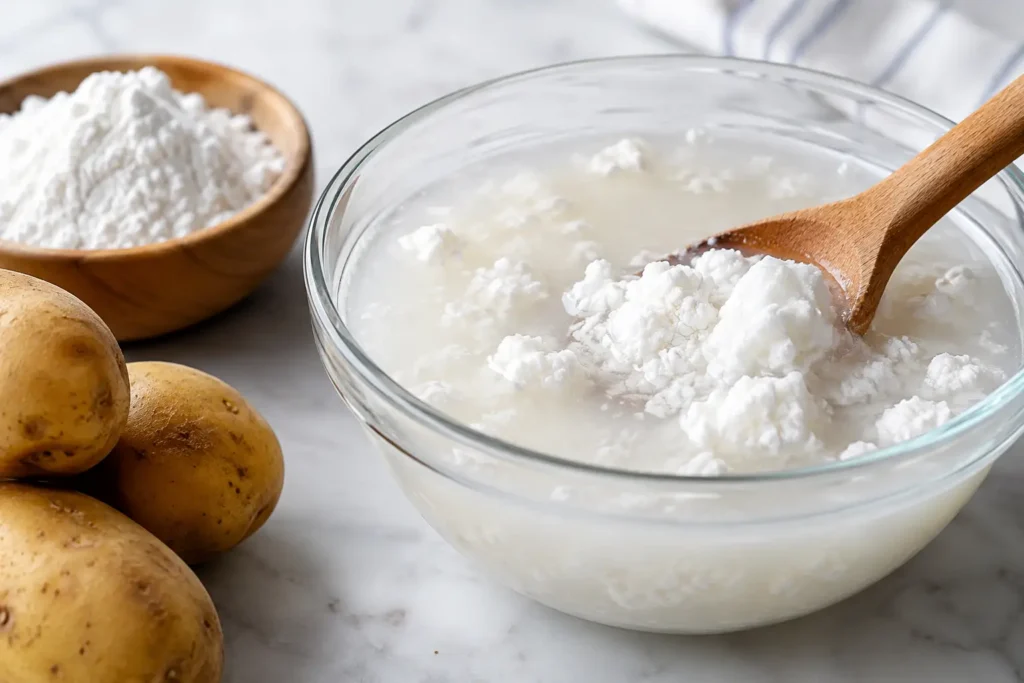
A sauce batch can look acceptable for the first minute, then reveal hard white specks, gelled particles, or stubborn fish eyes that remain after extended mixing. Why do starches form lumps? In most cases, the issue begins the instant dry powder contacts water. The outside of each starch particle hydrates faster than the center, forming a sticky gel layer that blocks water from penetrating further.
For commercial mayonnaise, dressings, ketchup, and sauces, this is not a minor cosmetic defect. Undispersed starch can create an inconsistent mouthfeel, weaken visual quality, interfere with filling performance, and lead to costly rework or rejected product. The solution is not simply to run the mixer longer. Reliable starch incorporation depends on controlling wetting, powder addition, shear, temperature, and the formulation itself.
Starch is a dry particulate ingredient designed to absorb water. When it is added too quickly to an aqueous phase, the particle surface starts to hydrate immediately. Depending on starch type and process temperature, that surface may swell or partially gelatinize before the particle is fully wetted. The result is a hydrated shell around a dry core.
This condition is commonly called a fish eye. It can be difficult to eliminate because the water needed to hydrate the dry center cannot easily move through the already swollen exterior. More agitation may break some lumps apart, but it may also introduce excess air, damage a sensitive emulsion, or extend batch time without fully correcting the problem.
The risk increases when powder lands on a low-flow liquid surface, collects at the vessel wall, or enters a vortex in large clumps. A vortex can look like vigorous mixing, but it does not guarantee that every particle is individually wetted. In fact, it often pulls powder in unevenly and allows dry material to bridge, float, or agglomerate before dispersion occurs.
Starch behavior depends on the complete process, not one operating setting. Native starches, pregelatinized starches, modified food starches, and starch blends each hydrate differently. Some are intended for cold-process systems, while others need controlled heating to develop viscosity. Using the wrong addition method for the starch type is a frequent cause of lumping.
Fast powder dumping is one of the most common production errors. Even a high-capacity mixer cannot properly disperse a large mass of starch if that material enters faster than the liquid can wet and distribute it. The powder first needs to be separated into individual particles and brought into intimate contact with the liquid phase.
The addition point matters as much as the addition rate. Introducing starch into the highest-energy zone of the process is generally more effective than adding it onto the open surface of a tank. A properly designed powder induction system uses vacuum or controlled suction to draw powder directly into the recirculating liquid stream. This minimizes airborne dust, avoids floating rafts of powder, and gives operators better control over incorporation.
Heat is necessary for many cooked sauce systems, but timing is critical. If starch reaches its gelatinization range before it is fully dispersed, the outer particle layer can cook into a gelled barrier. The batch may then contain visible lumps even after the target temperature and viscosity are reached.
For hot-process applications, starch is typically dispersed thoroughly at a temperature below its gelatinization point, then heated under controlled agitation. The correct sequence depends on the starch specification, solids level, and other ingredients present. A cold-process modified starch may require a different approach entirely, particularly in acidified dressings or low-fat mayonnaise systems.
As viscosity rises, it becomes harder to move liquid efficiently around each powder particle. This is especially relevant in reduced-fat mayonnaise, vegan mayonnaise, and high-solids dressings, where starches, proteins, gums, fibers, and oil-replacement systems may all compete for available water.
A batch can also become too viscous too early. If oil, sugar, hydrocolloids, or thickening agents are added in an unfavorable sequence, the liquid phase may lose the mobility needed to hydrate incoming starch. The practical answer is often to establish a well-mixed aqueous phase first, disperse the starch under sufficient flow and shear, and build final viscosity in a controlled sequence.
Salt, sugar, acids, proteins, gums, and emulsifiers can change how starch hydrates and thickens. Sugar and salt may compete for water. Acid can affect viscosity development during heated processing. Certain gums hydrate quickly and can create local viscosity spikes that trap starch particles before they disperse.
Oil-based systems add another consideration. Starch generally needs access to the aqueous phase. If dry starch is exposed to a high-oil environment before it has been properly wetted, dispersion can become inconsistent. This is one reason process order matters so much in emulsified foods: a stable emulsion and a smooth starch-thickened texture must be developed together, not treated as separate objectives.
The most dependable approach is to treat powder incorporation as a controlled process step. Start by verifying the starch supplier’s hydration and temperature recommendations, then confirm that the production sequence supports those requirements. A formula that performs in a small lab beaker can behave very differently in a 500-gallon vessel without the right flow pattern and powder handling method.
Use a controlled feed rate rather than manual dumping. With dry ingredient induction, powder is metered into a liquid stream where it is immediately wetted and conveyed into the mixing zone. This approach improves repeatability between operators and batches, particularly for formulations containing multiple difficult powders.
Select mixing energy based on the stage of the batch. High shear is valuable for breaking agglomerates and dispersing ingredients, but it must be applied where the product actually passes through the shear zone. Bulk agitation is equally necessary to circulate the entire vessel, eliminate dead zones, and maintain uniform temperature. High shear alone is not a complete mixing strategy.
Temperature control should be built into the operating procedure, not left to visual judgment. Record the temperature at starch addition, the heat-up rate, the hold temperature, and the mixing speed at each stage. These parameters make troubleshooting more precise when a viscosity or texture issue appears. They also give quality teams a stronger basis for validating scale-up.
A slurry or premix can reduce lumping risk in some formulations, especially when a particular starch is difficult to disperse directly into the main vessel. The starch may be blended first with a compatible liquid or dry carrier before being introduced to the batch. This can improve initial wetting, but it is not automatically the best option.
Premixes add handling steps, cleaning requirements, and potential opportunities for operator variation. In high-throughput facilities, direct powder induction into a well-designed vacuum mixing system may be more efficient and easier to standardize. The right choice depends on batch size, ingredient behavior, sanitation requirements, and the product’s target texture.
A successful pilot batch is useful. A repeatable commercial process is more valuable. At production scale, vessel geometry, agitator design, recirculation capacity, rotor-stator shear, vacuum capability, and powder induction all influence whether starch disperses consistently from the first batch to the thousandth.
Vacuum processing is particularly useful when introducing dry powders into viscous food systems. It can draw ingredients below the liquid surface, reduce dust, help limit entrained air, and support a smoother finished product. For mayonnaise and dressing manufacturers, this matters because air incorporation can affect density, appearance, filling accuracy, and emulsion stability.
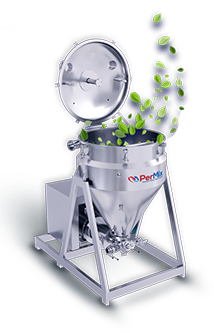
PerMix vacuum emulsifying mixers and universal vacuum mixer processors are engineered to combine controlled powder induction, effective circulation, and high-shear emulsification in one production platform. The objective is direct: disperse difficult ingredients efficiently while protecting batch uniformity and finished-product quality.
When starch lumps appear, do not accept longer mix times as the default correction. Examine how the powder enters the process, whether it is fully wetted before thickening begins, and whether the equipment creates the flow and shear the formula requires. Those answers usually lead to a smoother sauce, a more predictable process, and a production line that spends less time correcting preventable problems.

Get in touch with us today and learn how to we can help your business.