PerMix Mayonnaise Production
PerMix News

A mayonnaise batch can appear fully mixed at the vessel wall while dry starch, gum, or protein remains trapped in fisheyes at the center. The result is not a minor cosmetic defect. It can mean uneven viscosity, hydration delays, screen blockage, unstable emulsions, and rejected product. The best methods for powder incorporation are therefore process decisions, not simply mixing steps. They determine how reliably a formulation moves from dry ingredients to a uniform, stable commercial batch.
For mayonnaise, dressings, ketchup, and similar viscous foods, powder addition must be engineered around the ingredient, the liquid phase, and the final product target. A method that performs well with salt and sugar may fail completely with xanthan gum, modified starch, milk powder, or plant protein. The right system reduces operator intervention while protecting batch consistency and production speed.
Powders do not all behave the same way when they contact liquid. Some wet rapidly and sink. Others float, trap air, or form a hydrated outer layer that prevents water from reaching the dry material inside. This outer layer creates the familiar lump or fisheye problem. Once it forms, additional agitation may circulate the lump without breaking it down.
Hydrocolloids are especially demanding. Xanthan gum, guar gum, pectin, and cellulose-based thickeners can hydrate almost instantly at the surface. Starches may require controlled temperature and sufficient dispersion before cooking. Proteins can clump under unfavorable pH, temperature, or shear conditions. In low-fat and vegan mayonnaise, where gums, starches, and proteins often replace part of the oil structure, poor powder handling quickly becomes a texture and stability issue.
Air is another source of avoidable trouble. Open-top addition can pull air into the batch, increasing foam, reducing usable vessel capacity, and creating oxidation or filling concerns. Dust loss is also a sanitation and yield problem. A production line that relies on operators manually cutting bags and dumping powders into an open vortex is difficult to standardize from batch to batch.
The most effective approach depends on whether the powder needs simple dissolution, rapid wetting, high shear deagglomeration, controlled hydration, or cooking. Equipment selection should follow that process requirement.
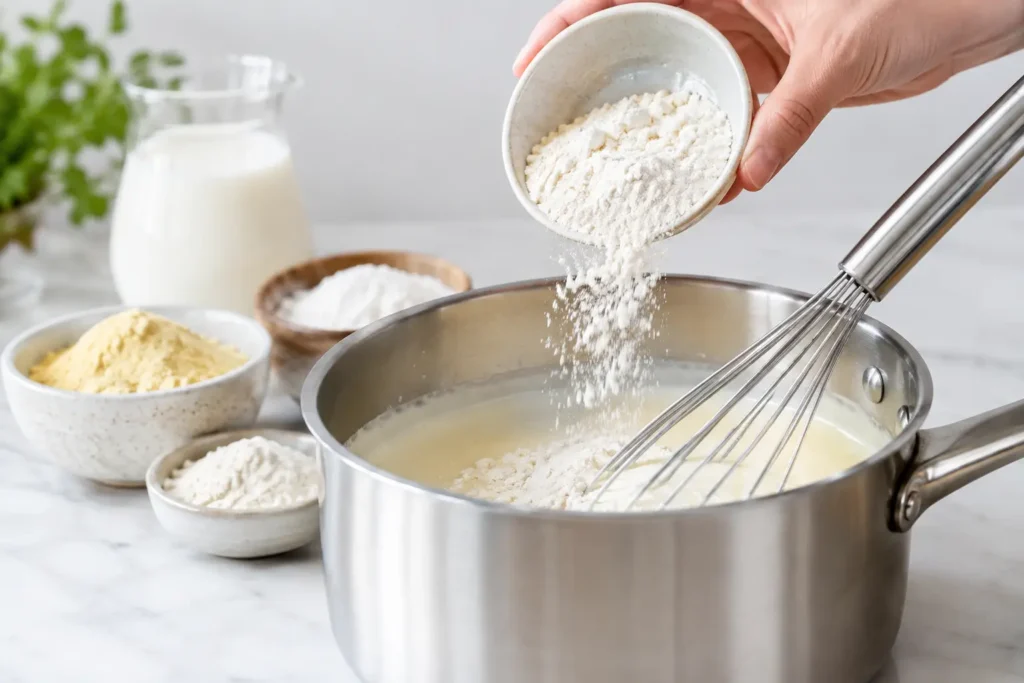
Direct addition into a liquid vortex can work for salt, sugar, acids, and certain minor ingredients that dissolve readily. It is a practical option when the powder is free-flowing, the addition rate is controlled, and the batch is still low enough in viscosity to establish a strong surface drawdown.
Its limitations are clear. As viscosity increases, the vortex becomes weaker and powder can sit on the surface or adhere to the vessel wall. Large dumps can overload the vortex and create dry rafts. This method is best reserved for ingredients with low lumping risk and formulations where modest air incorporation is acceptable.
Pre-blending difficult hydrocolloids with oil is a proven way to delay hydration until the particles are dispersed through the batch. In mayonnaise and dressings, gums can often be dispersed into part of the oil phase before contact with the water phase. This reduces fisheyes because each particle is separated by the carrier phase rather than immediately exposed to water.
The trade-off is formulation and handling complexity. The premix ratio must be controlled, and the carrier must be compatible with the recipe. Oil premixing may not be suitable for every low-fat, fat-free, or water-based product. It also adds a preparation step, which can become a bottleneck if it is not integrated into the production sequence.
A powder induction system feeding into a recirculation loop provides a more repeatable solution for powders that must enter the batch under controlled conditions. Liquid is circulated from the vessel through an induction point, where vacuum draws powder into the moving stream. The powder is wetted immediately and returned to the vessel for continued mixing.
This method is highly effective for starches, gums, milk powders, proteins, seasonings, and other ingredients that are difficult to add through an open manway. It supports measured addition rates, limits dust, and can reduce air entrainment. Because the powder is introduced into a flowing liquid stream rather than dropped onto the batch surface, wetting is more consistent.
For industrial production, the value is operational as well as technical. A closed induction setup improves repeatability between shifts, simplifies sanitary handling, and allows the process team to document a defined powder-addition procedure. It is particularly useful where multiple product lines use the same base equipment but different powder systems.
When a product requires both difficult powder incorporation and fine emulsion quality, vacuum processing with a high-shear emulsifying head is often the strongest option. Vacuum helps remove entrained air while supporting powder draw-in and cleaner processing. The high-shear zone breaks down agglomerates, distributes hydrated solids, and reduces droplet size in oil-in-water emulsions.
This combination matters in mayonnaise, vegan mayonnaise, creamy dressings, and emulsified sauces where powder performance and emulsion performance cannot be separated. A thickener that is only partly hydrated can create uneven body. A protein that is not properly dispersed can weaken the structure. A poorly emulsified oil phase can break during storage even when the viscosity initially appears acceptable.
A vacuum emulsifying mixer should not be treated as a cure for an incorrect addition sequence. High shear applied after large lumps have fully formed may not completely repair the batch. The best result comes from controlled induction, correct recirculation, and sufficient shear at the point where powder first contacts liquid.
The order of operations has a direct effect on powder dispersion. Start with enough available liquid to wet the ingredient effectively. Add powders before the batch becomes too viscous to circulate efficiently, unless the formulation specifically requires later addition. Allow adequate time for hydration before judging final viscosity, especially with gums and starches.
Temperature must also match the ingredient. Some starches require a defined heat cycle to develop viscosity, while other powders disperse best under cooler conditions. Protein ingredients may be sensitive to heat, salt concentration, or acidity. Adding acid too early can interfere with hydration or destabilize certain protein systems. Process engineers should establish the sequence through controlled trials, then lock it into the batch record.
For mayonnaise, a common logic is to prepare and hydrate the aqueous phase, develop the required dispersion, then introduce oil under controlled emulsification. However, the exact sequence changes with the emulsifier system, acid profile, oil level, and whether the product is conventional, low-fat, fat-free, or vegan. There is no universal recipe for processing behavior.
A powder system must be sized for more than final batch volume. Consider the maximum powder load, the fastest required addition rate, powder bulk density, expected batch viscosity, and the number of changeovers per day. A system that performs well in a pilot batch may not deliver the same wetting quality when a plant needs to add several hundred pounds of starch or sugar within a short production window.
The vessel geometry, agitator design, rotor-stator capacity, recirculation flow, and vacuum performance must work as one process system. Undersized recirculation flow can limit induction speed. Excessively aggressive shear can affect sensitive ingredients or raise product temperature. Large powder hoppers improve loading convenience but may be unnecessary if allergen segregation or frequent recipe changes require smaller, dedicated feed systems.
Sanitary design is equally important. Food manufacturers should evaluate cleanability of the induction line, hopper, valves, and transfer connections. Dead zones, difficult-to-clean powder ports, and manual handling steps can undermine an otherwise capable mixer. A properly specified system supports both product quality and efficient sanitation between formulations.
Successful powder incorporation should be verified with more than a visual check. Set measurable targets for mixing time, viscosity range, particle or lump count, finished-product air content, emulsion stability, and yield. For products with starches or gums, retain samples after defined hydration and hold periods because defects may appear after the batch has rested.
During trials, change one variable at a time: powder feed rate, liquid temperature, mixer speed, recirculation rate, vacuum level, or addition order. This creates usable process knowledge rather than a collection of operator preferences. It also identifies whether a problem belongs to the ingredient specification, the formula, or the equipment configuration.
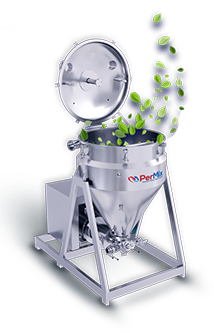
PerMix designs vacuum emulsifying and universal vacuum mixing systems around these real production variables, including the powder-induction requirements that often determine whether a batch is merely mixed or commercially repeatable.
The practical goal is straightforward: introduce every powder into the right liquid environment, at a controlled rate, with enough dispersion energy to prevent agglomerates before they form. When that standard is built into the process, manufacturers gain cleaner batches, more stable products, and a production line that is ready to scale with confidence.

Get in touch with us today and learn how to we can help your business.