PerMix Mayonnaise Production
PerMix News

A sauce line rarely fails because of one dramatic issue. More often, performance slips through small process weaknesses – poor powder wet-out, inconsistent droplet size, air entrainment, long batch times, or cleaning routines that eat into available production hours. That is why sauce processing equipment should be selected as a process solution, not as a collection of separate machines.
For manufacturers producing mayonnaise, ketchup, dressings, and other viscous products, equipment decisions directly affect product stability, throughput, labor efficiency, and line flexibility. The right system improves texture, repeatability, and yield. The wrong one can create recurring problems that show up as broken emulsions, fish eyes, off-spec viscosity, and expensive downtime.
In practical terms, sauce processing equipment has to deliver more than mixing. It needs to control how ingredients are introduced, dispersed, hydrated, emulsified, deaerated, heated or cooled, and transferred downstream. A sauce may look simple on a formula sheet, but the manufacturing demands can be high, especially when the product includes starches, gums, proteins, egg-based ingredients, oils, acids, sugars, and seasoning systems that behave differently under shear.
For emulsified sauces, the equipment must generate the right shear profile to create a stable and repeatable structure. For cooked sauces, thermal control becomes just as important as mechanical action. For products with difficult powders, induction and dispersion performance often determine whether the batch runs efficiently or turns into a long correction cycle.
That is why equipment should be judged by how it handles the product from first ingredient addition to final transfer. A fast mixer that creates air, leaves undispersed powder, or struggles with scale-up is not a high-performance solution.
Not all sauces place the same demand on the process. Mayonnaise and creamy dressings require controlled emulsification and air management. Ketchup and tomato-based sauces often call for strong dispersion, uniform viscosity development, and reliable pumping of dense product. Vegan and low-fat formulations can be even less forgiving because they rely on carefully built texture systems rather than traditional fat structures.
This is where buyers often make the wrong comparison. They look at vessel size, motor power, or headline RPM and assume those numbers tell the whole story. They do not. The more relevant question is whether the equipment architecture matches the formulation challenge.
For mayonnaise, sandwich spreads, aioli, and many dressings, vacuum emulsification is often central to performance. Removing air during processing helps improve texture, visual quality, and shelf stability while supporting a more controlled emulsion. High-shear mixing is necessary, but shear alone is not enough. Ingredient addition sequence, oil incorporation rate, and powder handling all matter.
A vacuum emulsifying mixer is especially valuable when the product must maintain a smooth, glossy, stable appearance at commercial scale. It also helps when a producer needs consistent results across different fat levels or when scaling from pilot batches to larger runs.
Ketchup, barbecue sauce, cheese sauce, and similar products can require a different balance. These products may need strong circulation, scraping, heat transfer, or gentle treatment of particulates depending on the formula. If the sauce includes starches or dry seasoning systems, the ability to induct powders cleanly and hydrate them quickly can significantly reduce batch time.
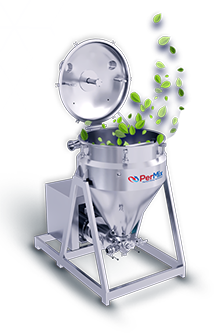
Some products need high shear only at a specific stage. Others need broader process flexibility. That is why a universal mixer processor can be a better choice than a single-purpose machine when the plant runs multiple sauce categories.
When evaluating equipment, the real question is not which machine has the longest feature list. It is which features solve costly production problems.
Vacuum processing helps reduce entrained air, improve product density, and support stable emulsions. It is particularly useful in mayonnaise, creamy dressings, and other products where appearance and mouthfeel are closely tied to air control. In some cases, vacuum also improves ingredient draw-in and powder incorporation.
Dry ingredient handling is a frequent source of inefficiency. Starches, gums, milk powders, proteins, and seasoning blends can form lumps, float on the surface, or hydrate unevenly. Equipment with effective powder induction reduces manual intervention and shortens the time needed to reach a uniform batch. This matters even more in formulas that use modified starches or stabilizer systems to replace fat.
More shear is not always better. Some sauces need aggressive droplet size reduction. Others can be damaged by excessive shear or unnecessary heat build-up. Good equipment gives the processor control over shear intensity and process timing so the product reaches target texture without overprocessing.
Food manufacturers do not need reminding that sanitation affects uptime. Dead zones, hard-to-clean valves, poor weld quality, and awkward internal geometries create cleaning risk and waste labor. Sanitary construction, CIP compatibility, and practical maintenance access should be evaluated early, not after installation.
A system that performs well in a test batch but loses consistency at larger volumes is a costly mistake. Scale-up should preserve product structure, cycle time, and operating logic. That requires equipment designed with real process transfer in mind, not just bigger tank geometry.
The most common mistake is buying around a price point rather than a production objective. Low initial cost can become expensive when the system needs extra labor, longer batch times, more rework, or formula compromises.
Another mistake is treating all sauces as if they behave the same way. A mixer that works for a simple hot-fill sauce may not be the right answer for high-viscosity mayonnaise or a vegan emulsion with a narrow process window. Equipment should be selected around the hardest product to manufacture, not the easiest one.
A third issue is underestimating ingredient behavior. Many processing problems are blamed on the formula when the actual cause is poor wet-out, incorrect shear application, or inadequate deaeration. Process engineering and equipment selection have to be aligned.
Return on investment is not limited to output per hour. In sauce manufacturing, ROI usually comes from a combination of shorter cycle times, lower waste, fewer rejected batches, reduced labor dependence, and more reliable product quality.
If a system improves emulsion stability, the benefit is not just quality. It can reduce customer complaints, limit hold-and-release delays, and support cleaner filling performance downstream. If powder induction is more efficient, operators spend less time correcting lumps or manually feeding ingredients. If sanitation is easier, the plant gets more productive hours out of the same shift schedule.
This is why equipment should be evaluated against measurable plant realities. Ask how the system affects batch consistency, ingredient incorporation time, CIP duration, utility usage, and changeover flexibility. Those are the numbers that determine whether the purchase strengthens margins.
Even high-quality machinery can underperform when the application fit is wrong. Sauce processing equipment should come with real process understanding – how to add powders, when to apply shear, how to manage viscosity rise, and how to maintain emulsion integrity as production volume increases.
For manufacturers working across standard, low-fat, fat-free, and vegan sauce platforms, this becomes even more important. Those formulas do not respond identically in the vessel. A supplier with emulsification experience can help match mixer design, vacuum level, and ingredient handling to the specific formulation challenge instead of offering a generic tank with a motor attached.
That application focus is where specialized equipment providers stand apart. PerMix, for example, centers its systems around real production needs in mayonnaise and related emulsified foods, with vacuum mixing and powder handling designed to improve both process control and commercial output.
When a sauce line runs well, the benefits show up everywhere – smoother startup, predictable batching, stable texture, easier scale-up, and fewer quality interventions. That kind of result usually comes from equipment chosen around the product’s real demands rather than broad assumptions about mixing.
If you are reviewing new capacity, replacing an underperforming mixer, or trying to standardize quality across multiple sauce types, start with the points where production friction is highest. The best equipment choice is rarely the one with the lowest sticker price or the most aggressive specification sheet. It is the one that gives your plant better control over the batch, the formula, and the business outcome.

Get in touch with us today and learn how to we can help your business.