PerMix Mayonnaise Production
PerMix News

A successful vegan mayonnaise formula at 20 gallons can become an expensive production problem at 2,000 gallons. This vegan mayo scaleup case study follows a representative condiment manufacturer moving from a promising pilot formulation to dependable commercial output without sacrificing gloss, body, spreadability, or shelf stability.
The manufacturer had a clear commercial objective: launch an egg-free mayonnaise that could compete with conventional products on texture and appearance while supporting consistent production across regional retail and foodservice channels. The formula used vegetable oil, water, vinegar, salt, sugar, starch, plant proteins, hydrocolloids, and flavor components. On paper, it was straightforward. In production, every one of those ingredients affected emulsion formation, hydration, viscosity, and process repeatability.
The initial pilot batches had acceptable viscosity and sensory performance. However, when the batch size increased, the operation began to see variable results. Some batches reached target viscosity too quickly, creating a heavy texture that was difficult to pump. Others showed weak body after filling. A small number developed visible oiling off during accelerated stability checks.
The central issue was not simply mixer size. A vegan mayonnaise has no egg yolk to provide the familiar emulsification behavior of a traditional mayonnaise system. Its stability depends on the coordinated performance of plant proteins, starches, gums, emulsifiers, acid, water phase preparation, shear energy, temperature, and oil addition rate.
At pilot scale, an operator can compensate for a slow powder addition or a viscosity change by extending the batch manually. At commercial scale, that approach becomes inconsistent and costly. Longer batches reduce throughput, increase exposure to process variation, and can still fail to correct poor dispersion established early in the cycle.
The manufacturer needed a production system that could produce fine oil droplets, fully hydrate dry ingredients, control entrained air, and repeat the same process from batch to batch.
Before selecting equipment, the process team separated the symptoms from the root causes. The first symptom was powder agglomeration. Starch and hydrocolloids were being added through an open vessel, where they contacted liquid unevenly and formed fisheyes. Those partially hydrated particles were difficult to break down later, even with extended high-speed mixing.
The second issue was inconsistent shear distribution. A larger tank with a conventional agitator could circulate the batch, but circulation is not the same as emulsification. Areas near the impeller received high energy while material farther from the mixing zone moved more slowly. The result was an emulsion that could appear smooth at the tank but behave differently after holding, pumping, and filling.
Air incorporation was the third concern. Open processing introduced air during powder charging and mixing. In a high-viscosity condiment, entrained air can reduce apparent density, interfere with clean filling, create an unstable appearance, and contribute to oxidative stress in the oil phase.
Finally, oil addition was not being managed as a controlled process variable. Adding oil too rapidly can overload the emulsifying system. Adding it too slowly can extend cycle time without necessarily improving quality. The correct rate depends on formula, batch volume, emulsifier system, available shear, and the viscosity of the developing emulsion.
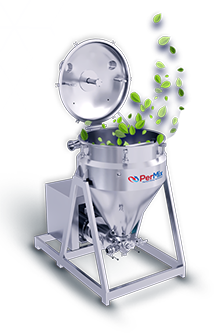
The recommended process centered on a vacuum emulsifying mixer configured for viscous food production. In this case, a PerMix PVC Vacuum Emulsifying Mixer would combine anchor agitation, high-shear homogenization, vacuum operation, and controlled ingredient handling in one sanitary processing platform.
The sequence began by charging the water phase and dissolving soluble ingredients under controlled agitation. Acid and other liquid components were added according to the validated formulation. Establishing a uniform water phase first mattered because it created the environment in which protein, starch, and hydrocolloid ingredients would hydrate.
Dry powders were then introduced through a powder induction arrangement rather than dumped directly into the vessel. This method creates immediate wetting and recirculation into the high-shear zone. It reduces airborne dust, shortens the time required to incorporate dry ingredients, and limits the formation of stubborn agglomerates.
Not every vegan mayo formula requires the same powder induction approach. A low-viscosity starch slurry may be suitable for one operation, while a formula containing high levels of modified starch, pea protein, or gums may benefit from a more aggressive induction and recirculation design. The equipment should follow the formula and production target, not the other way around.
Once the dry ingredients were dispersed and hydrated, the batch moved into the emulsification phase. Oil was introduced at a controlled rate while the homogenizer generated the shear required to reduce oil droplet size and distribute the oil phase through the continuous water phase. The anchor agitator maintained movement at the vessel wall and supported uniform heat transfer where heating or cooling was required.
Vacuum was applied to remove entrained air and support a denser, cleaner finished product. Vacuum processing also helps improve appearance and can reduce foaming during high-viscosity production. For manufacturers filling jars, squeeze bottles, or portion packs, this can make a visible difference at the packaging line.
The change was not just a better-looking batch. It was a controlled operating window.
The manufacturer established standard parameters for vacuum level, mixing speed, homogenizer speed, powder feed rate, oil addition rate, batch temperature, and final viscosity. Operators no longer had to judge the batch primarily by sight or extend processing based on intuition. They could run an approved sequence and verify critical quality checks at defined points.
This control improved repeatability in several practical ways. Powder incorporation became more predictable, reducing the need for rework caused by undispersed starch or gum particles. The oil phase was added at a rate matched to available emulsification energy, reducing the risk of an unstable or broken emulsion. Vacuum reduced aeration, helping the product reach a more consistent density and filling performance.
The plant also gained a more realistic path to capacity planning. A batch time is not only mixing time. It includes ingredient charging, hydration, emulsification, deaeration, discharge, cleaning, and changeover. By consolidating these functions into a properly sized vacuum emulsification system, the manufacturer could evaluate output based on complete production cycles rather than theoretical tank volume.
Higher shear is not automatically better. Excessive shear or unnecessary processing time can change the texture of certain starch systems, affect protein functionality, or create a product that is tighter than the target sensory profile. The objective is sufficient and repeatable energy, not maximum energy.
Likewise, a larger vessel is not always the right answer. A system sized far above the normal batch requirement may operate outside its most effective working range. Manufacturers should consider minimum and maximum working volumes, anticipated SKU growth, viscosity range, available utilities, and the frequency of product changeovers before finalizing capacity.
Formula development and equipment selection must also move together. If R&D replaces a starch, changes oil type, reduces fat, or introduces a new protein source, the process may need to change. Low-fat and fat-free vegan mayonnaise systems can be especially demanding because less oil means the water phase and stabilizer network carry more of the texture burden.
A commercial validation plan should confirm more than final viscosity. The team should track pH, temperature, density, particle dispersion, appearance, oil separation, and fill performance. Accelerated and real-time stability testing should be performed on retained samples from early production runs.
Cleaning validation is equally important. Vegan mayonnaise often contains sticky, high-viscosity ingredients that can remain in dead zones or discharge lines if the system is not designed for sanitary access and effective clean-in-place operation. Equipment geometry, valve selection, surface finish, and drainability should be evaluated before installation, not after the first difficult cleanup.
For plants producing both egg-based and vegan products, segregation strategy also matters. It may involve dedicated production scheduling, validated cleaning procedures, or dedicated equipment depending on allergen controls, customer commitments, and regulatory requirements.
A vegan mayo launch succeeds when the plant can reproduce the product that the commercial team sold and the consumer expects. The right vacuum emulsification system gives process teams a practical way to turn a sensitive formula into a repeatable manufacturing standard – batch after batch, shift after shift.

Get in touch with us today and learn how to we can help your business.