PerMix Mayonnaise Production
PerMix News


A vegan mayonnaise that looks smooth at the filler can still fail in the warehouse, during transport, or after repeated temperature changes. To stabilize vegan mayonnaise at commercial scale, manufacturers must control more than the emulsifier. Oil phase design, hydration, shear profile, process temperature, vacuum performance, and ingredient addition order all affect whether the finished product stays glossy, thick, and homogeneous through its intended shelf life.
Egg yolk provides a forgiving emulsification system in conventional mayonnaise. Removing it changes the process window. Vegan formulations rely on plant proteins, modified starches, gums, lecithin, and other hydrocolloids that can be highly sensitive to pH, salts, heat, and localized over-shearing. The objective is not simply to create a stable batch in the tank. It is to build a repeatable process that delivers stability batch after batch.
Vegan mayonnaise is generally an oil-in-water emulsion. Small oil droplets are dispersed throughout a continuous water phase that contains acid, salt, sweeteners, stabilizers, and plant-based emulsifying ingredients. Instability appears when those droplets merge, rise, separate, or lose the protective layer around their surface.
The visible symptoms vary. A product may show free oil, watery separation, loss of body, graininess, air pockets, or a texture that becomes thin after pumping. These are not always formulation failures. In many plants, the root cause is incomplete powder hydration, poor premixing, inconsistent rotor-stator shear, or a process sequence that exposes sensitive ingredients to the wrong conditions.
Vegan systems also have a narrower margin for error because plant proteins and hydrocolloids do not behave like egg yolk. Pea protein, soy protein, faba bean protein, aquafaba-derived ingredients, and potato protein each respond differently to acidification and ionic strength. A formula that performs well at pilot scale may break or lose viscosity when production equipment changes the shear rate, residence time, or powder wet-out conditions.
A stable commercial product begins with the correct functional roles. The primary emulsifier must rapidly cover newly formed oil droplets during homogenization. Supporting stabilizers must build viscosity in the water phase without preventing efficient emulsification or creating an undesirable gel-like texture.
Plant proteins can contribute emulsification and body, but their performance often drops near their isoelectric point. Acid level and type matter. Vinegar, citric acid, lemon ingredients, and fermented acids can produce different sensory and processing results even at similar final pH values. Salt can further shift protein behavior. This is why pH should be treated as a controlled manufacturing parameter, not only a food safety or flavor target.
Lecithin is often used to support emulsification, while starches, xanthan gum, guar gum, citrus fiber, pectin, or other systems provide suspension and viscosity. The best combination depends on the oil level, target mouthfeel, clean-label requirements, packaging format, and expected distribution conditions. A high-oil, spoonable vegan mayonnaise requires a different stabilization approach than a low-fat squeeze dressing.
Avoid increasing hydrocolloids as the first response to separation. Excess gum can mask an underlying droplet-size problem while creating poor flavor release, stringiness, or difficult pumping. A properly emulsified product usually needs less stabilization support than a coarse, poorly processed emulsion.
Dry ingredients are a frequent cause of inconsistency. Starches and gums can form fish eyes when added directly into water without adequate dispersion. Protein powders can clump, trap dry cores, or hydrate unevenly. Those defects may not be obvious until after acidification or filling.
Use controlled powder induction and sufficient recirculation to wet every particle quickly. A vacuum powder induction system can pull powders below the liquid surface and reduce airborne loss, operator exposure, and agglomeration. For difficult dry starches or high-viscosity premixes, this step is often the difference between a repeatable batch and one that requires extended rework.
Hydration time should be validated for each ingredient system. More mixing is not automatically better. Some gums reach full functionality only after a defined rest period, while some proteins lose performance when exposed to prolonged high shear or elevated temperature. Establish a documented hydration stage before the final emulsification step.
The most reliable manufacturing method separates preparation, emulsification, and finishing into distinct controlled stages. Water-phase ingredients are dispersed and hydrated first. Oil is then incorporated under the required shear conditions, followed by finishing adjustments for acid, flavor, color, and final viscosity.
Oil addition rate is critical. Adding oil too quickly can overload the available emulsifier and produce larger droplets that are more likely to coalesce. Adding it too slowly can extend batch time without improving product quality. The correct rate depends on oil percentage, emulsifier selection, vessel geometry, and the capability of the emulsifying head.
A high-shear rotor-stator system reduces droplet size and improves distribution, but the target is controlled shear rather than maximum shear. Insufficient energy leaves a coarse emulsion. Excessive shear may damage the structure built by certain starches or hydrocolloids, increase product temperature, and introduce more air. Process development should identify the minimum effective shear level that consistently achieves the desired droplet distribution and texture.
Air is an operational and quality issue in vegan mayonnaise. Entrained air can create a lighter apparent viscosity in the tank, inconsistent fill weights, oxidation risk, and an unattractive porous appearance after filling. It can also distort laboratory measurements, causing operators to make unnecessary formulation adjustments.
Vacuum mixing removes entrained air and supports smoother product development, particularly in high-viscosity batches. It also improves powder induction and can reduce foaming during circulation. The vacuum level, timing, and vessel seal integrity should be monitored as process parameters. Pulling vacuum at the wrong stage can cause uncontrolled expansion or interfere with ingredient addition, so the sequence must match the formulation and mixer design.
Temperature control belongs in the same discussion. High temperature can lower viscosity temporarily and make an emulsion appear stable before it cools. It can also alter the behavior of starches, proteins, and flavor components. Conversely, processing too cold can make a high-oil formula difficult to circulate and disperse. Maintain a validated temperature range from premix through filling, not merely at the end of the batch.
A viscosity reading alone does not prove that vegan mayonnaise is stable. Viscosity can remain high while the oil droplet structure is inadequate. Quality teams should evaluate the product at multiple points: immediately after production, after cooling, after accelerated storage, and after temperature cycling that reflects the distribution chain.
Useful controls include pH, viscosity at a defined temperature and spindle or rheology method, density, visual oil separation, droplet-size analysis where available, and sensory texture. Track these values by batch alongside mixer speed, processing time, vacuum level, temperature, and oil addition rate. This creates a practical data set for troubleshooting rather than relying on operator judgment alone.
When instability occurs, isolate the failure mode before changing the formula. Free oil shortly after mixing may indicate inadequate emulsification, poor emulsifier dispersion, or excessive oil addition rate. A product that thins after several days may point to incomplete gum hydration, starch breakdown, or pH-related protein loss. Air bubbles and variable filling often indicate vacuum or circulation issues rather than a formulation defect.
Pilot results do not scale by simply multiplying ingredient quantities. The relationship between batch volume, liquid height, recirculation rate, shear zone exposure, and heat transfer changes as production grows. A larger vessel with inadequate circulation can leave zones of poorly hydrated powder or unevenly processed emulsion.
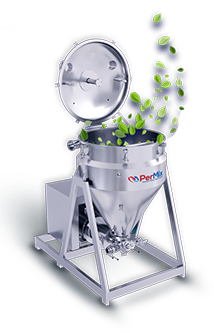
For manufacturers producing multiple mayonnaise, dressing, and sauce formats, a vacuum emulsifying mixer with efficient powder handling provides greater process control than a basic agitator and standalone disperser. PerMix PVC Vacuum Emulsifying Mixers and Universal Vacuum Mixer Processors are designed for this type of demanding emulsified food production, combining vacuum operation, high-shear emulsification, and controlled powder incorporation in one sanitary processing platform.
Equipment selection should reflect the actual product range. A system sized only for a standard full-fat mayonnaise may not perform equally well with low-fat or vegan formulas that depend on higher water-phase viscosity and more difficult powder systems. Specify the intended batch sizes, viscosity range, oil percentages, required heating or cooling, cleaning expectations, and future product plans before finalizing a production configuration.
The most dependable vegan mayonnaise is built through disciplined formulation and disciplined processing. When powder hydration, oil addition, shear, vacuum, and temperature are controlled as one system, stability becomes a designed production outcome rather than a problem discovered after filling.

Get in touch with us today and learn how to we can help your business.