PerMix Mayonnaise Production
PerMix News

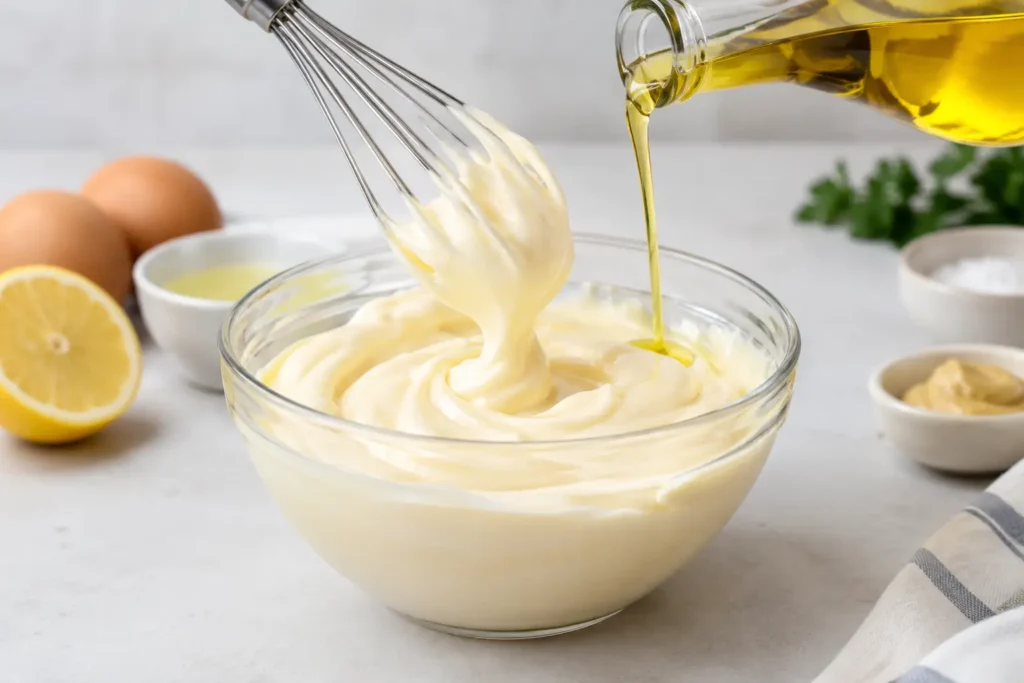
A mayonnaise batch can look excellent for the first few minutes, then lose viscosity, release oil, or develop an uneven texture before discharge. In many cases, the root cause is not the recipe. It is oil phase addition control – the relationship between how quickly oil enters the batch, the available emulsifying capacity, and the shear applied at that moment.
For commercial mayonnaise, dressings, and sauce production, oil addition is a controlled process step, not simply a transfer operation. The correct addition profile helps create fine, uniform oil droplets and a stable emulsion. The wrong profile can overload the system faster than the emulsifier and mixing zone can stabilize the incoming oil.
Mayonnaise is generally an oil-in-water emulsion. Oil must be divided into very small droplets and held apart by an emulsifier system, often supported by egg yolk, egg alternatives, hydrocolloids, starches, proteins, acids, and other formulation-specific ingredients. The continuous water phase must be properly prepared before significant oil loading begins.
If oil enters too quickly during early emulsification, droplets can coalesce faster than they are stabilized. This may produce a thin batch, visible oiling-off, a grainy body, or complete emulsion breakage. Adding oil too slowly is not automatically better. It can extend cycle time, reduce plant throughput, and expose the product to unnecessary mixing or temperature increase.
The objective is to introduce oil at a rate that the process can absorb. That rate changes during the batch. Early addition usually requires the greatest caution because the emulsion has not yet developed its full structure. Once a stable base and sufficient interfacial area have formed, the production system can often accept a higher oil flow rate without sacrificing droplet size or product texture.
A fixed pump speed from start to finish is simple to operate, but it is rarely the best process strategy. A staged addition profile provides better control over the changing conditions inside the mixer.
The first portion of oil establishes the foundation of the batch. At this stage, the water phase should already contain fully hydrated and dispersed emulsifiers, stabilizers, salt, acid components, and other ingredients required by the formulation. The high-shear mixing zone must be active and capable of immediately processing incoming oil.
A slower initial oil rate gives the emulsifier system time to cover newly created droplet surfaces. It also prevents a localized excess of oil near the feed point. This is particularly critical with high-oil mayonnaise, where the final formulation leaves little margin for poor dispersion.
As viscosity and emulsion strength develop, oil flow can typically increase. The correct increase depends on batch size, impeller geometry, recirculation pattern, homogenizing head design, and the formulation itself. A process engineer should treat the target flow rate as a validated operating parameter, not as an estimate based only on pump capacity.
The key question is whether the mixer continues to distribute and reduce the incoming oil immediately. If the batch shows sudden viscosity loss, unstable appearance, excessive temperature rise, or a change in motor load that does not match the expected process curve, the oil rate may be too aggressive.
Late-stage oil addition can also create problems. A highly viscous mayonnaise may have reduced bulk circulation if the vessel and agitator are not designed for the product’s final rheology. The system needs sufficient turnover to prevent oil from sitting in pockets, bypassing the high-shear zone, or accumulating at the vessel wall.
The final portion may require a moderated rate, especially in reduced-fat or vegan mayonnaise formulas that rely on complex thickener and protein systems. These products can be less forgiving than conventional egg-based mayonnaise. Their apparent viscosity may increase rapidly, while their tolerance for localized oil overload remains limited.
Oil flow rate matters, but where the oil enters the process matters just as much. Oil introduced into a low-energy area of the vessel may form large droplets before it reaches the emulsifying zone. Once those droplets coalesce, later processing may not fully restore the intended droplet-size distribution.
The most effective feed arrangement places the oil where it is immediately captured by high shear and strong product circulation. Depending on the equipment configuration, this may mean controlled feeding directly into a rotor-stator emulsifying head, a recirculation loop, or a dedicated induction point designed for rapid incorporation.
Vacuum processing can add another advantage. By reducing entrained air, vacuum helps support a dense, smooth finished product and can improve powder wetting during water-phase preparation. It does not replace correct oil addition control, but it helps create more repeatable conditions for emulsification and deaeration.
A stable process should be monitored through more than visual observation. Experienced operators recognize the relationship between pump rate, mixer load, temperature, vacuum response, product viscosity, and batch appearance. These signals can identify a developing problem before the batch fails.
Watch for four common warning signs:
These indicators must be interpreted in context. A motor-load increase is normal as mayonnaise builds body. The concern is an unexpected change from a validated batch profile. Recording process data from successful batches gives production teams a practical benchmark for future runs.
A control profile that performs well for full-fat mayonnaise may not transfer directly to low-fat, fat-free, or vegan products. Reducing oil changes the product structure. Replacing egg with plant proteins or alternative emulsifiers changes interfacial behavior. Adding modified starches, gums, fibers, or protein concentrates can alter hydration requirements and viscosity development.
For example, a low-fat mayonnaise may thicken substantially before all oil is added because its texture depends more heavily on the aqueous phase. In that case, oil delivery, agitator speed, and recirculation must be balanced to maintain product movement. A vegan formulation may need stricter control of pH, protein hydration, and shear timing before oil addition begins.
This is why process development should establish an addition curve for each formula family rather than relying on a single plant-wide setting. The desired outcome is repeatability: the same viscosity, mouthfeel, gloss, and stability from batch to batch and from pilot scale to production scale.
Manual valve adjustment can work for small batches and established formulas, but it leaves too much dependent on operator judgment at larger production volumes. A controlled oil metering system with recipe-driven flow rates creates a more reliable process. It also supports traceability when quality teams need to investigate a variation in finished product performance.
The mixer itself must match the formulation and production target. High shear must be sufficient to create the desired droplet size, while the vessel agitator must maintain complete turnover as viscosity rises. Poorly matched equipment may force operators to compensate with slower oil addition, longer processing, or excess shear – all of which can reduce capacity or compromise quality.
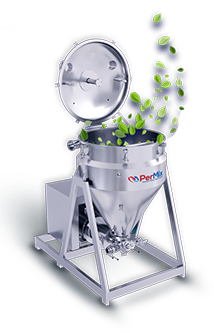
PerMix vacuum emulsifying systems are configured around these production realities, combining controlled ingredient addition with high-shear emulsification and mixing designed for viscous, demanding food products. The right configuration depends on batch volume, oil percentage, formula behavior, cleaning requirements, and target output per shift.
A reliable standard operating procedure defines more than the total oil quantity. It should specify the starting condition of the water phase, initial feed rate, rate changes by batch stage, mixer and agitator settings, temperature limits, vacuum conditions where applicable, and the process signals that require an operator response.
Validate the procedure under normal production conditions, not only during a carefully attended trial. Test reasonable variation in raw material temperature, oil viscosity, powder lot behavior, and batch size. This work reveals whether the process has a meaningful operating window or only performs under ideal conditions.
The strongest mayonnaise operations do not wait for an emulsion to break before adjusting the process. They control oil addition as a measurable part of the recipe, giving the mixer, emulsifier system, and production team the conditions needed to produce a stable batch every time.

Get in touch with us today and learn how to we can help your business.