PerMix Mayonnaise Production
PerMix News

Vegan mayonnaise that looks smooth in the pilot room can become a costly production problem at 2,000 gallons. The best systems for vegan emulsions are not simply the mixers with the highest motor ratings. They are integrated processing systems that control shear, powder wetting, vacuum, temperature, and batch circulation at the point where formulation complexity becomes operational risk.
For food manufacturers, the right selection depends on more than whether the product is egg-free. It depends on viscosity, oil phase level, starch and protein loading, required batch size, allergen controls, cleaning expectations, and the number of products planned for the line. A system that produces a light vegan dressing efficiently may not deliver the texture, gloss, or shelf stability required for a spoonable vegan mayonnaise.
Traditional egg-based mayonnaise benefits from the emulsifying strength of egg yolk. Vegan formulations replace that function with combinations of modified starches, pea or soy proteins, aquafaba, gums, fibers, lecithin, hydrocolloids, and other stabilizer systems. These ingredients can work extremely well, but they must be dispersed and hydrated correctly before the final emulsion structure is formed.
That is where production failures begin. Dry powders can form fisheyes or gel lumps when dropped into water without sufficient vacuum and shear. Proteins can agglomerate. Starches may hydrate unevenly. Oil droplet size can vary from batch to batch, creating a product that appears acceptable at filling but separates, thins, or loses body during shelf life.
The processing system must therefore do several jobs in a controlled sequence: rapidly disperse powders, eliminate entrained air, create fine oil droplets, maintain uniform temperature, and circulate the entire batch through the high-shear zone. A conventional open-top agitator may move product around the vessel, but it rarely provides the controlled dispersion needed for demanding vegan mayonnaise formulations.
There is no single machine that is best for every vegan product. However, several system types consistently perform well when matched to the formulation and production target.
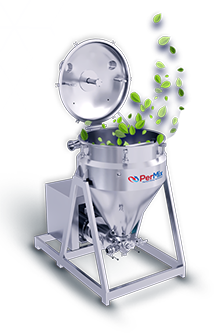
For high-viscosity vegan mayonnaise, creamy sandwich spreads, and thick dressings, a vacuum emulsifying mixer is typically the strongest production choice. This system combines an anchor or sweep agitator with a high-shear rotor-stator homogenizer and vacuum capability in one processing vessel.
The sweep agitator continuously moves material from the vessel wall toward the emulsification zone while helping control heat transfer. The high-shear head breaks down agglomerates and reduces oil droplet size. Vacuum draws down air introduced during powder addition and mixing, improving product density, appearance, and filling consistency.
This configuration is especially effective when the formulation contains starches, gums, plant proteins, or high solids. It supports staged processing: water phase preparation, powder induction, hydration, oil addition, homogenization, deaeration, and final cooling or transfer. For manufacturers focused on consistent, full-bodied vegan mayonnaise, this is often the most practical system architecture.
A universal vacuum mixer processor is a stronger option when one line must produce more than vegan mayonnaise. Manufacturers running mayonnaise alongside ketchup, barbecue sauce, creamy dressings, cheese-style sauces, spreads, or low-fat condiment lines need a broader processing window.
These systems are designed to handle viscous, paste-like, and emulsified products using configurable mixing tools, vacuum processing, heating and cooling jackets, and high-shear homogenization. The value is not just versatility on a product list. It is the ability to transition between different rheological behaviors without installing separate dedicated vessels for every formulation.
The trade-off is that flexible systems need thoughtful sizing and tool selection. A processor sized for a heavy sauce may not be efficient for very small development batches. Likewise, a facility producing only one high-volume vegan mayonnaise SKU may achieve a clearer return with a dedicated vacuum emulsifying mixer. Flexibility is valuable when it supports the actual production schedule, not when it adds unused capability.
Inline rotor-stator mixers are useful where emulsification is performed through recirculation or continuous processing. Product passes through a high-shear mixing chamber, then returns to the vessel or moves forward through the process line. This approach can provide highly uniform dispersion and is often effective for lower- to medium-viscosity dressings, sauces, and pre-emulsions.
For vegan emulsions, inline shear is most effective when it is part of a complete system. An inline mixer alone does not solve poor powder wetting, air entrainment, or inadequate vessel agitation. It must be paired with a properly designed tank, recirculation loop, feed method, and controls.
It can also be a good upgrade for manufacturers that already have jacketed blend tanks but need finer droplet size and better batch uniformity. For thick vegan mayonnaise, however, recirculation becomes more difficult as viscosity rises. Pump selection, line diameter, and flow rate become critical. In many cases, an in-vessel vacuum emulsifying system is the simpler and more reliable solution.
Powder induction is not an optional accessory when dry starches, gums, proteins, or stabilizer blends are a major part of the formula. It is a core capability. A vacuum powder induction system pulls powders into the liquid phase under controlled conditions, reducing dust, speeding incorporation, and minimizing the lumps that can compromise texture.
This matters most with ingredients that hydrate rapidly at the surface. If a gum or starch forms a gel layer before the particle is fully wetted, the resulting lump can remain visible or create inconsistent viscosity. High shear may reduce some agglomerates later, but it is more efficient to prevent them at the induction stage.
For production plants managing frequent formulation changes, controlled powder addition also improves repeatability. Operators are less dependent on manual dumping technique, addition speed, and individual judgment. That consistency becomes commercially significant when retail customers expect every jar, pouch, or foodservice pack to perform the same way.
The equipment discussion should begin with the product, not with a catalog capacity. A reliable supplier will ask how the formula behaves during hydration, emulsification, heating, cooling, and filling. These details determine the correct vessel geometry, homogenizer capacity, agitator design, and powder handling method.
Before investing, define at least the following operating requirements:
A system that is oversized can create poor turnover in small batches. One that is undersized may struggle with high-viscosity formulations, create long cycle times, and limit future growth. The right design should deliver enough mechanical energy for the most difficult approved formula, not only the easiest product currently being made.
Vacuum processing is often described as a way to remove air, but its production value is broader. During powder induction, vacuum helps draw dry ingredients beneath the liquid surface. During mixing, it reduces foam and entrained air. At final processing, it supports a denser product with cleaner visual appearance and more consistent net weight control.
For vegan mayonnaise, reduced air is particularly valuable because the product is often expected to match the smooth, glossy appearance of conventional mayonnaise. Air pockets can make a white emulsion look dull, affect apparent viscosity, and create filling variability. Vacuum also supports more controlled processing when volatile flavors or acids are added, although the sequence should be validated for each formula.
Vacuum is not a substitute for correct shear and agitation. If the emulsifier is under-dosed, the oil is added too quickly, or the powder phase is poorly prepared, vacuum will not rescue a broken emulsion. It works best as part of a disciplined process design.
A frequent mistake in vegan emulsion scale-up is assuming that a larger vessel will reproduce pilot results if ingredients are added in the same order. At production scale, ingredient addition time, shear exposure, circulation pattern, and heat transfer all change. A 20-gallon bench batch may hydrate powders quickly because every particle reaches the shear zone. A 1,000-gallon batch requires engineered circulation to achieve the same result.
Scale-up should preserve process conditions that matter: powder wetting energy, shear intensity, oil addition rate, temperature profile, and total residence time in the homogenizing zone. It may also require revised addition points, larger powder induction capacity, or a different homogenizer configuration.
PerMix designs vacuum emulsification solutions around these real production variables, helping manufacturers align mixer configuration with product behavior, output targets, and future capacity requirements. The goal is not simply to mix a batch. It is to produce a repeatable emulsion that remains stable through filling, distribution, and shelf life.
For thick, high-value vegan mayonnaise, a vacuum emulsifying mixer with effective powder induction is generally the preferred system. For plants running multiple viscous sauces and emulsified products, a universal vacuum mixer processor can provide the wider operating range needed to consolidate production. For lower-viscosity products or established recirculation lines, inline high shear may be the right fit when supported by proper tank and feed design.
The most profitable system is the one that makes difficult formulations routine. When powders wet out cleanly, oil droplets are consistently fine, air is controlled, and every batch follows the same process path, vegan innovation becomes easier to scale and easier to sell.

Get in touch with us today and learn how to we can help your business.