PerMix Mayonnaise Production
PerMix News
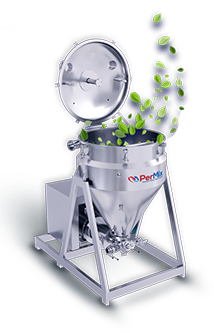

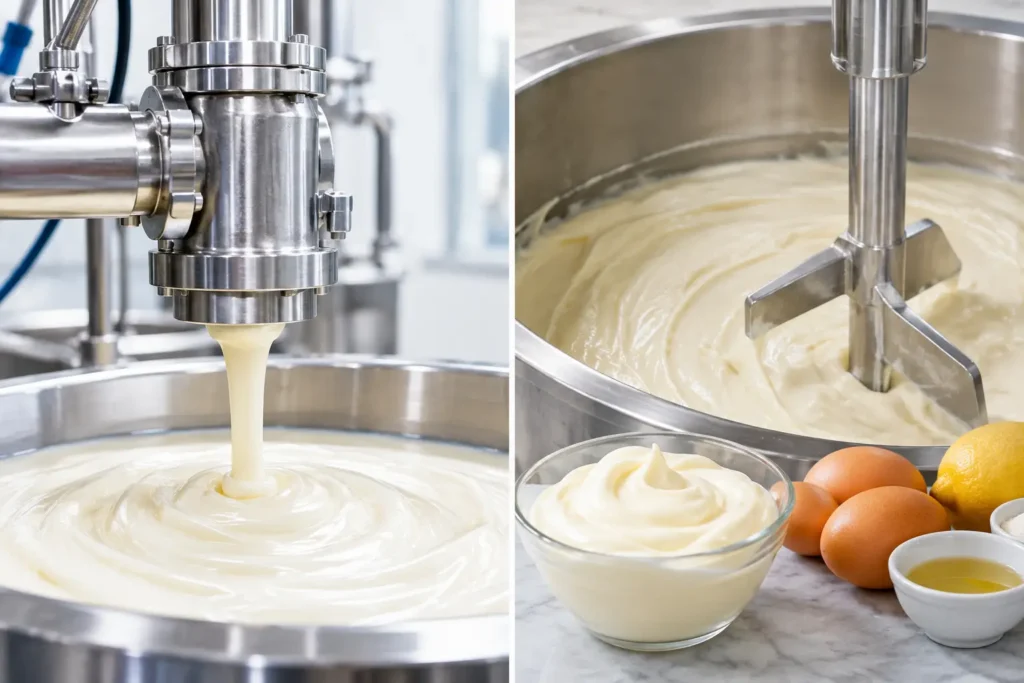
A mayonnaise line can meet its hourly output target and still create a costly quality problem: uneven droplet size, unstable viscosity, entrained air, or a texture that shifts from batch to batch. The decision between inline versus batch homogenization affects all of these outcomes. It also affects how easily a manufacturer can add powders, manage formulation changes, clean the system, and scale production without compromising product character.
For mayonnaise, dressings, ketchup, and other viscous emulsified foods, there is no universal winner. The right configuration depends on the product rheology, process sequence, production volume, available utilities, and the degree of flexibility the plant requires. The key is to select equipment around the process, not simply around a desired flow rate.
Batch homogenization processes the complete formulation in a vessel. Ingredients are added to the tank, dispersed and mixed, then subjected to high shear through a rotor-stator emulsifying head. In many mayonnaise applications, the batch is processed under vacuum to remove entrained air, improve powder wet-out, support stable emulsification, and produce a smooth finished texture.
Inline homogenization processes product as it moves through a pipeline. A pump sends the premix through an inline high-shear mixer or homogenizer, where intense mechanical shear reduces particle or droplet size before the product moves to the next stage, recirculates to a tank, or proceeds toward filling.
The distinction sounds simple, but the process implications are significant. A batch vacuum emulsifying mixer combines mixing, dispersion, emulsification, deaeration, and often heating or cooling in one controlled process environment. An inline system separates more of those duties across tanks, pumps, powder induction equipment, heat exchangers, and the homogenizer itself.
Batch systems are often the strongest choice for mayonnaise and dressing manufacturers that need process control across a broad formula range. This is especially true for low-fat, fat-free, vegan, starch-thickened, or gum-stabilized products where ingredient incorporation and hydration are as critical as the final homogenization step.
A high-shear vacuum emulsifying mixer gives operators time to build the formulation in the correct order. Water-phase ingredients can be mixed and heated as required. Powders can be inducted under controlled conditions. Oil can be added at a managed rate while the emulsifying head develops the target droplet size. Vacuum can remove air that would otherwise affect density, appearance, filling accuracy, oxidation risk, and mouthfeel.
This approach is valuable when dry ingredients are difficult to disperse. Starches, hydrocolloids, proteins, sugar, salt, mustard powder, and other functional powders can form lumps or fish eyes when added too quickly or exposed to insufficient shear. A batch processor with effective powder induction and high-shear mixing helps wet and disperse these materials before they become a downstream quality issue.
Batch processing also offers practical flexibility. A manufacturer producing full-fat mayonnaise in the morning, vegan aioli in the afternoon, and a low-fat dressing later in the week can adapt batch size, mixing time, vacuum level, shear intensity, and ingredient sequence to each formula. For plants with frequent changeovers or developing product portfolios, this flexibility has direct commercial value.
The trade-off is cycle time. Filling, mixing, emulsifying, discharging, cleaning, and preparing the next batch must all be considered when calculating output. A batch system must be properly sized not only for nominal vessel volume, but also for effective working volume, product viscosity, batch cycle, and the actual hours available for production.
Inline homogenization is highly effective when the product is already well premixed and the plant requires continuous or near-continuous processing. It can be a strong fit for established high-volume products with stable formulations, predictable viscosity, and a defined production schedule.
In an inline setup, product passes through the homogenizing zone at a controlled flow rate. This makes it possible to maintain consistent treatment when pump performance, pressure, temperature, and recirculation strategy are properly managed. Inline equipment can also be installed as a finishing step to refine an emulsion, reduce agglomerates, or improve texture before downstream processing.
For some operations, the compact footprint is attractive. An inline homogenizer can integrate with existing process tanks and transfer lines, allowing a manufacturer to upgrade shear performance without replacing the entire upstream process. It may also support continuous processing where large volumes of a limited product range justify dedicated equipment.
However, inline homogenization does not eliminate the need for good premixing. It cannot reliably correct every upstream failure. If powders enter the system poorly wetted, if gums have not hydrated, or if oil is introduced into an unstable water phase, sending the product through an inline homogenizer may reduce visible defects without delivering a durable emulsion. Product can still separate later, show viscosity drift, or develop an undesirable texture.
Pass count matters as well. A single pass may be sufficient for a low-viscosity product, while a thicker dressing or demanding mayonnaise formula may require recirculation and multiple passes. Each additional pass adds pump time, energy demand, and potential product stress. Excessive shear can damage a finished product just as insufficient shear can leave it coarse or unstable.
The best equipment decision starts with the finished product specification and works backward through the process. Manufacturers should evaluate four operational questions before choosing a configuration:
These answers frequently point toward a hybrid arrangement rather than a strict batch-only or inline-only decision. A vacuum batch mixer can create the emulsion, hydrate powders, and remove air, while an inline homogenizer provides a final texture adjustment or supports controlled recirculation. Conversely, a plant may use dedicated premix tanks and inline processing for its highest-volume SKU while retaining a batch vacuum emulsifier for specialty formulations and development work.
Traditional full-fat mayonnaise is generally forgiving compared with reduced-fat or fat-free alternatives because the oil phase contributes significantly to body and emulsion structure. Even so, oil addition rate, emulsifier performance, temperature, and shear must remain controlled to prevent breaking and achieve consistent gloss and texture.
Low-fat and fat-free mayonnaise are more demanding. These products typically depend more heavily on starches, gums, proteins, or other texturizing systems. Powder induction and hydration become central process steps, not secondary details. A system designed only for oil-water emulsification may not deliver the smoothness, body, and stability required by the finished product.
Vegan mayonnaise creates another set of variables. Egg-free emulsifier systems can react differently to pH, salt, process temperature, and shear. The manufacturer may need more precise control of ingredient addition and mixing intensity to reproduce the desired texture at scale. Batch vacuum emulsification provides a controlled environment for this development and production work, while inline homogenization can be used where the formula and flow conditions are proven.
Food manufacturers should also consider cleanability and operating discipline. Inline systems add valves, lines, pumps, and connections that must be included in a validated cleaning program. Poorly designed piping can create hold-up points and product losses, particularly with high-viscosity mayonnaise and sauces.
Batch systems simplify certain parts of the process by concentrating multiple functions in one vessel, although the vessel, agitator, emulsifying head, vacuum system, and discharge path must still be designed for complete clean-in-place coverage. In either configuration, hygienic construction, reliable seals, accessible maintenance points, and correctly sized pumps are essential to dependable production.
Scale-up requires more than multiplying a laboratory recipe. Residence time, shear exposure, oil addition rate, vessel geometry, heat transfer, and vacuum performance all change as production volume increases. Trials should measure emulsion stability, viscosity, density, particle or droplet characteristics, and finished-product performance after storage, not only immediately after processing.
PerMix designs mayonnaise processing solutions around these real production variables, including vacuum emulsification, powder induction, and equipment sizing for demanding sauce and dressing formulations. The goal is not simply to homogenize product. It is to create a repeatable process that protects quality from ingredient charging through final discharge.
A well-specified system should make the operator’s job easier: powders disperse cleanly, oil incorporates predictably, air is controlled, and each batch or continuous run meets the same target. Start with the formula that causes the most difficulty, because the right homogenization strategy is the one that performs when production conditions are least forgiving.

Get in touch with us today and learn how to we can help your business.