PerMix Mayonnaise Production
PerMix News

A mayonnaise line that delivers a stable full-fat product can still fail commercially when it is asked to produce a low-fat SKU, a vegan alternative, and a starch-thickened dressing in the same week. That is where the emulsification technology future becomes practical rather than theoretical. Food manufacturers need systems that control particle size, hydration, air removal, viscosity, and batch repeatability across a wider range of formulations.
The direction of the industry is clear: greater formulation flexibility with less production risk. The equipment that matters will not simply mix faster. It will help processors manage difficult ingredients, reduce operator dependency, shorten changeovers, and maintain product quality as product portfolios expand.
Future-ready emulsification is being shaped by a basic manufacturing reality. Consumer-facing product innovation has outpaced the capabilities of many conventional batch systems. A plant may need to run traditional mayonnaise in the morning, a lower-oil dressing in the afternoon, and an egg-free product for a separate customer later in the day. Each formula behaves differently under shear, temperature, vacuum, and ingredient addition.
For standard mayonnaise, the objective is typically a fine, stable oil-in-water emulsion with a controlled viscosity and clean sensory profile. For low-fat mayonnaise, water replaces a meaningful portion of oil, so the formulation often relies more heavily on starches, gums, proteins, or other stabilizing systems. Vegan mayonnaise introduces another layer of complexity because egg yolk is no longer providing its familiar emulsification performance. The process must compensate through ingredient selection and more disciplined control of dispersion and shear.
This is why the future belongs to integrated processing systems. Vacuum, high-shear homogenization, efficient agitation, powder induction, and temperature management must work together rather than operate as disconnected functions. A mixer that performs well on one formula but struggles with dry powder incorporation or air entrainment creates a costly limitation as demand changes.
High shear is essential, but high shear alone is not a process strategy. Excessive shear can damage certain hydrocolloids, raise product temperature, or create a texture that does not match the target product. Insufficient shear can leave a coarse emulsion, poor oil distribution, or instability during storage. The correct operating window depends on the formula, batch size, viscosity progression, and the order in which ingredients enter the vessel.
Modern emulsification design should give operators the ability to establish repeatable conditions rather than rely on judgment alone. Controlled rotor-stator action, variable speed capability, recirculation where appropriate, and properly designed vessel geometry all influence the final product. The goal is not maximum mechanical force. It is the right energy input at the right point in the batch.
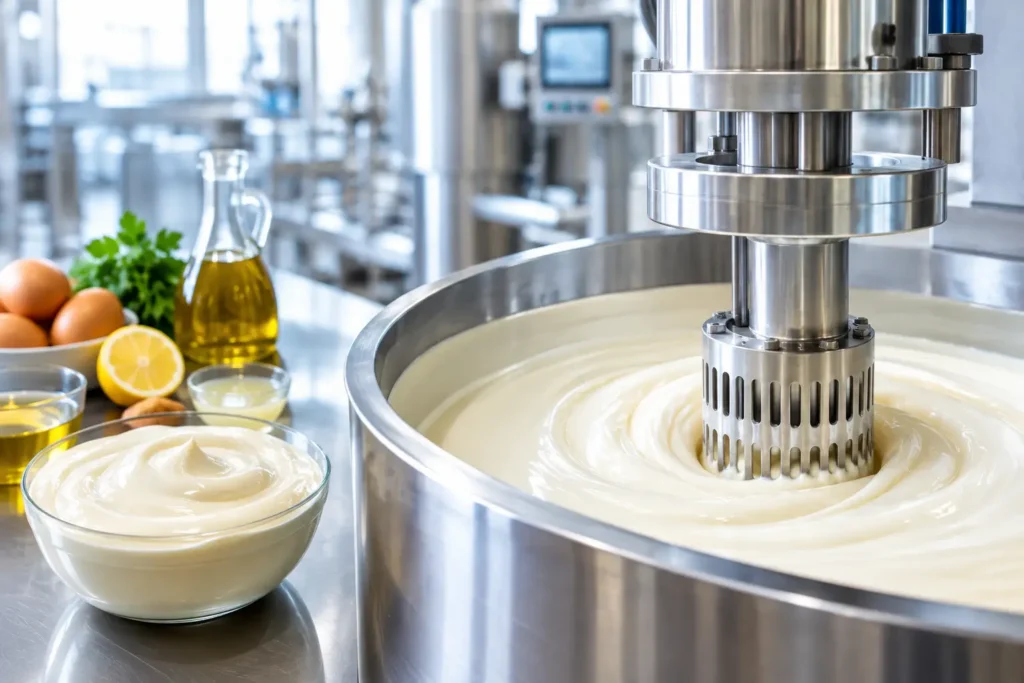
Vacuum emulsifying mixers are likely to become even more central to commercial sauce and condiment production. Air is a common but underestimated source of inconsistency. It can produce a lighter apparent density, interfere with accurate filling, increase oxidation exposure, and make texture look less uniform. In highly viscous products, trapped air can also be difficult to remove after the batch is complete.
Applying vacuum during processing helps reduce entrained air while supporting more controlled ingredient wetting and dispersion. For mayonnaise and creamy dressings, this can improve appearance, body, and filling performance. It can also support cleaner processing when powders are introduced into the liquid phase under conditions designed to limit dust and lumps.
Vacuum is not a cure for poor formulation or poor sequencing. If starch, gum, or protein powders are added too quickly or without sufficient wetting, the batch can still develop fisheyes and agglomerates. But when vacuum is combined with effective powder induction and homogenization, it provides a meaningful process advantage for manufacturers pursuing stable, premium-quality products.
The growth of low-fat, fat-free, plant-based, and clean-label products will keep pressure on powder-handling performance. These formulations often contain functional dry ingredients that determine body, suspension, water binding, and shelf stability. Getting them into the batch evenly is not a minor step. It is often the point where a process succeeds or fails.
Manual powder addition can be slow, dusty, labor-intensive, and difficult to standardize. It also increases the chance that an operator will add ingredients too rapidly or at the wrong stage. A properly engineered induction arrangement draws powders into the process stream under controlled conditions, promoting rapid wetting before agglomerates can form.
This capability matters especially for modified and native starches, xanthan gum, guar gum, milk powders, plant proteins, stabilizer blends, and seasoning systems. Each ingredient has different hydration behavior. Some require aggressive dispersion; others need gradual addition to avoid over-thickening or lump formation. Equipment selection must reflect the actual formula, not just a general viscosity range.
The next generation of emulsification systems will use more automation, but the value is not simply a touchscreen or a longer recipe list. Useful automation captures the process conditions that determine batch quality. It can manage addition timing, mixer speed, vacuum level, temperature profile, and hold time while giving the operator clear visibility into what is happening inside the vessel.
Recipe control is particularly valuable for manufacturers with multiple SKUs and several production shifts. It reduces variation between operators and makes approved process parameters easier to reproduce. For plants that serve private-label customers, it also supports better batch documentation and traceability.
The most productive systems will combine automation with practical operator access. Plant teams still need to inspect ingredients, respond to viscosity changes, verify sanitation, and make controlled adjustments when raw materials behave differently. Automation should reduce avoidable variation, not remove process understanding from the floor.
Data collection will also become more relevant. Tracking batch duration, energy use, vacuum performance, temperature history, and mixing parameters can reveal why one batch performs differently from another. Over time, this information helps manufacturers refine formulas, reduce rework, and plan maintenance before a production interruption occurs.
A processor buying equipment for a mayonnaise line should consider what else the system may need to produce. The same plant may later add ketchup, sandwich spreads, dipping sauces, cheese sauces, marinades, or cosmetic-style food emulsions. The practical question is not whether one mixer can make every conceivable product. It is whether the system has the range to support the company’s realistic growth plan.
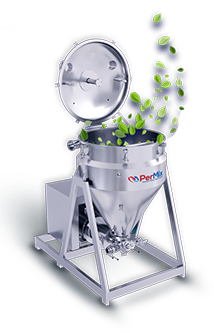
A Universal Vacuum Mixer Processor can be a strong fit where the production schedule includes varying viscosities, suspended solids, and demanding powder additions. A dedicated vacuum emulsifying mixer may be the better choice when the operation is focused on high-volume mayonnaise and similar emulsified products. There is no universal answer. Batch capacity, heat-transfer requirements, cleaning expectations, floor space, discharge method, and future product plans should guide the specification.
Scalability deserves the same attention. A process that works in a pilot vessel may not transfer directly to an industrial batch. Shear distribution, powder wetting time, heating and cooling rates, and pumping behavior all change as volume increases. Manufacturers should validate the process logic early, then select equipment that can maintain those conditions at commercial scale.
Food safety has always required sanitary construction, but the commercial value of hygienic design is expanding. Easier cleaning means faster turnaround between products, less water and chemical use, and lower risk of cross-contact between allergen-containing and allergen-free formulations. That matters when a plant is running egg-based mayonnaise alongside vegan alternatives.
Future-focused systems should be evaluated for clean-in-place compatibility, drainage, surface finish, seal design, accessible components, and the ability to avoid product hold-up points. A difficult-to-clean machine can erase the productivity gains promised by fast mixing. The best system is one that produces a stable emulsion and returns quickly to a validated sanitary condition.
Equipment decisions should not be based only on purchase price or nominal batch capacity. The real comparison includes labor requirements, rejected batches, changeover time, ingredient losses, cleaning time, utility demand, maintenance access, and the revenue opportunity created by new product formats.
For many processors, the strongest business case comes from avoiding recurring production problems. A system that prevents powder lumps, reduces air entrapment, and produces consistent viscosity can protect margins every day. It can also give R&D teams more confidence to commercialize challenging low-fat or vegan formulas without creating an unstable, operator-sensitive process.
PerMix approaches these projects as process applications, matching vacuum emulsification, powder induction, and mixing performance to the product and production target. The most useful next step is to define the formulations, batch volumes, ingredient-addition challenges, and quality requirements before selecting machinery. That preparation turns equipment from a capital expense into a controlled production advantage.

Get in touch with us today and learn how to we can help your business.