PerMix Mayonnaise Production
PerMix News
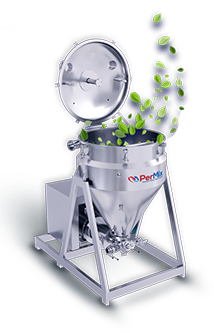


A dressing line rarely loses capacity because of one dramatic equipment failure. More often, production time disappears in small, repeatable losses: powders that take too long to wet out, a batch held for texture correction, an emulsion that needs rework, or a changeover that exceeds its planned window. Effective dressings line efficiency improvement starts by identifying these losses as process constraints, not isolated operator issues.
For manufacturers of mayonnaise, salad dressings, sandwich spreads, and sauces, higher throughput must not come at the expense of viscosity, emulsion stability, flavor distribution, or sanitary control. The strongest results come from aligning formulation, mixing technology, material handling, and operating procedures around the actual behavior of the product.
Rated mixer capacity is not the same as productive line capacity. A 1,000-gallon vessel may hold a 1,000-gallon batch, but the line’s real output depends on how much time is spent loading ingredients, dispersing powders, mixing, transferring, cleaning, and waiting for downstream filling equipment.
Track total cycle time from the start of one batch to the start of the next. Then separate productive mixing time from nonproductive time. Plants often find that the largest opportunity is not reducing a 20-minute emulsification step to 18 minutes. It is eliminating 15 minutes of manual powder addition, correcting a recurring viscosity issue, or coordinating transfer with the filler.
The most useful measures are batch cycle time, first-pass quality rate, pounds or gallons produced per labor hour, changeover duration, and downtime by cause. Data should be recorded by product family, not only as a line average. A full-fat ranch dressing and a low-fat creamy dressing can place very different demands on the same process.
Dry ingredient addition is one of the most common bottlenecks in dressings production. Starches, gums, proteins, salt, sugar, spices, and stabilizer blends can form fish eyes, float on the surface, or create lumps when added through an open vessel. Operators compensate by slowing addition, extending mix time, or screening the batch after processing.
A properly designed vacuum powder induction system pulls dry ingredients directly into the liquid phase under controlled conditions. This reduces airborne dust, limits operator handling, and improves wetting before powders have an opportunity to agglomerate. It is particularly valuable for difficult hydrocolloids and starch systems used in low-fat, fat-free, and vegan dressings.
The objective is not simply to add powder faster. The objective is to add it at a rate the liquid phase and mixing system can absorb. If induction outpaces dispersion, the plant may produce a batch quickly only to lose that time to rework. The correct feed rate depends on powder bulk density, formulation order, liquid temperature, recirculation flow, and the available shear energy.
Dressings require controlled emulsification, not maximum shear at every stage. Oil droplet size, stabilizer hydration, viscosity development, and aeration control all affect the finished product. Too little shear can leave an unstable emulsion or coarse texture. Too much shear can alter viscosity, create excess heat, or damage texture-sensitive ingredients.
A vacuum emulsifying mixer gives processors greater control because it combines agitation, high-shear homogenization, vacuum operation, and product circulation in one closed system. Under vacuum, entrained air can be removed during processing rather than becoming a source of foaming, oxidation, inaccurate filling weights, and visual defects.
For oil-in-water dressings, the oil addition profile also matters. Adding oil too quickly can overload the emulsification zone and increase the risk of breaking. A controlled oil feed, paired with consistent rotor-stator performance, supports a finer and more stable emulsion. This can reduce the need for extended finishing time and minimize batch-to-batch variation.
Many line inefficiencies are created before the mixer starts. When operators rely on memory or local workarounds, ingredient sequence can vary by shift. A small change in when salt, acid, starch, gum, or oil is introduced can change hydration behavior and finished viscosity.
Each dressing formula should have a validated process instruction that defines addition order, mixing speed, vacuum level, temperature range, hold time, and acceptance criteria. The instruction must be specific enough to prevent variation but practical enough for production personnel to follow under normal plant conditions.
This is especially critical when the plant runs multiple product types. A process optimized for a standard oil-based dressing may not transfer directly to a fat-free formulation with higher levels of modified starch and gums. Vegan dressings may require different hydration and emulsification conditions because plant proteins and alternative oils behave differently from egg-based systems.
Fast changeovers are valuable only when they preserve allergen control, food safety, and product integrity. The wrong approach is to shorten cleaning by skipping verification steps. The better approach is to design the line so it is easier to clean correctly and faster to return to production.
Closed vacuum processing systems reduce exposed product surfaces and can simplify cleaning compared with open mixing arrangements. Smooth internal surfaces, sanitary valves, cleanable powder induction paths, and properly designed CIP circuits all affect how long a changeover takes. Dead legs, difficult-to-access fittings, and retained product zones create both sanitation risk and avoidable downtime.
Production scheduling also has a major effect. Grouping products by allergen profile, color, flavor intensity, and viscosity can reduce the cleaning burden between runs. A light-colored vinaigrette followed by a dark, spice-heavy dressing may be operationally efficient. Reversing that sequence may require a longer wash and inspection. The best schedule depends on the facility’s allergen controls and customer commitments, but it should be built around cleaning realities rather than sales order alone.
Rework is one of the most expensive forms of hidden capacity loss. It consumes ingredients, labor, mixer time, quality resources, and sometimes packaging capacity. More significantly, it makes production scheduling unreliable.
The right in-process checks depend on the product, but most dressings operations benefit from monitoring temperature, vacuum level, viscosity, pH, appearance, and emulsion stability at defined points in the batch. These checks should occur early enough to correct a trend before the batch reaches final volume or transfer.
For example, a rising viscosity trend during powder hydration may indicate that a gum addition rate is too aggressive or that liquid temperature is outside the validated range. Detecting it immediately allows the team to adjust processing conditions. Discovering it after filling preparation creates a larger correction problem.
Automation can help by recording critical setpoints and alarm conditions, but automated controls do not replace process understanding. Operators need to know what a normal batch looks and sounds like, and when a deviation requires intervention rather than more mixing time.
A mixer that is technically capable of producing a dressing may still be the wrong system for a plant’s commercial goals. Equipment selection should consider annual volume, desired batch size, product viscosity range, powder loading, oil addition requirements, utility availability, cleaning needs, and future SKU expansion.
Undersized equipment creates long cycle times and excessive batches per shift. Oversized equipment can create poor mixing performance at low fill levels, higher capital cost, and unnecessary utility demand. The ideal design supports consistent performance across the expected operating range.
Manufacturers should also evaluate the full process path. A high-performance mixer cannot solve a bottleneck caused by slow ingredient staging, an undersized transfer pump, a restricted filter, or a filler that cannot accept product at the mixer discharge rate. Dressings line efficiency improvement is a system-level project.
The most reliable way to increase output is to make every batch predictable. When powders hydrate consistently, emulsions form under controlled shear, vacuum removes air, and cleaning is designed into the equipment, the line spends more time producing saleable product and less time recovering from variation.
PerMix designs vacuum emulsification systems around these operating realities, including demanding dressing formulations that require dependable powder induction and controlled processing. The next productive improvement is usually visible in the batch data: find the recurring delay, determine its process cause, and remove it with equipment and procedures built for the formulation.

Get in touch with us today and learn how to we can help your business.