PerMix Mayonnaise Production
PerMix News

A mayonnaise line usually looks efficient right up to the moment the emulsion breaks, powder fisheyes show up in the tank, or the finished product drifts from the target viscosity by the end of the shift. That is where a real commercial mayonnaise processing guide matters – not as a generic recipe document, but as a production framework for controlling texture, stability, throughput, and repeatability at scale.
For commercial producers, mayonnaise is not just oil, egg, and acid. It is a high-volume emulsified system where ingredient order, shear profile, vacuum level, powder incorporation, temperature, and cycle time all affect final product quality. A line that performs well in the lab can fail in production if the equipment is undersized, the mixing sequence is wrong, or aeration is not controlled. The processing target is simple: a stable emulsion with consistent particle distribution, correct viscosity, clean flavor release, and efficient batch turnover.
Commercial mayonnaise processing is often treated as a mixing task. In practice, it is an emulsion engineering task. The process has to disperse water-phase ingredients, hydrate gums or starches where needed, incorporate oil under controlled shear, and remove entrained air that would otherwise affect appearance, density, and shelf life.
That becomes more demanding as formulations diversify. Full-fat mayonnaise behaves differently from low-fat systems. Fat-free products rely more heavily on starches, hydrocolloids, and functional texturizers. Vegan mayonnaise removes egg yolk from the equation and replaces a familiar emulsification mechanism with one that can be less forgiving. Each of these products can be made on commercial equipment, but they do not respond to the same process window.
This is why equipment selection and process design should be tied directly to the product family. A plant producing only standard mayonnaise may prioritize high-output oil incorporation and fast batch cycles. A manufacturer running multiple SKUs across low-fat, vegan, and dressing-style products needs broader mixing flexibility, stronger powder induction, and tighter batch control.
Ingredient quality still matters, but processing discipline matters just as much. Most commercial mayonnaise problems begin before the main emulsification step. If powders are added poorly, they do not fully wet out. If liquid ingredients are charged in the wrong order, pH and hydration can shift. If oil addition is too aggressive early in the cycle, the emulsion can destabilize before it is properly formed.
The water phase generally needs to be built first with close attention to dispersion. Salt, sugar, preservatives, acids, starches, gums, proteins, and flavor ingredients all have different dissolution and hydration behavior. Some dry ingredients disperse cleanly under strong circulation. Others agglomerate quickly and need vacuum-assisted powder induction or immediate high-shear exposure to prevent lumping.
For operations using modified starches or hydrocolloids, the difference between acceptable and poor texture often comes down to the first few minutes of powder incorporation. Inconsistent wetting creates localized over-hydration and under-hydration, which then shows up as graininess, poor body, or unstable viscosity. At commercial scale, that is not a minor adjustment. It affects yield, rework rates, and line efficiency.
Once the aqueous phase is properly prepared, oil addition becomes the defining stage. The goal is not simply to get the oil into the vessel. The goal is to create a stable droplet distribution that supports the target texture without overprocessing the batch.
This is where high-shear emulsification under vacuum offers a clear processing advantage. Controlled shear reduces droplet size and improves consistency. Vacuum reduces air entrainment, which is especially important in mayonnaise because trapped air can create a pale appearance, reduce fill accuracy, and interfere with a dense, smooth mouthfeel. A well-designed vacuum emulsifying mixer also improves ingredient transfer and cleaning performance compared with improvised open-tank systems.
Oil addition rate has to match the system’s ability to emulsify. Add it too slowly and cycle times become inefficient. Add it too quickly and the emulsion can invert, break, or show weak stability over time. The right rate depends on formulation viscosity, emulsifier system, rotor-stator performance, vessel geometry, and batch size.
Temperature also needs attention. Mayonnaise is not usually a high-temperature process, but frictional heat from high shear can shift product behavior. Some formulations thicken as the process develops, which changes shear efficiency across the batch. Others are temperature-sensitive enough that a narrow process band is required to protect viscosity and flavor. That is why jacketed vessels and repeatable process controls matter in serious production environments.
In commercial mayonnaise plants, powders are often the hidden bottleneck. Starches, gums, proteins, stabilizers, and seasoning blends can slow a batch more than oil does if they are not introduced efficiently. Manual addition into an open vortex may work in pilot runs, but it usually becomes inconsistent and labor-intensive at production scale.
A proper powder induction system shortens batch times and improves uniformity by pulling powders directly into the liquid stream. It reduces dust, minimizes floating powder rafts, and improves hydration. Under vacuum, the system can also help eliminate trapped air that would otherwise remain in the product and affect appearance or filling performance.
For manufacturers producing low-fat or fat-free mayonnaise, this is especially important. These systems depend on precise texturizer performance to replace the body that oil naturally provides. If starches or hydrocolloids are not dispersed correctly, no downstream adjustment will fully recover the intended texture. The process has to get the foundation right the first time.
A formulation that looks excellent in a benchtop mixer can behave very differently in a 500-gallon or 1,000-gallon system. The reason is straightforward: scale changes shear exposure, circulation patterns, residence time, powder wetting behavior, and oil addition dynamics.
That is why a commercial mayonnaise processing guide has to account for scale-up logic, not just product composition. If the mixer is too small for the plant’s output target, operators may push oil addition too fast to recover time. If the vessel geometry does not support proper turnover, dead zones can develop. If the homogenizing head is not matched to viscosity and batch volume, the process may produce inconsistent droplet size from one run to the next.
Commercial equipment should be sized around more than nominal batch capacity. It should be sized around formulation range, target viscosity, desired cycle time, utility availability, cleaning method, and expected future SKU expansion. A plant that plans to add vegan mayonnaise or heavy dressings later should factor that into equipment selection early, not after the line is installed.
Batch consistency does not come from operator experience alone. It comes from a process that is engineered to repeat. In mayonnaise manufacturing, a few control points carry most of the quality burden: ingredient sequencing, vacuum performance, oil addition rate, mixing intensity, temperature, and endpoint verification.
Endpoint verification is often overlooked. Some plants rely only on time, but time is not a universal indicator of finished quality. A better approach tracks viscosity, batch appearance, density, and where relevant, droplet structure and pH. If a formulation uses sensitive stabilizers or acid systems, small deviations can create delayed instability that is not obvious at discharge.
Sanitary design belongs in this discussion as well. A high-performance mixer that is difficult to clean will eventually create production risk. Commercial mayonnaise systems need hygienic construction, reliable seals, predictable CIP performance, and surfaces designed to reduce product hold-up. Sanitation is not separate from performance. It is part of performance.
The strongest processing results usually come from a system approach rather than a standalone mixer purchase. For mayonnaise, that means aligning the vessel, emulsifying head, vacuum system, powder induction method, transfer setup, and controls with the product requirements.
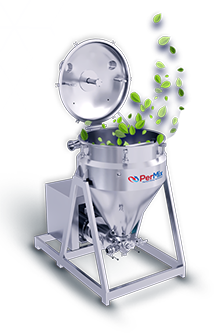
A PVC Vacuum Emulsifying Mixer or Universal Vacuum Mixer Processor is typically chosen because it addresses the problems that matter most in commercial production: stable emulsification, fast and clean powder incorporation, reduced aeration, repeatable texture, and better scalability across multiple formulas. For manufacturers balancing standard mayonnaise with low-fat, fat-free, or vegan variants, that flexibility is commercially valuable. It reduces the gap between R&D success and plant-floor reality.
The right processing setup does more than make mayonnaise. It protects throughput, reduces waste, improves product uniformity, and gives operations teams a wider working window when formulations become more demanding.
If your production target is consistent mayonnaise at commercial scale, the best next step is not chasing a more aggressive recipe adjustment. It is making sure the process and the equipment are doing the heavy lifting they should.

Get in touch with us today and learn how to we can help your business.