PerMix Mayonnaise Production
PerMix News
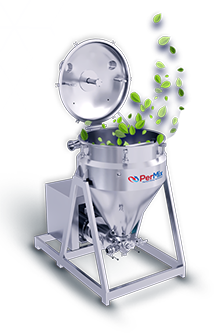


A condiment line rarely fails because a recipe looks wrong on paper. It fails when oil enters too quickly, starch forms fish-eyes, air becomes trapped in the batch, or a pilot-scale process cannot hold texture at production volume. Commercial condiment mixing systems must control those variables at the same time. For manufacturers of mayonnaise, dressings, ketchup, and sauces, the mixer is not simply a vessel with an agitator. It is the center of product quality, batch repeatability, and profitable throughput.
A capable production system has to perform several jobs in a controlled sequence: hydrate powders, disperse gums and starches, emulsify oil and water phases, remove entrained air, manage temperature, and move the finished product without damaging its texture. The required balance changes by formulation.
A full-fat mayonnaise needs dependable droplet-size reduction and controlled oil incorporation to build a stable emulsion. A low-fat or fat-free mayonnaise often requires more demanding powder hydration and hydrocolloid dispersion because the formulation has less oil to support body and mouthfeel. Vegan mayonnaise may introduce plant proteins, modified starches, and other functional ingredients that respond poorly to weak shear or incomplete wetting.
Ketchup and barbecue sauces present a different challenge. Tomato solids, sugar, spices, vinegar, starches, and gums need even dispersion without scorching or localized overprocessing. A system that works well for a thin vinaigrette may not provide the shear, vacuum capability, or powder handling needed for a thick, high-solids sauce.
This is why equipment selection should begin with the product family and production target, not with tank volume alone.
For many emulsified and viscous condiments, the most effective configuration combines a jacketed vacuum vessel, an anchor-style agitator, a high-shear emulsifying head, and a powder induction method. Each element solves a specific process problem.
An anchor agitator sweeps the vessel wall, continuously returning material from the perimeter to the batch. This is especially valuable with viscous mayonnaise, dressings, and cooked sauces, where stagnant zones can create uneven temperature, poor ingredient distribution, or product buildup on the vessel surface.
Wall scraping also improves the value of the vessel jacket. Heating or cooling is only useful when the product is moving across the heat-transfer surface. For thermal steps such as starch cooking, pasteurization support, or controlled cooling before filling, effective agitation helps maintain a uniform batch condition.
A high-shear rotor-stator emulsifier creates the localized energy needed to break down dispersed oil droplets and distribute functional ingredients. In mayonnaise processing, this action supports a fine, stable emulsion with consistent appearance, viscosity, and mouthfeel.
More shear is not automatically better. Excessive shear can affect sensitive ingredients, alter a target texture, or introduce process inefficiency if the formulation does not require it. The objective is sufficient, repeatable shear at the right stage of the batch. A properly sized emulsifying head should match product viscosity, batch size, oil phase volume, and required production time.
Vacuum processing is a practical advantage in condiment production, particularly for products where appearance, density, and filling performance matter. Air can enter during powder addition, agitation, recirculation, and transfer. Once trapped in a viscous batch, it is difficult to remove with conventional mixing.
A vacuum emulsifying mixer reduces entrained air during processing. The result can be a smoother product appearance, more consistent density, improved filling accuracy, and reduced oxidation exposure. Vacuum can also support lower-temperature processing conditions when the recipe and process require it.
The trade-off is that vacuum systems demand correct vessel design, reliable seals, proper operator controls, and a production process built around the vacuum step. It should be selected because it solves a defined product or operational need, not because it is a feature on a specification sheet.
Many difficult condiment batches begin with a powder addition problem. Dry starches, gums, proteins, stabilizers, salt, sugar, and seasoning blends can form lumps when they contact liquid too quickly. Powder may float on the surface, cling to the vessel wall, or hydrate unevenly before the mixer can distribute it.
Adding powders manually through an open manway may be acceptable for early development batches, but it becomes less dependable as batch size and viscosity increase. It can create dust, extend cycle time, and introduce operator-to-operator variation. More critically, it may leave undispersed particles that appear later as graininess, viscosity drift, or emulsion instability.
A powder induction system draws dry ingredients directly into the liquid stream under controlled conditions. Properly applied, it improves wetting, reduces agglomeration, and shortens the time required to achieve a uniform batch. It is particularly useful for starch-heavy reduced-fat dressings, vegan mayonnaise formulations, and sauces that depend on hydrocolloid systems for structure.
The equipment alone does not eliminate formulation discipline. Powders still need to be added in the right order, at the correct temperature and liquid ratio, with enough time for hydration. Some ingredients benefit from preblending; others should be introduced separately to prevent premature thickening. The best system supports that process rather than forcing every ingredient through one addition method.
A formulation that succeeds in a 50-gallon pilot batch can behave differently at 500 or 2,000 gallons. The ratio of product volume to mixing energy changes. Powder addition takes longer. Heat transfer behaves differently. Oil addition rates that produced a stable small batch may cause a large batch to break or become inconsistent.
Successful scale-up starts by documenting the actual process, not only the ingredient list. Manufacturers should capture the order of addition, temperatures, vacuum level, agitation speed, emulsifier speed, oil feed rate, hydration times, and final viscosity range. These operating conditions become the foundation for equipment sizing and process validation.
Batch turnover is equally important. A large vessel is not always the most productive option if it requires long mix times, difficult cleaning, or extended changeovers. A smaller system with faster cycles may deliver better daily output for a co-packer or regional brand running multiple SKUs. Conversely, high-volume manufacturers may benefit from larger batches, automated ingredient handling, and integrated transfer equipment.
The right answer depends on annual volume, batch frequency, SKU complexity, available utilities, cleaning requirements, and future expansion plans. Equipment should fit the production schedule as well as the recipe.
Condiment manufacturers need a system designed for cleanability from the start. Product-contact surfaces should be suitable for food processing, with sanitary welds, accessible inspection points, appropriate seals, and a layout that supports effective cleaning-in-place procedures when required.
Dead zones are costly. They can retain product, complicate allergen changeovers, increase cleaning labor, and create avoidable quality risk. This matters particularly for plants producing conventional and egg-free mayonnaise, allergen-sensitive dressings, or multiple flavors on shared equipment.
Transfer design also deserves attention. Long lines, undersized pumps, or poor valve selection can slow production and leave excessive product in the system. Viscous products need transfer equipment sized for their actual rheology, not their water-like ingredients. A well-designed discharge path helps preserve batch yield and keeps filling operations supplied consistently.
The most useful equipment discussion begins with a clear production profile. Define the products being made today, then identify the formulations and volumes expected over the next several years. A system for standard mayonnaise may need different shear, powder induction, and temperature control capabilities than one intended for starch-based ketchup or a broad line of vegan dressings.
Ask practical questions during evaluation. Can the mixer produce the required viscosity without excessive cycle time? Can it disperse the hardest powder in the formula? How will oil be metered into the emulsion? Is vacuum needed for product quality or filling performance? Can the system be cleaned efficiently between product families? What utility load, floor space, and operator involvement will it require?
PerMix applies this application-first approach through vacuum emulsifying mixer configurations designed around actual formulations and production requirements. The goal is not generic mixing capacity. It is a repeatable process for making stable, commercially consistent condiments.
A commercial condiment operation earns reliability through controlled repetition. The right mixing system gives operators the tools to hydrate powders correctly, build stable emulsions, manage air, control temperature, and move product efficiently from batch to filling.
Before committing to equipment, run the difficult formula through the proposed process conditions. The batch that contains the highest powder load, the most demanding oil phase, or the tightest texture specification will reveal what the system must truly do. Designing around that batch creates room for growth without compromising the products customers buy again and again.

Get in touch with us today and learn how to we can help your business.