PerMix Mayonnaise Production
PerMix News
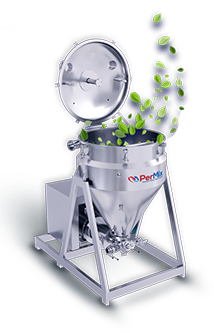

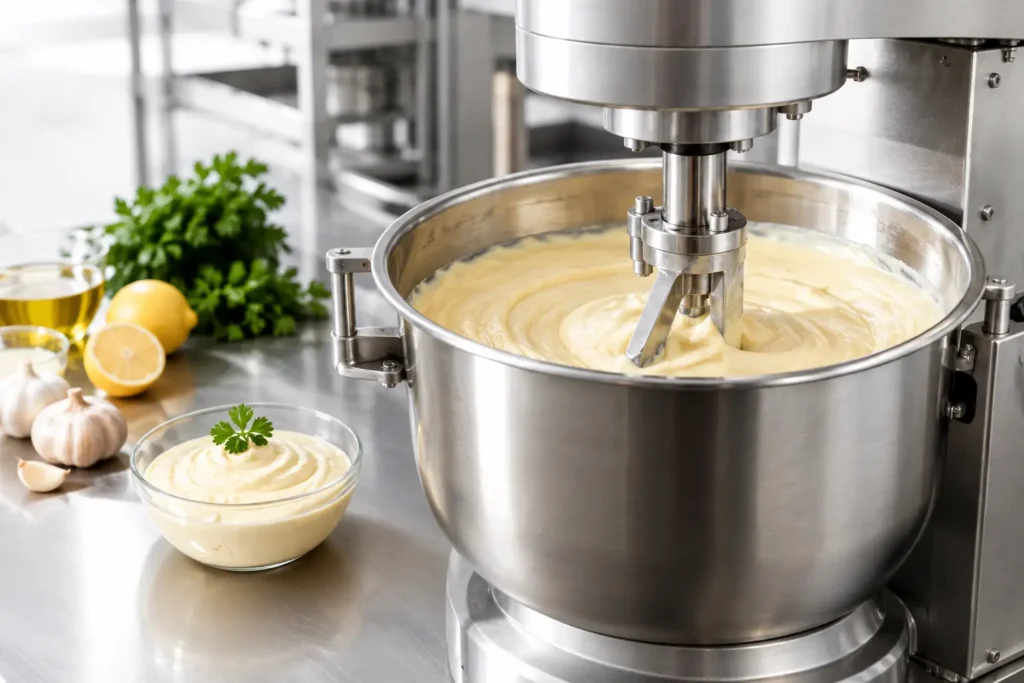
Aioli can look simple on a formula sheet: oil, egg or egg alternative, garlic, acid, salt, and seasoning. On a production floor, it is a high-value oil-in-water emulsion that exposes every weakness in ingredient addition, shear control, and batch repeatability. The best mixers for aioli production are not defined by horsepower alone. They must create a fine, stable droplet structure while handling viscous product, incorporating powders cleanly, and protecting flavor, color, and texture from batch to batch.
For commercial processors, the right choice depends on production volume, recipe complexity, target viscosity, and whether the line must also produce mayonnaise, dressings, or other sauces. A mixer that works for a straightforward full-fat garlic aioli may not provide the dispersion or vacuum control required for a low-fat, egg-free, or starch-stabilized product.
Aioli production requires controlled emulsification, not simply agitation. Oil must be introduced into the continuous water phase at a rate the system can emulsify. At the same time, the mixer needs enough shear to reduce oil droplet size and distribute garlic, salt, acids, gums, starches, and spices without leaving particles, fisheyes, or unhydrated powder pockets.
The process becomes more demanding as oil content falls or formulation complexity increases. Traditional high-oil aioli gets much of its body from the dispersed oil phase. Reduced-fat products often rely more heavily on starches, hydrocolloids, proteins, or fibers. These ingredients require strong powder wetting and reliable hydration. Vegan aioli adds another variable: plant proteins and alternative emulsifiers can be less forgiving than egg yolk when processing conditions drift.
The mixer also must manage air. Entrained air can lighten the apparent density, create an undesirable whipped appearance, interfere with filling weights, and shorten shelf-life performance. For products intended for retail packaging or foodservice distribution, air removal is a process requirement, not a cosmetic improvement.
For most commercial aioli operations, a vacuum emulsifying mixer is the strongest all-around choice. This system combines an anchor or sweep agitator for bulk movement with a high-shear rotor-stator homogenizer for emulsification. The sweep keeps viscous product moving across the vessel wall, while the homogenizer creates the localized shear needed for fine oil dispersion.
Vacuum operation is a major advantage. It helps remove entrapped air during processing, supports smoother product appearance, and improves filling consistency. It can also assist with vacuum powder charging, reducing dust and improving incorporation of salt, sugar, starch, stabilizers, and seasoning blends.
This configuration is particularly effective for processors making multiple aioli styles on one platform. A properly sized vacuum emulsifying mixer can support standard garlic aioli, flavored varieties, chipotle or herb formulations, low-fat products, and vegan lines with recipe-specific process adjustments. It is the preferred solution when quality consistency and product flexibility matter as much as throughput.
A universal vacuum mixer processor is often the better fit when aioli production includes difficult powders, heat-sensitive ingredients, or multiple process stages. These systems are designed to mix, disperse, emulsify, heat, cool, and deaerate in one enclosed vessel.
This matters when the recipe contains modified starches, thickening systems, plant proteins, or dry flavor components that must be fully hydrated before oil addition. Instead of transferring partially processed material between separate tanks, the manufacturer can manage the process in a controlled batch environment. Fewer transfers can mean less product loss, lower contamination risk, and tighter repeatability.
For R&D groups and co-manufacturers, this versatility has commercial value. One machine can support pilot work, recipe validation, customer trials, and production of several condiment categories. The trade-off is that universal systems should be specified carefully. A system built for broad flexibility still needs the correct homogenizer design, agitator geometry, vessel capacity, and powder induction method for the planned aioli range.
Inline high-shear mixers can be effective in continuous or recirculation-based aioli production. Product is pumped through a rotor-stator mixing head, where intense mechanical shear breaks down droplets and disperses ingredients. These units are commonly used to supplement a batch tank, refine an emulsion after initial mixing, or support larger production lines.
Their strength is throughput and process consistency in a defined operating window. Once flow rate, oil feed rate, recirculation time, and shear conditions are established, an inline system can deliver highly repeatable results. They are especially useful when a plant has standardized formulas and needs to increase capacity without relying on longer batch times.
However, inline shear alone is rarely the complete answer for aioli. It does not replace effective vessel agitation, controlled powder addition, or vacuum deaeration. High-viscosity products may also require careful pump and piping design. An inline mixer performs best as part of an integrated process system rather than as an isolated piece of equipment.
A batch tank with a basic agitator may be suitable for small-volume aioli production, limited menus, or early-stage product development. This option has a lower initial equipment cost and may be adequate for formulas with moderate viscosity and few challenging dry ingredients.
Its limitations appear quickly when production grows. Basic agitation may not create enough shear for a fine, stable emulsion. Oil droplets can remain too large, causing a less smooth mouthfeel and increased risk of separation. Powders can float, clump, or collect at the vessel wall. Without vacuum capability, air control becomes more difficult.
For a small processor producing fresh, short-run aioli, this may be a sensible starting point. For a manufacturer supplying retailers, restaurant chains, or export markets, it is usually a temporary solution rather than the best long-term production platform.
More shear is not always better. The objective is to achieve the droplet size, viscosity, gloss, and stability required by the finished product without overprocessing the formulation. Excessive shear can raise product temperature, affect delicate flavors, and change the structure of some stabilizer systems.
The right approach is controlled high shear supported by efficient low-speed agitation. The high-shear homogenizer develops the emulsion. The anchor agitator prevents dead zones and ensures uniform circulation through the vessel. In viscous aioli, wall scraping is also valuable because it improves heat transfer and prevents product buildup.
Processing temperature must be considered with shear selection. If the batch warms during emulsification, the oil phase and water phase may behave differently than they do at the target filling temperature. Equipment with jacketed heating and cooling gives operators more control, particularly when producing starch-thickened or pasteurized formulations.
Dry ingredient handling often separates a reliable aioli process from a troublesome one. Garlic powder, seasoning blends, salt, sugar, starch, gums, and plant proteins may all be included in the formula. If they are added slowly through an open manway, operators may face dusting, inconsistent addition times, and powder lumps that do not break down fully.
A vacuum powder induction system draws ingredients directly into the batch under controlled conditions. This improves wetting, reduces airborne material, and helps standardize the sequence of addition. It is particularly valuable for low-fat and vegan aioli, where functional powders have a greater influence on viscosity and emulsion stability.
The key is not simply adding powders faster. Ingredients need to enter at a point where they encounter sufficient liquid movement and shear. The equipment design should support the actual powder load, not a theoretical maximum. A mixer that handles salt well may still struggle with high levels of modified starch or pea protein unless its induction and dispersion system is correctly engineered.
Aioli manufacturers often run several flavored SKUs, allergen-controlled recipes, and seasonal products. Equipment must therefore be designed for cleaning as well as mixing performance. Sanitary construction, smooth internal surfaces, properly designed valves, and clean-in-place capability reduce downtime and support food safety programs.
Changeover time has direct financial impact. If a plant runs garlic aioli in the morning and lemon-herb vegan aioli in the afternoon, trapped product in piping, pump housings, or vessel fittings creates both waste and flavor carryover risk. Specify the entire process path, including transfer pumps, hoses or hard piping, inline devices, and filling connections.
Do not size equipment only around the current batch volume. Consider the target annual output, the number of SKUs, expected growth, batch cycle time, cleaning time, and the maximum viscosity your line will produce. A 500-gallon vessel that is theoretically large enough may become a bottleneck if long emulsification, powder hydration, heating, cooling, and cleaning cycles limit daily batches.
Also evaluate the practical working volume. Aioli needs room for agitation and, where applicable, vacuum operation. Running a vessel too close to its maximum capacity can reduce mixing efficiency and increase the chance of product carryover into vacuum lines.
PerMix engineers aioli and mayonnaise systems around the formulation and operating target, not a one-size-fits-all mixer category. The right configuration should match oil phase addition, viscosity range, powder loading, temperature control, sanitation requirements, and expansion plans.
A well-chosen mixer does more than prevent broken batches. It gives operators a repeatable process window, gives R&D confidence when reformulating, and gives the business a product that looks, fills, and performs the same every time it reaches the customer.

Get in touch with us today and learn how to we can help your business.