PerMix Mayonnaise Production
PerMix News
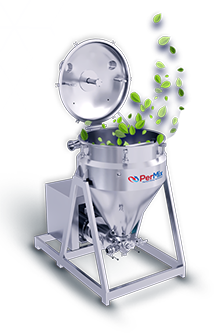

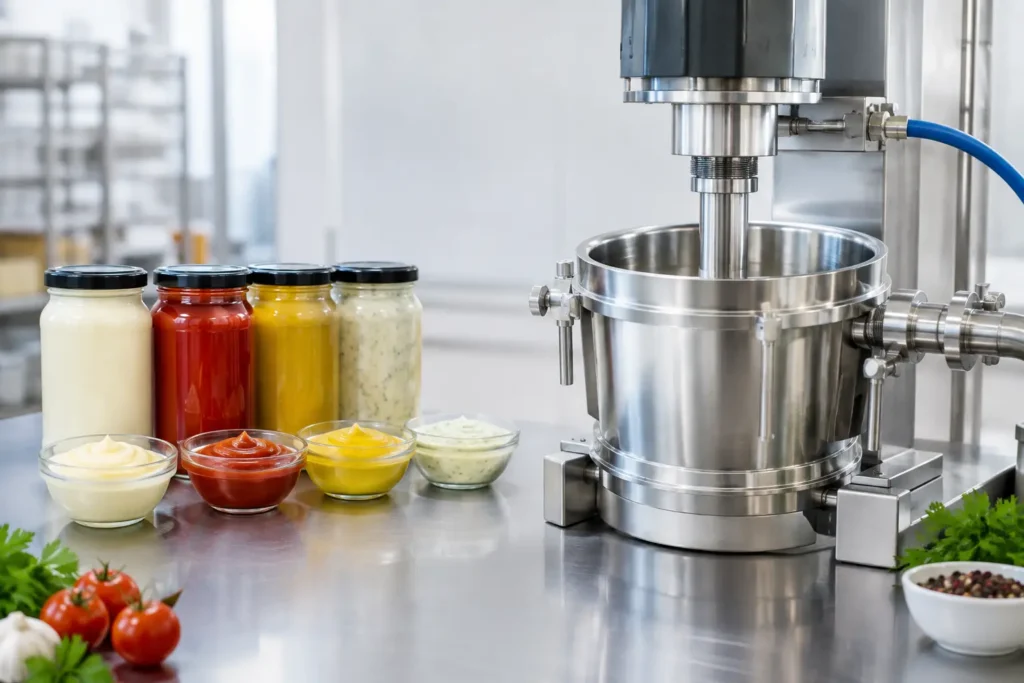
A condiment line can look efficient until the first broken mayonnaise emulsion, fisheyes in a starch-thickened ketchup, or air-filled dressing reaches the filler. The best condiment homogenizers are not selected by motor size alone. They are selected around the formula, viscosity curve, powder loading method, required particle reduction, batch volume, and the level of process control needed to deliver repeatable product.
For manufacturers producing mayonnaise, ketchup, dressings, sauces, and plant-based emulsions, homogenization is a critical production step. It determines whether oil is dispersed into a fine, stable phase; whether hydrocolloids hydrate without lumps; whether the finished product has the intended body and gloss; and whether it remains consistent through filling, warehousing, and distribution.
A useful condiment homogenizer must create enough localized shear to break down droplets and disperse ingredients, while moving the full batch through the high-shear zone efficiently. That distinction matters. High speed without effective circulation can leave untreated pockets in the vessel, especially in thick products or batches containing dry powders.
For most commercial condiment applications, the strongest solution is an integrated batch system combining an anchor agitator with a high-shear rotor-stator homogenizer. The anchor continuously sweeps the vessel wall and pushes high-viscosity material through the batch. The homogenizer produces the intense mechanical action needed for emulsification, dispersion, and particle size reduction.
The result is not simply a smoother product. Properly controlled homogenization supports emulsion stability, batch-to-batch texture, predictable viscosity, and faster downstream filling. It also reduces rework caused by oil separation, visible powder agglomerates, inconsistent color, or an overly aerated finished product.
Mayonnaise requires fine oil droplet distribution and controlled emulsification. A conventional full-fat mayonnaise may process very differently from low-fat or fat-free mayonnaise, where starches, gums, proteins, and water-phase structure carry more of the texture burden. Vegan mayonnaise introduces another set of variables, including protein source, oil ratio, acidity, and emulsifier behavior.
Ketchup and barbecue sauces often place greater demand on dispersion, viscosity management, and powder incorporation. Tomato solids, sugar, salt, starch, spices, and thickeners can create a dense process environment. A homogenizer must handle those loads without creating unmixed zones, damaging the target texture, or pulling unnecessary air into the batch.
More shear is not automatically better. Excessive processing can alter texture, heat-sensitive ingredients, or the appearance of particulate products. The right system provides enough adjustable shear to achieve the required result without treating every formulation as if it were the same.
There is no single machine category that is best for every condiment plant. The appropriate design depends on the production objective and the risk points in the formulation.
For mayonnaise, creamy dressings, aioli, sandwich spreads, and similar oil-in-water emulsions, a vacuum emulsifying mixer is often the most capable production platform. It combines controlled agitation, high-shear homogenization, vacuum processing, heating or cooling capability, and a closed sanitary vessel.
Vacuum helps remove entrained air created during mixing and powder addition. That can improve product density, surface appearance, filling consistency, and oxidation control. It is particularly valuable when a product must maintain a clean, glossy appearance in a clear package or when foam creates problems at the filler.
A well-designed vacuum emulsifying mixer also supports disciplined ingredient sequencing. The water phase can be prepared, powders can be dispersed under controlled conditions, oil can be introduced at the intended rate, and the batch can be finished under vacuum before discharge. This level of control is a major advantage when scaling an R&D formula into commercial production.
A bottom-entry rotor-stator homogenizer is highly effective when the process requires strong circulation through the vessel and the product becomes thick during production. Positioning the shear head at the bottom places it where dense material naturally accumulates and where the batch can be continuously drawn into the high-shear zone.
This configuration is especially relevant for starch-thickened dressings, heavy sauces, ketchup, and high-solids formulations. When paired with an anchor agitator, it helps prevent wall buildup and promotes uniform heat transfer. The practical benefit is more complete batch treatment, not simply a higher shear rating on a specification sheet.
Inline homogenizers are a strong choice for manufacturers operating recirculation loops or continuous processes. Product passes through a rotor-stator workhead in a controlled stream, allowing targeted treatment before it returns to a holding vessel or moves downstream.
They can be effective for liquid dressings, premixes, and processes where a defined number of passes is needed. However, an inline unit is not a replacement for proper vessel agitation in a thick batch. If powders are poorly wetted or material is stagnant in the tank, recirculation alone may not correct the underlying mixing problem.
Many condiment failures begin at powder addition. Dry starches, xanthan gum, modified food starch, milk powders, proteins, and seasoning blends can form agglomerates when dumped directly into a liquid surface. Once a lump is hydrated on the outside, it can become difficult to break apart later.
A powder induction system draws ingredients directly into a high-shear liquid stream. This improves wetting, reduces dust exposure, shortens addition time, and minimizes the risk of fisheyes. For plants making low-fat mayonnaise, fat-free dressings, or starch-forward sauces, powder induction capability may be more valuable than an incremental increase in homogenizer speed.
The most productive equipment discussions begin with process data. A supplier should understand more than final batch size. The critical questions include the starting and final viscosity, oil phase percentage, ingredient addition order, temperature profile, powder types, particulate content, desired throughput, and cleaning requirements.
Batch volume affects vessel geometry, agitator design, and homogenizer sizing. A homogenizer that performs well in a 50-gallon pilot vessel may not produce the same circulation pattern in a 1,000-gallon production vessel. Scale-up requires attention to tip speed, energy input, residence time in the shear zone, and the relationship between the workhead and the vessel volume.
Sanitary design deserves equal attention. Condiment equipment should be built for reliable cleaning, with appropriate surface finish, drainability, seals, valves, and CIP integration where required. A system that creates an excellent emulsion but adds excessive cleanup time or difficult maintenance is not an efficient production asset.
The first mistake is buying a generic high-speed mixer for an emulsification problem. A propeller may blend liquids effectively, but it does not necessarily create the controlled high shear required for stable mayonnaise or a lump-free hydrocolloid system.
The second is specifying equipment solely around current output. A plant may begin with one mayonnaise SKU, then add low-fat, vegan, or flavored variants. Equipment should be evaluated for its operating range, not just its performance on the easiest formula in the portfolio.
The third is treating vacuum as optional without evaluating the formulation and filling process. Not every product needs vacuum processing, but products prone to foaming, air entrapment, oxidation concerns, or density variation often benefit from it substantially.
Finally, do not separate machine selection from process development. A difficult formula can often be made stable with the right combination of shear, temperature, ingredient order, vacuum level, and addition rate. The machine is the platform, but the process is what creates the result.
The best investment starts with a representative product trial and a clear production target. Define what stable means for your product: oil separation limits, viscosity range, visual texture, fill weight consistency, shelf-life expectation, and acceptable batch cycle time. Then select the homogenizer configuration that can meet those standards repeatedly at scale.
PerMix designs vacuum emulsifying and universal vacuum mixer processing systems around these real production variables, including demanding mayonnaise, dressing, ketchup, and sauce applications. The most useful next step is to bring the actual formula challenge to the equipment discussion. A properly matched homogenization system turns formulation complexity into a controlled, repeatable manufacturing process.

Get in touch with us today and learn how to we can help your business.