PerMix Mayonnaise Production
PerMix News
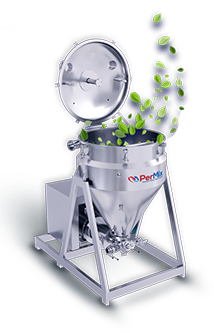

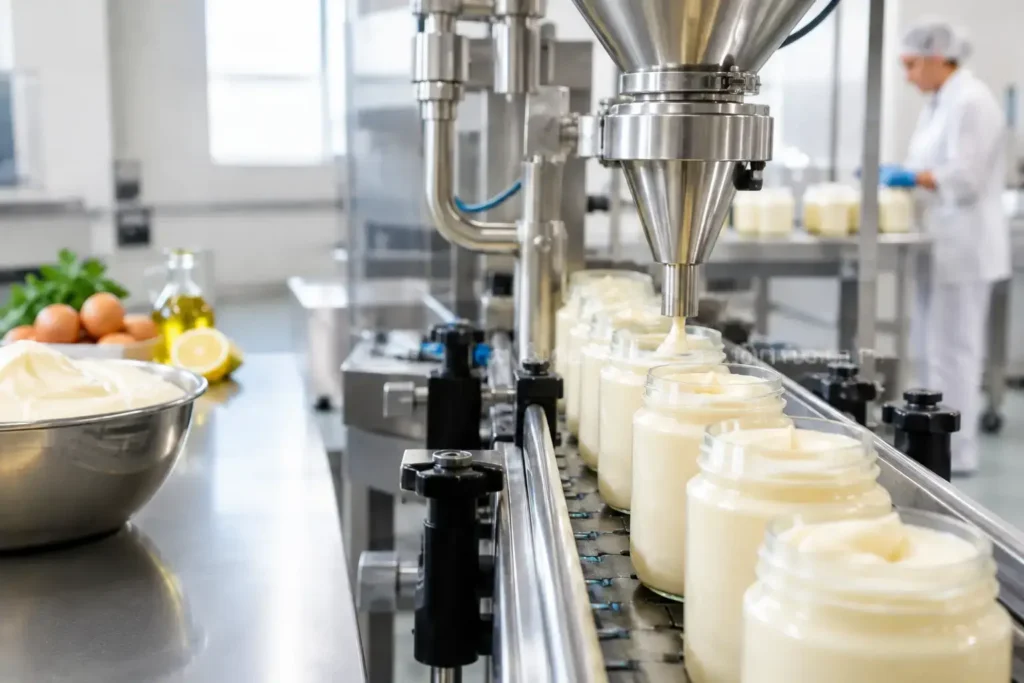
A credible mayonnaise startup line example starts with the product, not a mixer catalog. A plant making 500 gallons per batch of standard full-fat mayonnaise has different shear, vacuum, powder-handling, and filling requirements than a producer launching vegan mayonnaise in 100-gallon pilot batches. The line must protect emulsion stability while giving the operation room to increase output without rebuilding the process around a production bottleneck.
For commercial manufacturers, the practical objective is straightforward: turn oil, water, egg or egg-free emulsifiers, acids, salt, sweeteners, stabilizers, and dry functional ingredients into a uniform, stable product with repeatable texture. That outcome depends on correctly integrating ingredient handling, vacuum emulsification, transfer, filling, cleaning, and controls.
Consider a regional condiment producer entering the mayonnaise market with a target output of 1,000 gallons per eight-hour shift. The company plans to produce conventional mayonnaise first, then add low-fat and vegan SKUs once market demand is established. Rather than sizing the entire facility for future peak volume on day one, the producer selects a flexible batch process that can run multiple recipes with controlled changeovers.
A practical configuration would use a 300-gallon vacuum emulsifying mixer as the production center. At three finished batches per shift, allowing time for ingredient charging, processing, transfer, and cleaning, the system can support the initial production target. The vessel should include a high-speed homogenizer, slow-speed wall-scraping agitation, vacuum capability, jacketed temperature control, and a powder induction arrangement suited to the formulation.
The batch volume is deliberately below the maximum nameplate capacity. Mayonnaise needs enough headspace for effective circulation, powder incorporation, deaeration, and process control. Overfilling a vessel to chase nominal capacity can reduce mixing performance and make an otherwise sound formula difficult to reproduce.
The line begins with receiving and staging. Bulk oil is held in a dedicated sanitary tank and delivered through filtered piping. Water is treated as required by the finished-product specification and made available at a controlled temperature. Liquid vinegar or acetic acid, egg yolk, liquid egg, sugar syrup, and other liquids are stored or staged near the process area. Salt, sugar, modified food starch, gums, protein powders, and other dry materials are weighed in a controlled preparation station.
The operator charges the water phase and selected liquid ingredients into the vacuum mixer. Slow-speed agitation establishes bulk circulation while the jacket brings the batch to the required processing temperature, if the recipe calls for it. Dry ingredients are introduced through a vacuum-fed powder induction system or a properly engineered hopper and recirculation loop.
This step is where many startup lines lose efficiency. Dry starches, gums, and protein systems can form fisheyes, agglomerates, or floating rafts when added directly into a vessel without sufficient wetting energy. Once clumps enter the batch, extra processing time may not fully correct them. A powder induction system that draws powders into a high-velocity liquid stream can improve dispersion, reduce dust, and shorten the operator-intensive portion of the batch.
For a standard egg-based mayonnaise, the emulsifier phase is established before controlled oil addition begins. For vegan formulations, the process may require a different sequence, hydration time, pH window, or shear profile depending on the selected plant proteins, starches, and hydrocolloids. The equipment should accommodate those variations without forcing the plant to accept poor texture or excessive cycle times.
Oil addition is the defining stage of mayonnaise production. The oil must enter at a controlled rate while the homogenizer creates the droplet size required for a stable, glossy emulsion. Adding oil too aggressively can overload the emulsion system and cause separation. Adding it too slowly can extend the batch cycle and reduce daily output.
Vacuum processing provides two practical advantages. It helps remove entrained air that can create a lighter appearance, unstable density, and filling variation. It also improves powder wetting and reduces aeration during high-shear processing. For commercial mayonnaise, a consistent low-air product improves both visual quality and package weight control.
The correct shear level is formulation-dependent. Full-fat mayonnaise generally has a different process window than low-fat or fat-free products, where starches and gums contribute more heavily to body and suspension. Excessive shear may damage certain thickening systems or produce a texture that feels overly short. Insufficient shear can leave a coarse emulsion, weak structure, or oil separation risk. A variable-speed homogenizer gives process teams the ability to establish a validated recipe rather than relying on a single fixed operating point.
Once the mayonnaise reaches the target viscosity, pH, appearance, and emulsion quality, it is transferred under sanitary conditions to a buffer tank or directly to the filler. A positive displacement pump is generally preferred for viscous products because it moves the product steadily without unnecessary shear. Pipe diameter, pump selection, valve design, and transfer speed all matter. An undersized line can increase pressure, heat the product, and slow the entire operation.
For the 1,000-gallon shift example, a sanitary holding tank sized for at least one batch provides useful production flexibility. It allows the mixer to begin the next batch while the previous batch is being filled. This separation between batch processing and packaging prevents the filler from dictating the mixer schedule.
The filling system should match the planned package mix. Squeeze bottles, jars, pouches, and foodservice containers have different filling behaviors and speed requirements. Thick mayonnaise demands filling equipment capable of accurate volumetric control at the intended viscosity range. Product temperature should also be controlled. A formula that fills accurately at 72°F may behave very differently at 55°F.
A startup plant should not treat cleaning as an afterthought. A complete line includes a clean-in-place strategy for the vacuum mixer, transfer lines, holding tanks, and filler product path. Sanitary design means more than stainless steel contact surfaces. It requires drainable piping, correct spray coverage, hygienic valves, accessible seals, and a cleaning sequence validated for the product soils in use. Fast, repeatable CIP is especially valuable when moving between egg-based and vegan products or between allergen-containing and allergen-free recipes.
The most common sizing error is buying a mixer based only on annual sales projections. Production equipment should be sized around batch frequency, cycle time, recipe complexity, cleaning requirements, and the packaging schedule. A line that appears large enough on a spreadsheet may miss its target if each low-fat batch requires extended powder hydration or if cleaning consumes too much of the available shift.
For the example line, a 300-gallon vacuum emulsifying mixer is a sensible starting point when production demand is near 1,000 gallons per shift. If demand grows to 2,000 gallons per shift, the manufacturer has several options: add a second shift, reduce validated batch cycle time, install a larger mixer, or operate parallel process vessels. The right choice depends on labor availability, packaging capacity, SKU count, and the company’s growth horizon.
A larger vessel is not automatically the best investment. Small and mid-sized producers often need flexibility more than maximum volume. A 500-gallon system may reduce the number of batches, but it can also increase minimum economic run size, worsen changeover losses, and make product development trials more expensive. Conversely, a line with too little capacity may force overtime and create inconsistent production pressure during peak demand.
A startup mayonnaise line should record the process conditions that define a successful batch: ingredient weights, oil addition rate, vacuum level, temperature, agitator speed, homogenizer speed, processing time, pH, and finished viscosity. These records give production and quality teams a baseline for troubleshooting and make scale-up more disciplined.
Automation can range from guided manual operation to recipe-driven PLC control. For a startup facility with multiple recipes and a lean operating team, recipe management is often worth the investment. It reduces dependence on operator memory and makes it easier to hold consistent product quality across shifts. However, automation should follow a proven process. Automating an unvalidated formulation sequence only repeats the same variation faster.
PerMix evaluates these process conditions as a complete production system, matching vacuum emulsification, powder induction, vessel geometry, and controls to the actual product and target output. That application-driven approach is particularly valuable when a plant must make both conventional and difficult low-fat or vegan mayonnaise on the same equipment.
Before release, every new line should complete water trials, product trials, cleaning validation, operator training, and acceptance testing against agreed performance criteria. The goal is not simply to see a mixer run. The goal is to demonstrate that the plant can repeatedly produce mayonnaise with the intended viscosity, stability, sensory profile, and packaging performance.
A well-designed mayonnaise startup line gives the manufacturer control where it matters most: at the moment powders hydrate, oil is emulsified, air is removed, and finished product moves to the filler. Start with the recipe and the shift target, then build the equipment package around the process conditions that make that recipe commercially repeatable.

Get in touch with us today and learn how to we can help your business.