PerMix Mayonnaise Production
PerMix News

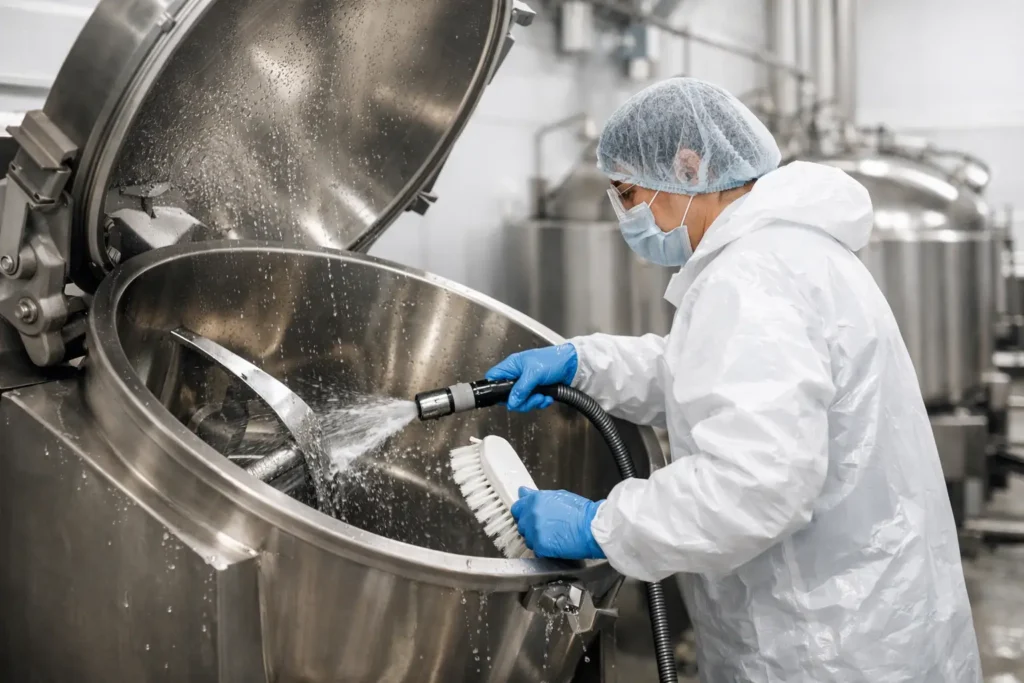
A vacuum mixer can produce a smooth, stable mayonnaise emulsion one batch and carry over allergens, fat residue, or flavor contamination into the next if cleaning is incomplete. Knowing how to clean vacuum mixers is therefore not a housekeeping task. It is a controlled sanitary process that protects product quality, food safety, batch consistency, and production uptime.
For mayonnaise, dressings, ketchup, and other high-viscosity products, the most difficult residues are rarely visible on the vessel wall. Oil films, egg or protein deposits, starches, gums, stabilizers, and emulsifiers can remain in the rotor-stator head, discharge valve, recirculation loop, vacuum line, powder induction system, and seal areas. A successful cleaning procedure must reach every product-contact surface, not simply leave the tank looking clean.
There is no single cleaning cycle that fits every vacuum emulsifying mixer. The correct sequence depends on the formulation, the mixer configuration, the cleaning chemicals approved for the plant, and whether the system is designed for clean-in-place operation.
A full-fat mayonnaise leaves a different residue profile than a vegan mayonnaise containing modified starch, pea protein, or hydrocolloids. Low-fat products can be especially demanding because proteins and starches may dry onto hot surfaces or lodge in high-shear zones. A batch containing mustard, egg, dairy, soy, or sesame also requires validated allergen changeover controls.
Before setting cycle times or chemical concentrations, confirm the equipment documentation for the vessel, homogenizer, vacuum pump, spray devices, gaskets, transfer piping, and powder induction equipment. Cleaning parameters should be validated for the actual machine and product. Excessively aggressive chemistry, temperature, or mechanical action may reduce seal life, damage elastomers, or create premature wear in sensitive components.
Cleaning begins only after production has been properly stopped and the batch has been discharged as completely as possible. Product left in the vessel is not only waste. It increases chemical demand, makes rinse water less effective, and can create a persistent residue in dead legs and valve seats.
First, isolate the machine according to the plant’s lockout/tagout procedure. Stop the agitator and high-shear homogenizer, isolate electrical energy, and ensure there is no possibility of automatic restart. Break the vacuum safely and bring the vessel back to atmospheric pressure before opening any cover, manway, or inspection port.
Confirm that the vessel and product-contact lines are at a safe temperature. If the previous batch was processed hot, allow controlled cooling where required by the equipment manufacturer and site safety procedure. Never introduce cold rinse water into an excessively hot vessel without confirming the system can tolerate the thermal change.
Inspect the discharge path before beginning the wash cycle. The bottom outlet valve must be capable of draining freely. A blocked discharge line can leave cleaning solution pooled in the vessel, dilute the next stage of the cycle, and create sanitation risks.
A validated clean-in-place sequence is the most efficient approach for production-scale equipment, but it only works when flow, temperature, chemical concentration, and contact time are controlled. The following process is a practical framework for vacuum mixers used in emulsified food manufacturing.
Discharge the batch fully through the normal outlet route. Where appropriate, use a controlled product push or recovery method approved by the plant to reduce waste. Run the agitator at a low, safe speed only if the equipment design and cleaning procedure permit it, helping move remaining product toward the outlet.
Do not use compressed air to force product from a closed vacuum vessel unless the equipment and procedure specifically allow it. Improper pressurization can create serious safety and equipment risks.
A warm water pre-rinse removes loose product and reduces the organic load before detergent circulation. For oil-rich mayonnaise and dressings, water temperature should be high enough to mobilize fats without baking proteins or starches onto surfaces. The exact temperature depends on the formula and equipment specification.
Circulate or spray the rinse through the vessel, homogenizer, discharge valve, recirculation loop, and all product-contact piping. Continue until the return water is substantially free of visible product. If the mixer includes a vacuum transfer line or powder induction circuit that contacts product, clean those components using the validated path as well.
An alkaline detergent cycle is commonly used to remove fats, proteins, and emulsified residues. The solution must reach the required concentration and temperature before it enters the mixer. A weak or cool alkaline wash may look acceptable on a conductivity reading but fail to remove oil films inside the rotor-stator assembly or beneath valve seats.
Maintain enough circulation velocity to create mechanical action in the piping. Inside the vessel, verify that spray balls or rotary spray devices provide complete coverage. Low flow, plugged spray devices, or a poorly positioned cleaning head can leave shadow areas on the upper vessel wall, lid, and internal fittings.
For mixers with a high-shear emulsifier, follow the equipment manufacturer’s approved cleaning operating mode. Some systems require controlled rotation during circulation to wash the rotor-stator gap effectively. Others require the homogenizer to remain off. The wrong approach can cause seal damage or reduce cleaning effectiveness.
After the alkaline cycle, rinse with potable water until the return meets the plant’s established endpoint for detergent removal. Conductivity, pH, and rinse-water clarity are useful process indicators, but they are not substitutes for validation. A neutral reading alone does not prove that all residue has been removed from difficult product-contact zones.
If the production schedule involves an allergen changeover, follow the site’s validated rinse and verification requirements. This may include separate collection of rinse water, swab testing, rapid protein testing, or other documented methods.
Acid cleaning is not necessary after every batch in every plant. It is typically scheduled to remove mineral scale, water deposits, and inorganic buildup that alkaline chemistry does not address. The need depends on water hardness, process temperature, cleaning frequency, and the materials used in the formula.
Use only chemicals compatible with the mixer materials, seals, and instrumentation. After the acid stage, complete a final potable-water rinse according to the validated procedure.
Drain the system completely. Standing water in low points, vacuum lines, valves, and hoses can promote microbial growth and dilute the next product batch. Where the process requires it, use filtered air or another approved method to dry the equipment.
Open accessible inspection points after cleaning when safe and practical. Check the vessel lid, agitator shaft area, scraper blades, rotor-stator head, discharge valve, sight glass, and gasket surfaces. Look for product streaking, oil film, pooled water, damaged seals, or residue around crevices.
Vacuum mixers have several cleaning challenges that standard open-top mixers may not. The vacuum system is one example. If product has been drawn into a vacuum line because of overfilling, foam carryover, or an incorrect operating condition, the line and any associated trap must be cleaned before the next run. Ignoring this area can create odor issues, contamination risk, and poor vacuum performance.
The homogenizer is another critical area. Stable emulsions are created in very tight, high-energy zones, which also makes them effective at retaining viscous residue. Incomplete cleaning here can affect the next batch’s color, flavor, particle dispersion, and emulsion stability.
Powder induction systems deserve the same discipline. Dry starches, gums, and stabilizers can hydrate and harden in feed lines or wet-out chambers if not rinsed promptly. A blocked powder path can lead to inconsistent powder addition, lumps, longer batch times, and avoidable production interruptions.
A sanitary cleaning program should be measurable. Record the wash recipe, chemical concentration, flow, temperature, time, operator, and verification results. Trend these records over time. A gradual increase in cleaning time, recurring swab failures, or declining vacuum performance can indicate a developing mechanical or process issue.
Visual inspection remains valuable, but it should be paired with the verification method appropriate to the risk. ATP testing can provide rapid feedback on organic residue. Allergen-specific tests are necessary where allergen changeover is a concern. Microbiological verification may be needed for products and facilities with higher sanitation requirements.
For larger operations, automated CIP control provides stronger repeatability than manually managed wash cycles. It can document the parameters that matter and reduce dependence on individual operator judgment. However, automation does not correct poor system design, damaged spray devices, worn gaskets, or an unvalidated cleaning path.
The best cleaning procedure starts before the mixer is installed. A vacuum emulsifying system should be selected with sanitary access, drainability, spray coverage, cleanable valve design, compatible seals, and the required CIP connections in mind. These details directly affect labor, water consumption, chemical use, turnaround time, and product protection.
PerMix designs vacuum mixing solutions around the actual processing challenge, including difficult emulsions, high-viscosity sauces, and powder incorporation. When equipment geometry and cleaning requirements are considered alongside batch size and formulation, manufacturers can protect both emulsion performance and sanitation efficiency.
A clean vacuum mixer is not merely ready for the next batch. It is ready to deliver the same texture, stability, and food safety standard that customers expect from every batch that follows.

Get in touch with us today and learn how to we can help your business.