PerMix Mayonnaise Production
PerMix News

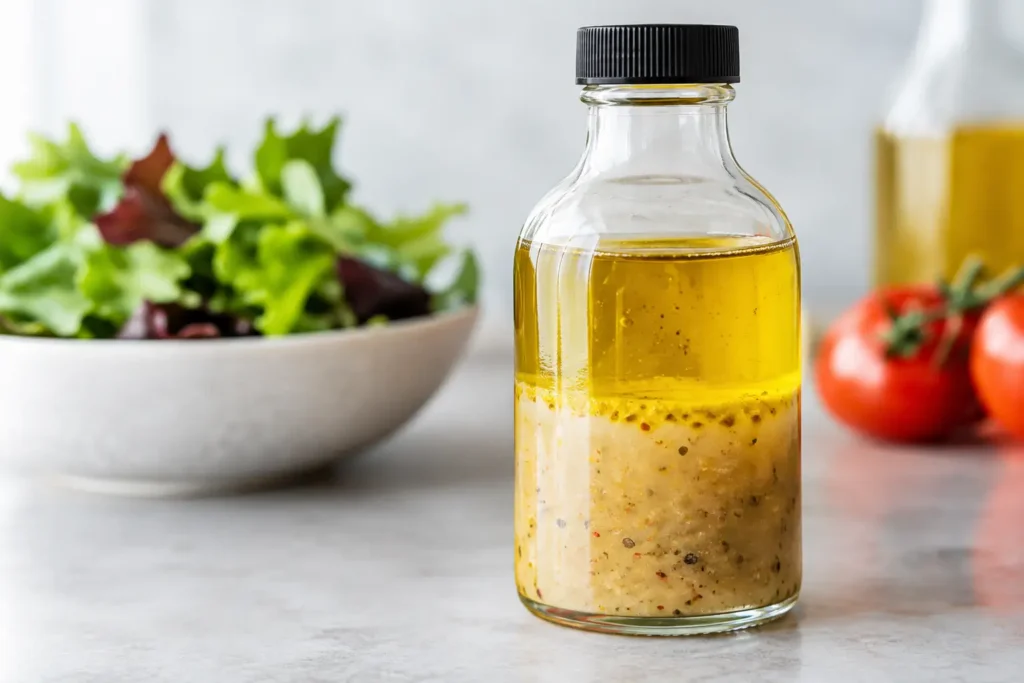
A dressing can leave the mixer with a smooth, glossy texture and still separate in the tank, tote, or bottle days later. That is why asking what causes dressing oil separation requires more than looking at the finished product. Oil separation is usually the visible result of an unstable emulsion, created by a combination of formulation limits, ingredient handling, process sequence, and inadequate shear.
For commercial dressing manufacturers, the cost is not limited to a poor appearance. Separation can lead to rejected batches, rework, inconsistent flavor delivery, filling problems, customer complaints, and shorter practical shelf life. The right response is to identify the mechanism behind the failure, then control it with a repeatable formulation and process.
Oil and water naturally resist mixing. A dressing is stable only when its emulsifiers, stabilizers, and processing conditions keep tiny oil droplets dispersed throughout the continuous water phase. When that system loses control, droplets collide, join together, and rise to the surface as a distinct oil layer.
Not every separation defect has the same cause. A thin oil ring at the top of a bottle may indicate slight creaming. A clear oil layer after temperature cycling points more strongly to coalescence, where droplets have merged permanently. A batch that separates immediately after mixing often has a process or ingredient-addition problem. One that breaks after several weeks may be limited by formulation strength, storage conditions, or both.
An emulsifier reduces the interfacial tension between oil and water and forms a protective layer around each oil droplet. Egg yolk, modified starches, proteins, mustard, lecithin, and selected food-grade emulsifier systems can all contribute, depending on the product target.
If the emulsifier level is too low for the oil load, droplets are not adequately covered. If the emulsifier is poorly dispersed, hydrated incorrectly, or added at the wrong stage, its theoretical dosage may not matter. It cannot stabilize droplets it never reaches effectively.
This is especially relevant when converting a full-fat dressing into a low-fat, reduced-calorie, egg-free, or vegan version. Removing oil or egg changes more than the nutrition panel. It changes the structure of the entire emulsion. A replacement system must provide adequate emulsification, viscosity, mouthfeel, and stability under the product’s actual pH and storage conditions.
Large droplets separate faster than fine droplets. Inadequate homogenization leaves a broad droplet-size distribution, including oversized droplets that are more likely to cream and coalesce. A batch may look uniform at first because the oil is temporarily dispersed, but visual uniformity is not proof of long-term stability.
High-shear emulsification is the critical step for reducing droplet size. However, more mixing time alone is not always the answer. A low-speed agitator can circulate a batch thoroughly without creating the shear needed to break oil into stable droplets. Conversely, excessive shear after the emulsion has formed can damage certain hydrocolloid networks, introduce heat, or pull in air if the process is not controlled.
The objective is controlled energy input at the correct stage. The oil must be introduced into an active emulsification zone where it is immediately broken down and coated by the available emulsifier system.
The formulation sets the operating window for a stable dressing. Processing can improve a sound formula, but it cannot reliably compensate for a system that is chemically or physically under-designed.
Every emulsifier system has a practical capacity. Raising the oil percentage without adjusting emulsifier concentration, aqueous-phase viscosity, or processing energy can push the formula past that limit. The same issue can occur when changing from one oil to another. Oils differ in viscosity, density, fatty-acid profile, and behavior at cold temperatures.
A high oil load demands precise control of phase ratio and oil-addition rate. But very low oil products can be equally difficult. Low-fat dressings often depend heavily on starches, gums, proteins, or fiber systems to build body and suspend the dispersed phase. If those materials are not properly hydrated and dispersed, the product may become thin, grainy, or unstable despite having less oil.
Acidified dressings operate in a narrow functional environment. pH affects protein behavior, starch performance, preservative systems, flavor perception, and emulsion stability. Salt can also influence viscosity and the electrical forces that help keep droplets from aggregating.
For example, adding acid too early may interfere with the hydration or performance of certain proteins and hydrocolloids. Adding salt before gums or starches are fully dispersed can create lumps, reduce hydration efficiency, or produce uneven texture. The exact order depends on the ingredient system, but the principle is consistent: dry ingredients need the right dispersion and hydration conditions before the emulsion is subjected to final acid and salt adjustment.
Stabilizers do not always prevent droplet coalescence directly, but they can slow creaming by increasing the viscosity and yield stress of the water phase. Xanthan gum, modified food starch, pectin, cellulose-based systems, and other hydrocolloids are commonly used for this purpose.
Problems arise when powders form fisheyes, hydrate incompletely, or enter the batch too quickly. A fisheye may look like a small lump, but it represents dry material isolated from the liquid phase. The active polymer inside cannot build viscosity or support the emulsion. This creates local inconsistency and a weaker finished product.
A stable dressing process requires more than a formula sheet. The equipment must deliver reliable dispersion, homogenization, temperature control, and deaeration from batch to batch.
Oil should generally be added gradually into a properly prepared aqueous phase while the emulsification system is active. Adding a large volume of oil too quickly can overwhelm the emulsifier and create large droplets before the system has time to stabilize them.
The same principle applies to powders. Dry starches, gums, proteins, and seasonings need controlled induction and dispersion. Dumping powders through an open manway may cause agglomerates, dust loss, inconsistent hydration, and unnecessary operator variability. A powder induction system can improve wetting and prevent the batch from becoming a collection of partially hydrated ingredients.
A mixer must bring all product through the high-shear zone, not simply shear a small area near the rotor-stator head. Dead zones, poor recirculation, or an improperly sized emulsifier can leave parts of the batch underprocessed.
This is a common scale-up failure. A pilot formula may perform well in a small vessel because the product passes repeatedly through a relatively intense mixing zone. At production scale, the same formula can separate if the larger system does not provide equivalent shear, turnover, and residence time.
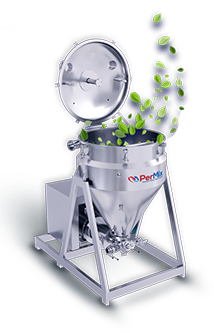
Vacuum emulsifying mixer systems are designed to address this challenge by combining controlled agitation, high-shear emulsification, and efficient product movement in a closed vessel. For dressings containing difficult powders or viscosity-building ingredients, the ability to disperse and hydrate materials consistently is often as important as peak shear intensity.
Air is not merely an appearance issue. Entrained air can accelerate oxidation, create foam during filling, distort volume control, and make product behavior less predictable. Vacuum processing helps remove air from the batch and supports a denser, more uniform finished dressing.
Temperature must also be managed carefully. Heat may be necessary for starch gelatinization, pasteurization, or improved ingredient hydration, but excess temperature can reduce viscosity, alter emulsifier performance, and stress sensitive ingredients. Cooling is equally important. A dressing that appears stable while warm may show separation after cooling, particularly if the oil phase changes viscosity or partially crystallizes at refrigerated temperatures.
A dressing formula should be evaluated under realistic distribution conditions, not only after it reaches room temperature in the plant. Temperature cycling, cold storage, warm warehouse exposure, vibration, and extended hold times can reveal weaknesses that are invisible on day one.
Cold temperatures can crystallize portions of some oils, while heat can thin the aqueous phase and increase droplet movement. Repeated temperature changes are particularly demanding because they force the emulsion to adapt multiple times. If the stabilizer system, droplet size, or emulsifier coverage is marginal, the product may fail after distribution even though retained samples initially passed inspection.
Packaging orientation also matters. A product stored upright for months places a continuous gravitational demand on the emulsion. Manufacturers should set realistic hold tests based on their actual sales channel, expected storage period, and whether the product will face ambient or refrigerated conditions.
When a dressing separates, begin with the pattern of failure. Immediate separation usually points to oil addition, shear, emulsifier dispersion, or a major formulation imbalance. Delayed separation may indicate insufficient viscosity, droplet growth, thermal sensitivity, or long-term incompatibility between ingredients.
Review batch records before changing the formula. Compare oil-feed rate, mixing speed, processing time, temperature profile, vacuum level, powder-addition method, and ingredient lot data. Then measure the practical indicators: pH, viscosity at defined temperature, droplet-size distribution where available, density, and visual stability through controlled storage testing.
Do not treat every separation issue with more gum. Increasing viscosity can mask a droplet-size problem temporarily, but it may create an overly heavy texture, poor pourability, or difficult filling. Likewise, increasing emulsifier without correcting inadequate shear may add cost without solving the core problem. Effective troubleshooting matches the correction to the mechanism.
Reliable dressings are engineered, not rescued after filling. The most effective production systems align formulation, ingredient addition, high-shear emulsification, vacuum deaeration, and thermal control in one repeatable operating sequence.
PerMix designs vacuum emulsifying and universal mixer processor solutions for manufacturers that need that level of control across mayonnaise, dressings, sauces, and challenging low-fat or vegan formulas. Equipment selection should be based on batch size, viscosity range, powder-handling needs, oil phase ratio, and the stability standard required at the end of shelf life.
When oil separation appears, treat it as process data. A disciplined review of droplet formation, ingredient hydration, and operating conditions can turn an unstable batch into a repeatable commercial product that holds its texture, appearance, and performance from production through the consumer’s last pour.

Get in touch with us today and learn how to we can help your business.