PerMix Mayonnaise Production
PerMix News

Vegan mayo can look simple on a formula sheet and still fail on the plant floor. A batch that appears balanced on paper can separate under shear, trap air during powder addition, or develop a weak body that does not hold through filling and shelf life. That is why knowing how to mix vegan mayo is less about a single recipe and more about controlling emulsification, hydration, and process sequence at commercial scale.
Unlike conventional mayonnaise, vegan systems do not rely on egg yolk to carry emulsification and texture at the same time. The structure has to come from a different combination of oils, starches, hydrocolloids, proteins, and emulsifiers, often under tighter process conditions. For manufacturers, the challenge is not only making a stable batch once. It is producing the same viscosity, gloss, flavor release, and emulsion stability every shift.
The first rule is to treat vegan mayo as a process-driven product, not just a blended sauce. In most cases, the oil phase and water phase need to be developed separately before final emulsification. If powders are added too quickly or into the wrong phase, hydration becomes uneven. If oil is introduced before the continuous phase has enough strength, the emulsion may break early or build the wrong texture.
A typical vegan mayo process starts with the water phase. Water, vinegar or other acid components, salt, sugar, preservatives if used, and water-soluble stabilizers are usually introduced first. This stage matters because it determines whether starches, gums, and proteins will fully hydrate or form fisheyes and lumps. Under-mixed hydration leads to downstream issues that are often mistaken for formulation problems.
The oil phase is then incorporated under controlled shear. Too little shear can leave large oil droplets and a thin, unstable emulsion. Too much shear, especially for sensitive stabilizer systems, can create heat and damage the final body. The best result depends on the exact formulation. A high-oil vegan mayo behaves differently from a low-fat version built around starch and hydrocolloids.
Vacuum processing is often a decisive advantage here. Removing entrained air improves density, appearance, and filling accuracy while supporting cleaner hydration and more consistent emulsion development. For commercial producers, that translates directly into better batch repeatability and fewer quality deviations.
When teams ask how to mix vegan mayo, the real question is often how to manage the ingredients that replace egg yolk functionality. Vegan systems can use starches, modified starches, pea protein, soy protein, aquafaba-derived ingredients, gums, fibers, and plant-based emulsifiers. Each one contributes differently to viscosity, mouthfeel, and emulsion stability.
Starches need proper dispersion before they can fully hydrate. If they are dumped into an agitated tank without enough powder induction performance, they can form stubborn agglomerates. Gums present a similar issue, except they hydrate so rapidly that poor addition technique can create instant clumping. Proteins add another layer of complexity because their performance changes with pH, ionic strength, and shear history.
This is why equipment selection should match the formulation profile. A mixer that handles oil and water blending well may still underperform when dry ingredient loading becomes the bottleneck. In vegan mayo production, powder incorporation is often where time is lost and consistency is compromised.
A well-designed emulsifying system should do three things at once. It should disperse powders fast, generate controlled droplet size reduction, and maintain a sanitary, repeatable process environment. If one of those elements is weak, the line may still run, but the product usually tells the story through texture variation, phase instability, or long cycle times.
For most industrial vegan mayo formulations, sequence control is more important than aggressive mixing. The water phase should be built first with enough circulation to create a strong vortex or induction path for dry ingredients, depending on system design. Powders should be introduced steadily, not all at once, to prevent lumping and incomplete wet-out.
Once hydration is achieved, the batch can move into emulsification. Oil is typically added gradually into the continuous phase under rotor-stator shear or an equivalent high-efficiency emulsifying action. The goal is to build a fine, stable emulsion while avoiding unnecessary heat rise. Acid adjustment may come before or after full oil addition depending on the formulation and the sensitivity of proteins or starches.
Final polishing under vacuum helps reduce trapped air and improves visual finish. It can also support a denser, cleaner texture that aligns better with premium commercial standards. For manufacturers scaling from lab or pilot to plant production, this step often separates an acceptable product from a market-ready one.
The most frequent complaint is emulsion breakage, but the root cause is not always the same. In some cases, the continuous phase lacks enough viscosity before oil addition. In others, the oil addition rate is too high for the mixer’s actual shear capacity. Sometimes the formula is sound, but powder hydration was incomplete from the beginning.
Weak body is another common issue. Vegan mayo may look stable immediately after processing yet lose structure over time or after pumping and filling. That usually points to under-hydrated starch, poor gum dispersion, or a droplet size distribution that is too broad. If the mixer cannot create uniform emulsification, batch-to-batch texture variation becomes hard to avoid.
Aeration is also a practical problem, especially in open-top systems or with poor powder feeding methods. Entrained air changes apparent viscosity, disrupts filling weights, and reduces visual quality. Under vacuum, these issues are easier to control, especially when the process includes high powder loading and high-shear emulsification in the same vessel.
Then there is scale-up. A bench formula that works with a handheld homogenizer or small pilot unit does not automatically transfer to a 500-liter or 2,000-liter batch. Shear exposure, circulation path, ingredient addition timing, and thermal load all change with scale. Process engineering matters here as much as formulation expertise.
Food manufacturers evaluating how to mix vegan mayo at scale should look beyond simple tank agitation. Vegan emulsions demand more than bulk blending. They need a system built for dispersion, emulsification, deaeration, and repeatable batch control.
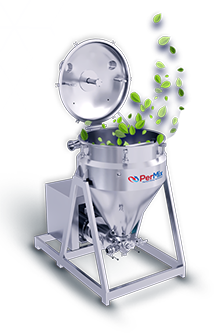
A vacuum emulsifying mixer is often the right fit because it combines several process requirements in one platform. It supports controlled powder incorporation, efficient droplet size reduction, and reduced air entrapment. That combination is especially valuable when producing thick, high-viscosity mayo with starches and stabilizers that are difficult to wet out.
Mixer geometry also matters. Rotor-stator design, vessel configuration, scraper agitation, and recirculation path all influence how quickly ingredients hydrate and how uniformly the emulsion develops. A machine that looks adequate on capacity alone may still struggle with product quality if the shear profile does not suit the formulation.
For manufacturers running multiple SKUs, flexibility is another factor. Vegan mayo, low-fat mayo, and dressings may share part of the same production line, but they do not behave the same way in processing. A properly specified system should handle formulation changes without forcing long cycle times or repeated operator adjustments. That is where application-specific engineering delivers measurable value.
PerMix focuses on this exact production reality – matching vacuum emulsification and powder handling performance to the needs of mayonnaise and related emulsified sauces at commercial scale.
Efficiency is not only about faster batches. It is about reducing rework, minimizing off-spec product, and shortening the time between ingredient loading and filling. In practice, that starts with consistent ingredient addition and ends with a controlled final texture.
If dry ingredients are a known challenge, improve induction before increasing shear. If viscosity builds too early, review sequence before changing the formula. If the product finishes with too much air, address vessel design and vacuum capability before assuming the emulsion system itself is unstable. The right fix depends on the actual bottleneck.
For many plants, the strongest improvement comes from treating process conditions as part of the formula. Mixing time, shear intensity, vacuum level, and ingredient order are not secondary details. They define whether the product reaches its target body and holds it through downstream handling.
That is the commercial reality of vegan mayo. The market expects clean appearance, stable texture, and repeatable performance, but those results come from disciplined emulsification, not trial-and-error blending. When the process is engineered correctly, vegan mayo becomes easier to scale, easier to control, and far more reliable to produce shift after shift.
The best batches rarely happen by accident. They come from a process that respects ingredient behavior, controls emulsification under load, and gives operators the equipment needed to hit the same target every time.

Get in touch with us today and learn how to we can help your business.