PerMix Mayonnaise Production
PerMix News

A ketchup batch can meet its flavor and color specifications yet still fail on the filling line. It may pour too quickly, show small gel particles, release serum after storage, or trap enough air to create inconsistent fill weights. Knowing how to improve ketchup texture means controlling the complete process, not simply adding more thickener.
For commercial producers, the target is a ketchup that is smooth under the tongue, stable in the bottle, easy to pump, and predictable at the filler. That result depends on ingredient functionality, powder dispersion, thermal treatment, shear, vacuum, and a repeatable batch sequence. A change in any one of these areas can alter the final flow behavior.
Texture is more than a single viscosity reading. Ketchup is a shear-thinning product: it should resist movement in the bottle, then flow when squeezed or shaken. A batch with high apparent viscosity can still feel weak if its yield stress is low. Conversely, an overly structured batch may meet a viscosity target but dispense poorly and create excessive pressure drop in transfer lines.
Set specifications that reflect how the product will perform in production and in the consumer’s hands. Depending on the product and market, this can include Bostwick flow, rotational viscosity at defined speed and temperature, yield stress, serum separation, particle size, density, and sensory evaluation. Measure samples after a controlled cooling period. Comparing a warm process sample with a cooled finished-product sample often leads teams to make unnecessary corrections.
Texture targets must also match the package. A glass bottle, squeeze bottle, portion packet, and foodservice dispenser do not demand identical flow properties. The same is true for standard, reduced-sugar, clean-label, and starch-based formulas. There is no universal ideal ketchup viscosity.
Tomato solids provide much of ketchup’s body, but they do not work alone. Soluble solids, insoluble tomato particles, sugar, salt, acid, and hydrocolloids all affect the continuous phase and the way the product flows. A higher tomato solids level can improve body and flavor intensity, but it may also raise cost, increase processing load, and make fine dispersion more difficult.
Starch, pectin, xanthan gum, modified food starch, and other stabilizers each build texture differently. Some create a clean, short texture; others contribute a longer, more elastic body. Starch systems require adequate hydration and cooking. Gums can develop very high localized viscosity if they contact water without immediate dispersion. Pectin performance depends heavily on solids, pH, calcium availability, and heating history.
This is why adding more stabilizer is rarely the best first response to thin ketchup. If the existing stabilizer is partially hydrated, agglomerated, or damaged by the process, a higher dosage can create lumps, an artificial mouthfeel, or an unstable batch. Confirm the raw material specification, lot-to-lot consistency, and addition method before reformulating.
Sugar and salt also deserve attention. Their dry solids contribution can support body, but they compete for water and can change hydration behavior. Acid addition is particularly critical. Adding vinegar or acetic acid too early can reduce the performance of some starch systems and affect pectin behavior. The correct sequence depends on the specific formulation, so validate it through controlled pilot trials rather than general assumptions.
Poor powder incorporation is one of the most common root causes of weak or inconsistent ketchup texture. Dry starches and gums can form fisheyes: dry powder enclosed by a hydrated outer layer. Once formed, these agglomerates are difficult to break down completely. The batch may appear smooth in the tank, then reveal particles, viscosity drift, or uneven texture after holding.
A controlled powder induction system pulls dry ingredients into the liquid under managed vacuum or suction, rapidly wets each particle, and minimizes airborne dust. This is substantially more reliable than manually dumping powders into an open vessel. It also improves operator safety, reduces ingredient loss, and shortens batch preparation time.
The hydration stage needs enough liquid volume, circulation, and residence time for the chosen functional ingredients. High shear helps disperse powders, but shear alone cannot correct an incorrect addition sequence. Add ingredients at the point of strongest wetting and circulation, not into a stagnant zone or a shallow vortex. For gums with a high tendency to clump, premixing with sugar or another compatible dry carrier can further improve distribution.
Water temperature matters as well. Some starches require a defined cook profile to fully develop viscosity, while certain gums hydrate more effectively at lower temperatures. If tomato paste, sugar syrup, and process water enter at different temperatures, the actual hydration environment may not match the recipe sheet. Record the temperature at the point of powder addition, not only the vessel jacket setting.
An effective ketchup process commonly begins with water-phase preparation and dispersion of the dry functional ingredients. Tomato paste and remaining solids are incorporated under controlled agitation, followed by thermal processing to hydrate and cook the texture-building system. Acid is often introduced after the ingredients that are sensitive to low pH have developed their intended structure.
The exact order will vary by formula. A tomato-forward ketchup with pectin behaves differently from a cost-optimized formula that relies primarily on modified starch. A reduced-sugar product may need a different stabilizer system altogether because less dissolved sugar changes water availability and solids balance. Process engineers should treat sequence as part of the formula, not as an operator preference.
High-shear mixing should be applied with purpose. It can reduce particle size, distribute stabilizers, and improve smoothness. Too little shear leaves agglomerates and uneven body. Too much shear, especially after the texture network has formed, can reduce viscosity or create a less desirable flow profile. The objective is controlled dispersion and homogenization, not maximum mixer speed.
Entrained air is often mistaken for a formulation issue. Air lowers measured density, causes a lighter visual appearance, contributes to foam, and can make a ketchup batch appear thicker or less consistent during in-process testing. It also creates filling variability and can complicate downstream deaeration.
Vacuum mixing removes trapped air while supporting rapid powder wetting and homogeneous circulation. For products with dense tomato solids and difficult powders, vacuum processing can improve both the visual finish and the repeatability of the final texture. It is particularly valuable when manufacturers need a uniform product across long runs and multiple production lines.
Vacuum level should be matched to the product and operating stage. Excessive vacuum at the wrong point can cause undesirable boiling, foam behavior, or loss of process control. The best approach is a validated vacuum profile integrated with mixing speed, temperature, and feed rate.
A successful laboratory or pilot batch does not automatically translate to a production vessel. Scaling by tank volume alone is a common mistake. Mixer tip speed, circulation rate, power per unit volume, powder feed rate, heat-transfer area, and vacuum response all change as equipment size increases.
Maintain process intent during scale-up. If a pilot batch uses high localized shear for powder wetting, the production system must deliver comparable wetting energy at the powder inlet. If the pilot process reaches cooking temperature quickly, a large vessel with slower heat transfer may require a different hold time or addition point. The production team should evaluate the full process curve, including time, temperature, vacuum, and agitator speed, rather than copying only the ingredient percentages.
A practical control plan should define the critical settings for each batch stage:
Document deviations alongside finished-product data. Over several batches, this creates a clear process window and makes root-cause analysis faster when texture moves out of specification. It also prevents operators from relying on visual judgment alone when a batch looks slightly different in the tank.
Ketchup production equipment must do more than stir a viscous product. It must wet and disperse powders efficiently, develop the intended texture, remove air, handle thermal processing, and transfer a consistent batch to filling. Equipment that performs well with a simple sauce may not provide enough process control for a starch-heavy, reduced-sugar, or clean-label ketchup.
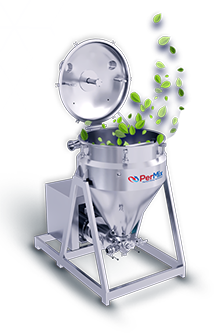
A vacuum emulsifying mixer with an integrated high-shear homogenizer and powder induction capability gives manufacturers stronger control over the stages where texture is won or lost. PerMix designs vacuum mixing systems for demanding mayonnaise, ketchup, dressing, and sauce applications where batch consistency, sanitary operation, and scalable performance are commercial requirements.
When evaluating a system, focus on measurable operating outcomes: batch cycle time, powder handling efficiency, repeatability, cleaning access, viscosity range, heating and cooling capability, and the ability to maintain texture across recipe changes. The lowest initial equipment price can become expensive if it creates slow hydration, rework, high scrap rates, or unstable filling performance.
The most reliable ketchup texture comes from a process that makes each ingredient perform as intended. Start with a clear flow target, validate hydration and thermal sequence, then use mixing and vacuum control to repeat that result batch after batch. That discipline gives R&D teams room to innovate while giving operations a product they can manufacture with confidence.

Get in touch with us today and learn how to we can help your business.