PerMix Mayonnaise Production
PerMix News

A mayonnaise batch can look acceptable at discharge and still fail where it matters: after filling, during transport, or on a customer’s shelf. Oil separation, weak body, air pockets, uneven color, and inconsistent viscosity usually begin earlier in the process. This emulsion processing guide focuses on the operating decisions that determine whether a sauce or dressing becomes a stable, repeatable commercial product.
For manufacturers, emulsification is not simply a mixing step. It is the controlled creation of a fine oil-in-water structure while powders hydrate, gums develop, and air is removed. Equipment selection matters, but stable results come from matching the mixer, batch sequence, vacuum level, shear profile, and formulation to the product being made.
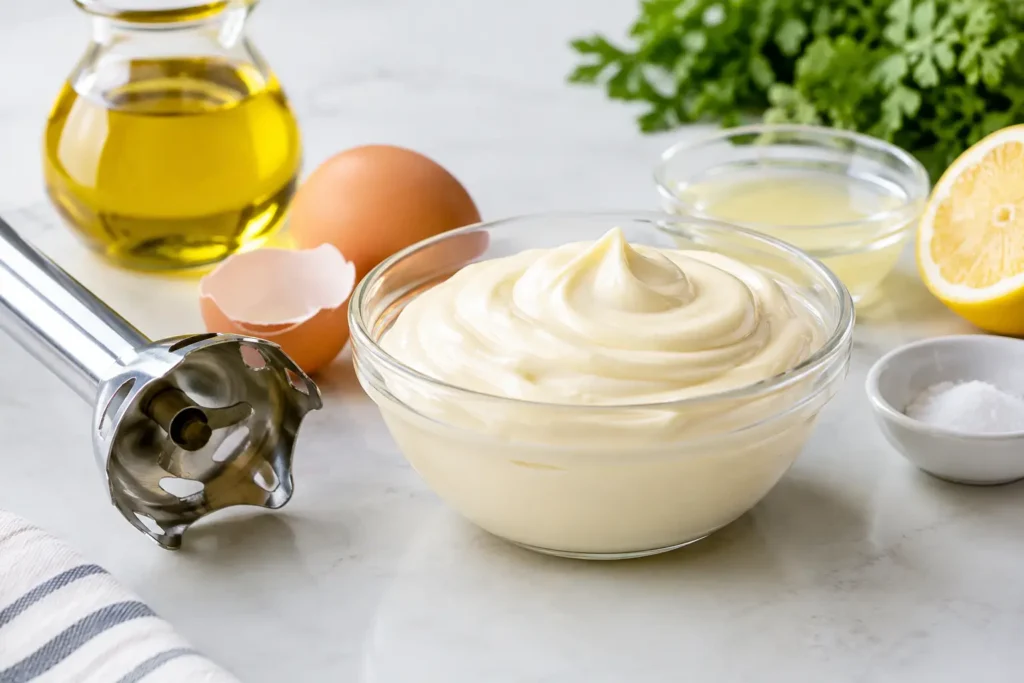
Mayonnaise and similar dressings are typically oil-in-water emulsions. The continuous water phase contains ingredients such as egg yolk or plant-based emulsifiers, salt, sugar, acids, stabilizers, and flavor components. The dispersed phase is oil, broken into small droplets and held apart by emulsifying agents and the viscosity of the surrounding system.
The goal is not maximum shear at every stage. The goal is controlled droplet-size reduction without damaging the structure, overheating sensitive ingredients, or introducing excess air. A batch with overly large droplets is more likely to separate. A batch exposed to poorly managed shear may lose desired texture or show viscosity variation from one production run to the next.
Four process variables work together: formulation chemistry, ingredient order, mechanical energy, and temperature. Changing one affects the others. For example, a low-fat mayonnaise contains more water than a full-fat product and often requires a different stabilizer system, more demanding powder dispersion, and tighter shear control. A vegan mayonnaise may rely on starches, hydrocolloids, proteins, or specialty emulsifiers rather than egg yolk, which changes both hydration requirements and process timing.
Ingredient sequencing is one of the most effective ways to prevent production problems before they reach the high-shear zone. The aqueous phase should be prepared to support efficient emulsification, not treated as a holding step before oil addition.
Begin by charging the water phase and dissolving soluble ingredients under adequate agitation. Salt, sugar, acids, and preservatives should be handled according to the formulation’s requirements. Some ingredients perform best before oil is introduced, while others must be delayed to protect viscosity development or preserve emulsifier functionality.
Dry ingredients require special attention. Starches, gums, proteins, and stabilizer blends can form fish eyes or persistent agglomerates when dumped directly into a vessel. These defects may survive extended mixing and appear later as graininess, uneven viscosity, or poor emulsion stability. Powder induction under vacuum or through a properly designed powder intake system improves wetting and distribution while reducing dust exposure and manual handling.
Hydration time is equally important. A gum that appears dispersed may not yet be fully hydrated. If oil is added too soon, the formulation can develop unevenly and become difficult to correct. Process engineers should establish a verified hydration window for each critical powder and maintain it as part of the batch standard.
Oil addition is where many otherwise sound batches become unstable. Introducing oil too quickly can overwhelm the available emulsifier and create large droplets before the system has enough structure to hold them. The result may be a thin batch, visible oiling-off, or an emulsion that breaks after storage.
The correct oil addition rate depends on viscosity, emulsifier type, oil percentage, mixer geometry, and batch volume. It is not a fixed number that transfers automatically from pilot scale to production scale. As viscosity rises, circulation patterns inside the vessel change. A rate that works in a small test batch may create poor incorporation in a large vessel.
A practical approach is to begin oil addition slowly while the emulsion is forming, then adjust the rate once the product has built sufficient body. The high-shear homogenizing zone must receive material continuously. Dead zones, weak recirculation, or inconsistent feed rates create localized oil concentrations and increase the risk of coarse droplets.
For high-oil mayonnaise, reliable metering is especially valuable. Controlled oil delivery supports repeatable droplet size and allows operators to reproduce validated recipes with less dependence on manual judgment.
Vacuum processing is a major advantage in commercial mayonnaise and sauce production. It removes entrained air that can create a lighter appearance, misleading volume readings, unstable density, and poor filling performance. It also supports faster powder wetting and can reduce oxidation exposure in sensitive formulations.
However, vacuum must be applied with process intent. Pulling vacuum too aggressively during powder charging may disrupt material flow if the induction system is not designed for the product. Applying vacuum at the wrong point can also cause excessive foaming in formulations with certain proteins or surfactants. The best operating point depends on the ingredients and the vessel’s agitation and powder induction configuration.
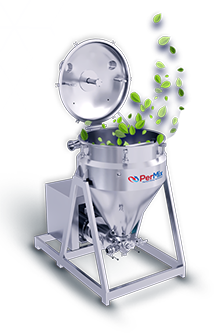
For most viscous emulsified products, a vacuum emulsifying mixer provides a clear process benefit because mixing, homogenization, deaeration, and powder handling occur in a controlled closed vessel. This reduces transfer steps and gives the operator better control over the conditions that affect batch consistency.
High shear is essential for reducing oil droplet size, but more shear is not always better. The correct level depends on the target texture and the formula’s tolerance for mechanical energy.
A full-fat mayonnaise may require strong homogenization to create a smooth, stable structure at high oil loading. A dressing with particulates may need enough shear to emulsify the base without damaging visible herbs, spices, or inclusions. A starch-thickened low-fat product may require careful sequencing because shear, heat, and hydration can interact in ways that either build or reduce final viscosity.
Rotor-stator design, tip speed, processing time, and product recirculation all affect the result. Batch time should be based on validated quality measurements, not on an arbitrary production habit. If longer homogenization does not improve droplet size, viscosity, or stability, it may only consume energy and reduce throughput.
Operators should monitor practical product indicators during development and scale-up: viscosity, temperature, density, pH, visual gloss, air content, and finished product stability. Where available, droplet-size analysis provides a more direct view of emulsion quality and helps distinguish a formulation issue from an equipment or operating issue.
Temperature affects viscosity, hydration, emulsifier performance, and microbial control. It also influences how effectively the mixer circulates the batch. A product that becomes too warm may thin excessively during processing, making it harder to judge its final body. Heat-sensitive flavors, egg-based components, and certain stabilizers can also lose performance when exposed to unfavorable temperatures.
At the same time, some powders require heat for proper hydration or activation. This is why jacketed vessels with controlled heating and cooling are valuable in sauce and dressing systems. The objective is not simply to heat or cool the batch. It is to hold the formulation within the temperature range needed for each stage of the process.
Record actual product temperature, not only jacket temperature. Large batches can have temperature gradients if circulation is weak, and a single vessel reading may not represent the entire product mass.
Scaling from R&D to industrial output is not a matter of multiplying ingredient weights. Larger batches have different flow patterns, longer addition times, greater heat-transfer demands, and different energy distribution. This is why a successful bench formula can become inconsistent when moved directly to production.
Before specifying equipment, define the production target: batch size, batches per shift, oil percentage, powder types, desired viscosity range, cleaning requirements, available utilities, and future product plans. A system sized only for today’s standard mayonnaise may limit the launch of vegan, reduced-fat, or starch-based product lines later.
PerMix evaluates these operating requirements around the actual formulation and production objective, including vacuum emulsification, powder induction, and the level of shear required for the finished product. A properly matched vacuum mixer processor gives manufacturers more than mixing capacity. It gives them a repeatable process window.
When an emulsion breaks, operators often respond by extending mix time or adding more stabilizer. Those actions can occasionally help, but they may conceal the actual cause. Review the batch record first: Was the powder fully hydrated? Did the oil feed rate change? Was vacuum stable? Did the product exceed its target temperature? Was the rotor-stator operating at the validated speed?
Consistency comes from turning those answers into controlled operating limits. Standardize addition order, set acceptable ranges for time and temperature, verify pump and oil-meter performance, and train operators to recognize early changes in product appearance and load behavior. A stable emulsion is built through discipline before it is proven in storage.
The best next step is to test your most demanding formula under production-relevant conditions. When the process can reliably handle difficult powders, high oil loading, and tight texture requirements, everyday mayonnaise production becomes far easier to control.

Get in touch with us today and learn how to we can help your business.