PerMix Mayonnaise Production
PerMix News

A shorter ingredient deck used to be a marketing advantage. Now it is a formulation constraint that reaches deep into the process line. Clean label mayo trends are forcing manufacturers to rethink not only what goes into the tank, but how each ingredient is hydrated, dispersed, emulsified, and protected through scale-up. For processors running commercial mayonnaise, dressings, and adjacent emulsified products, the shift is less about packaging language and more about process control.
When formulators remove modified starches, artificial preservatives, synthetic stabilizers, or familiar processing aids, they also remove some margin for error. The emulsion has fewer tools to mask poor dispersion, incomplete hydration, weak oil droplet distribution, or inconsistent shear. What looks simple on the label often becomes more demanding in production.
That is why clean label reformulation tends to expose mechanical limits faster than conventional mayo does. Powder addition becomes more sensitive. Hydration windows get narrower. Temperature control matters more. Vacuum performance matters more. If the process is not built for repeatable emulsification, the product will show it in viscosity drift, texture defects, oil separation, or shortened shelf life.
For manufacturers, this creates a practical question: how do you meet label expectations without sacrificing line efficiency or finished product quality? The answer usually sits at the intersection of formulation discipline and equipment capability.
One of the clearest clean label mayo trends is the move away from additive-heavy systems that once compensated for inconsistency. Brands want recognizable ingredients. Retailers want simpler declarations. Consumers increasingly scan labels for ingredients they understand.
In practice, that means the process has to do more of the work. A stable emulsion cannot depend on a long list of texturizers to cover poor incorporation. Manufacturers need tighter control over shear rate, mixing sequence, powder wet-out, and deaeration. This is especially true at larger batch sizes, where small deviations scale into visible quality problems.
Many clean label mayo formulas now rely on native starches, fibers, proteins, and hydrocolloids that are perceived as more acceptable by the market. The trade-off is that these materials often behave differently during induction and hydration. They may agglomerate faster, hydrate unevenly, or build viscosity at a point that makes later ingredient addition more difficult.
This is not simply a sourcing issue. It is a processing issue. If powder induction is weak or inconsistent, clean label systems can become lumpy before the batch is fully developed. Once that happens, texture and stability suffer, and rework becomes expensive.
Vegan mayo is no longer a niche line extension. It is becoming a standard category requirement. At the same time, many vegan formulas are expected to maintain a clean label position, which narrows the emulsifier toolbox. That raises the technical bar.
Without egg yolk, the process window changes. Protein functionality, oil phase incorporation, and final mouthfeel all require closer management. Some plant-based systems are more shear-sensitive, while others demand stronger dispersion early in the batch to prevent fisheyes and uneven texture. The formula may be label-friendly, but production can be less forgiving.
Another important market shift is the overlap between health-positioned products and simpler labels. Low-fat mayo has always been harder to process than full-fat systems because water management, viscosity building, and mouthfeel become more difficult as oil drops. Add clean label requirements to that equation, and the challenge increases again.
Manufacturers are now expected to build body and stability with fewer formulation crutches. That can be done, but only with well-managed ingredient functionality and equipment that can disperse powders effectively while maintaining the right emulsification profile.
Most clean label setbacks do not start with catastrophic breakdown. They start with inconsistency. One batch runs slightly thicker. Another traps more air. Another develops texture late in the process, making oil addition less efficient. Over time, those variations become production losses.
A common issue is poor powder incorporation. Native starches, gums, proteins, and fibers used in clean label systems often need fast, controlled wetting to prevent clumping. If they are dumped into a vortex without proper induction, they can form lumps that never fully disperse. Operators may extend mixing time to compensate, but that can add heat, increase batch time, and still leave an unstable system.
Air is another frequent problem. Clean label mayonnaise is often less tolerant of entrapped air because there are fewer ingredients available to disguise resulting defects. Excess air can affect density, appearance, oxidation risk, and shelf stability. Under vacuum, the system has a better chance to build a smooth, uniform emulsion with less foam and more consistent texture.
Then there is scale-up. A formula that works in a lab mixer or pilot kettle may not behave the same way in an industrial vessel. Shear distribution changes. Powder addition dynamics change. Oil addition timing changes. This is where engineered emulsification systems separate workable concepts from commercially reliable production.
In clean label production, vacuum is not just about reducing bubbles. It supports more consistent emulsion development by limiting air incorporation during mixing, improving ingredient wet-out, and helping create a smoother finished texture. That matters when the formulation has less tolerance for variation.
Vacuum processing also supports more repeatable scale-up. In commercial mayonnaise production, repeatability is often the deciding factor between a successful reformulation and a costly trial cycle. If one batch meets target and the next one drifts, the issue is rarely the ingredient list alone.
As clean label formulas lean harder on difficult dry ingredients, powder handling becomes central to line performance. Fast, controlled induction reduces lumping, shortens hydration time, and improves batch uniformity. That is especially valuable when using native starches or plant-based functional systems that build viscosity quickly.
This is where application-specific mixer design matters. A general-purpose tank with basic agitation may move product, but that does not mean it can efficiently incorporate clean label powders at commercial speed. Food manufacturers need equipment designed for demanding emulsified systems, not just liquid blending.
There is a tendency to assume more shear solves every emulsion problem. In practice, clean label systems often require precise shear, not excessive shear. Too little and the droplet distribution is weak. Too much and certain ingredients can lose functionality, especially in alternative protein or starch-based systems.
The right mixer configuration allows processors to hit the needed level of dispersion and emulsification without overprocessing the batch. That balance becomes more important as formulas become more sensitive.
Clean label work should start with process reality, not label ambition alone. R&D, operations, and procurement need to align early on batch size, ingredient handling, hydration sequence, expected viscosity, shelf-life target, and production rate. If those variables are not addressed upfront, the project may look viable in development but struggle in the plant.
It also helps to evaluate how flexible the current system really is. Can it handle rapid powder induction? Can it run under reliable vacuum? Can it support both full-fat and low-fat products without major compromise? Can it process vegan mayo with the same confidence as conventional egg-based formulas? Those questions matter because clean label portfolios rarely stay limited to one SKU.
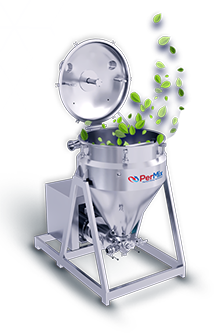
For many manufacturers, the opportunity is not just to make a cleaner label claim. It is to build a production platform that can support multiple high-value formulations with less trial-and-error and better batch consistency. That is where specialized systems such as PerMix vacuum emulsifying solutions fit the market – they are built around real mayonnaise processing demands, not generic mixing assumptions.
The market direction is clear, but the winning response is not to chase every claim. It is to build a process that can absorb formulation change without losing control. Clean label mayonnaise is achievable at commercial scale, but it demands stronger engineering discipline than many teams expect.
Manufacturers that treat clean label as a process challenge, not just a marketing request, will move faster from trial batches to profitable production. The ingredient statement may get shorter, but the value of the right mixing, vacuum, and powder incorporation strategy only gets bigger. That is where better production decisions start paying back.

Get in touch with us today and learn how to we can help your business.