PerMix Mayonnaise Production
PerMix News

When a fat-free mayo formula looks acceptable in the lab but fails in production, the issue is rarely just the recipe. In fat free mayonnaise manufacturing, process control does the heavy lifting that oil normally provides. Texture, opacity, suspension, mouthfeel, and shelf stability all depend on how water-phase ingredients hydrate, how powders disperse, and how the emulsion system is built under controlled shear and vacuum.
That is why fat-free production is usually more demanding than full-fat mayonnaise. A conventional mayonnaise can tolerate some process variation because the oil phase carries body and masks minor inconsistencies. A fat-free system has less room for error. If starches hydrate unevenly, gums fisheye, or air is pulled into the batch, the finished product can become thin, pasty, glossy in the wrong way, or unstable during storage.
In practical terms, fat-free mayonnaise is a structure-building exercise. Instead of relying on a high oil load to create viscosity and richness, manufacturers use a carefully balanced combination of water, starches, gums, proteins, acids, sweeteners, flavors, and stabilizers. Each ingredient has a specific role, and the process has to support that role at the right time.
The first challenge is powder incorporation. Modified starches, gums, milk proteins, egg powders, and seasoning blends are often difficult to wet out cleanly. If they enter the vessel too slowly, they can form lumps. If they enter too quickly without enough shear, they may sit on the surface or hydrate inconsistently. Once that happens, the batch may never fully recover.
The second challenge is viscosity development. In a fat-free system, body is built through hydration and network formation rather than oil loading. That means the process sequence matters. Temperature, vacuum level, rotor-stator shear, and powder induction all influence whether the final texture is smooth and spoonable or overly elastic and gummy.
The third challenge is air management. Entrained air can make a fat-free mayo look larger in volume during production, but it also creates false viscosity, weakens visual quality, and can reduce shelf life. Vacuum processing is not a luxury in this category. It is often a core requirement for reliable texture and appearance.
A successful fat-free mayonnaise line is not just mixing ingredients together. It must deliver fast dispersion, repeatable hydration, controlled particle size reduction, effective deaeration, and tight batch-to-batch consistency. For food manufacturers, that directly affects line efficiency, product quality, and customer acceptance.
The typical process begins with building the water phase under agitation. Water-soluble ingredients, preservatives, acids, and functional dry materials are introduced in a controlled sequence. At this stage, powder handling is critical. High-performance powder induction helps pull dry ingredients below the liquid surface quickly, reducing dusting, shortening batch time, and improving dispersion quality.
Once key thickeners and stabilizers are properly hydrated, the batch moves into a more intensive emulsification and homogenization stage. Even in fat-free products, fine droplet distribution and uniform ingredient integration matter. The goal is a smooth, stable matrix with no visible graininess and no weak structure points that can lead to weeping or phase instability later.
Under vacuum, the process becomes more controlled. Air is minimized, ingredient wet-out improves, and the finished product typically shows better gloss, denser body, and cleaner filling performance. For processors running commercial volumes, this is where engineered equipment makes a measurable difference.
The most common mistake in fat free mayonnaise manufacturing is using general-purpose mixing equipment for a process that needs specialized emulsification capability. A standard agitator may move the batch, but it will not necessarily hydrate powders efficiently or build the fine, consistent structure a fat-free system requires.
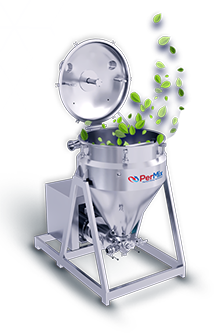
For this application, vacuum emulsifying mixers and universal vacuum mixer processors are better aligned with the real process demands. They combine vessel geometry, shear control, vacuum operation, and powder incorporation into a single production platform. That matters because the quality target is not simply blending. It is repeatable texture development at scale.
A properly configured system should give manufacturers control over several key variables. Shear has to be strong enough to disperse and refine, but not so aggressive that it damages sensitive hydrocolloid structure. Vacuum has to remove air without disrupting the batch. Mixing has to cover the full vessel volume so there are no dead zones, especially in higher-viscosity stages.
This is where application-specific engineering becomes commercially valuable. A system built for mayonnaise and emulsified sauces performs differently from a generic industrial mixer. In high-value product categories with narrow quality tolerances, that difference shows up in waste reduction, shorter cycle times, and fewer rejected batches.
Most fat-free mayonnaise defects can be traced to a small number of manufacturing problems.
Poor powder dispersion is one of the biggest. If starches or gums are not wetted instantly and uniformly, they can form fisheyes that survive through the batch. That leads to texture defects and visible inconsistency. In production, this usually points to weak induction, poor ingredient addition sequence, or insufficient localized shear.
Overprocessing can also create problems. More shear is not always better. Some systems become slimy or overly elastic when hydrocolloids are pushed too hard or for too long. The target is controlled development, not maximum agitation.
Temperature control is another variable that depends on formulation. Some starch systems need heat for proper functionality, while others are designed for cold process conditions. A mismatch between ingredient system and equipment capability can create major scale-up issues. What works in a benchtop beaker does not always translate to an industrial vessel.
Acid timing matters as well. If the pH drops too early, certain ingredients may not hydrate or perform correctly. If it drops too late, flavor balance and preservation targets may be harder to hit consistently. This is one of those areas where process design and formulation design have to work together.
Scale-up is where many promising fat-free products lose their edge. The pilot batch may have the right taste and texture, but commercial production adds different flow patterns, longer transfer distances, different shear exposure, and larger ingredient loading events. Those changes can alter hydration behavior and finished consistency.
A strong scale-up plan starts by identifying what really created the target result at pilot level. Was it a specific shear rate, a narrow addition window, a temperature profile, or a vacuum step that removed trapped air at the right moment? If the answer is unclear, repeating the result at larger scale becomes difficult.
Manufacturers should also look at cycle time economics. A process that produces excellent texture but ties up a vessel for too long may not be viable. The best production setup balances quality with throughput. This is especially important for plants running multiple mayonnaise and dressing SKUs on shared equipment.
PerMix addresses this with application-focused systems designed around real emulsified food production challenges, including difficult powder handling, vacuum homogenization, and reliable scale-up performance.
For plant managers and procurement teams, the right equipment decision comes down to production reality. Start with the formulation complexity. A simple low-viscosity dressing does not place the same demands on the system as a thick fat-free mayonnaise with starches, gums, and multiple dry ingredients.
Next, evaluate how the mixer handles powders. This is not a minor feature. Efficient powder induction can improve batch time, reduce operator intervention, and raise consistency across shifts. Then review vacuum performance, cleanability, sanitary design, discharge efficiency, and the ability to maintain quality as viscosity rises during the batch.
It also pays to ask a more direct question: can the supplier speak credibly about emulsion failure, hydration behavior, and ingredient-sensitive processing, or are they only selling horsepower and tank volume? In fat-free applications, process understanding is part of the machine value.
The best system is not automatically the most complex one. It is the one that matches your throughput, formulation range, and quality standard without creating unnecessary operating cost. For some manufacturers, that means a dedicated production platform. For others, it means a flexible vacuum processing system that can cover mayonnaise, dressings, and adjacent sauce products with equal reliability.
Fat-free mayonnaise can be profitable and scalable, but only when the process is built to replace what the oil phase used to hide. Get the dispersion right, control the air, match the shear to the formula, and production becomes far more predictable. That is where good engineering stops being a capital expense and starts becoming a quality advantage.

Get in touch with us today and learn how to we can help your business.