PerMix Mayonnaise Production
PerMix News

A low-fat formula that looks right in the lab can fail fast on the plant floor. It may thin out after cooling, show poor spoonability, develop air pockets, or break under normal shear. That is why low fat mayonnaise processing is not simply standard mayonnaise production with less oil. It is a different process window, with tighter demands on hydration, emulsification, vacuum control, and ingredient incorporation.
For food manufacturers, the challenge is commercial as much as technical. Low-fat mayonnaise has to meet label and cost targets while still delivering body, gloss, flavor release, and shelf stability. If the process cannot control viscosity development and droplet distribution consistently, product quality becomes batch dependent. That leads to rework, slower throughput, and unnecessary pressure on operations.
In full-fat mayonnaise, oil contributes much more than richness. It provides structure, viscosity, mouthfeel, and visual appeal. When oil is reduced, the formulation loses a major part of its physical framework. The processor has to replace that lost functionality with a combination of starches, gums, proteins, fibers, and optimized emulsification.
That changes the entire manufacturing approach. Powder addition becomes more sensitive. Hydration time matters more. The sequence of ingredient addition can decide whether the batch develops properly or forms fisheyes and lumps. Shear must be high enough to build a fine, stable emulsion, but not so aggressive that it damages the texture system or creates excess heat.
The practical result is simple. Low-fat production demands equipment that can disperse powders quickly, pull ingredients under vacuum, manage viscosity changes during the batch, and maintain repeatable shear conditions from one run to the next.
A successful low-fat mayonnaise process usually starts well before oil enters the vessel. The water phase has to be built correctly first. That means acids, sweeteners, salts, preservatives, and functional ingredients must be incorporated in a way that supports later emulsification rather than fighting it.
Many low-fat systems depend on starches or hydrocolloids for body. These ingredients are effective, but only when they are fully dispersed and hydrated. Poor powder induction is one of the most common causes of instability. Lumps that survive the early stage will not disappear later, and underhydrated powders can create inconsistent viscosity across the batch.
This is where powder handling becomes a real processing issue, not a minor mixing detail. A mixer that can pull powders directly into the liquid phase under vacuum helps reduce dusting, improve wet-out, and shorten batch time. Just as important, it improves repeatability. In low-fat applications, repeatability is the difference between a controlled product and a formulation that behaves differently every shift.
Once the continuous phase is properly prepared, the oil addition stage must be tightly controlled. In traditional mayonnaise, high oil content naturally supports a dense emulsion. In low-fat mayonnaise, there is less room for process variation. Droplet size distribution becomes more critical because the product has fewer structural contributors from oil itself.
A fine, uniform emulsion can help compensate for reduced fat by improving visual creaminess and texture perception. But this depends on controlled shear and efficient circulation. If oil is added too quickly, or if the mixer cannot generate enough emulsifying energy in a viscous system, the batch may show weak body or long-term separation.
Vacuum is not just about appearance. In low fat mayonnaise processing, vacuum improves product quality on several fronts. It helps limit air incorporation, which supports cleaner texture and more accurate filling density. It can also improve powder wetting and reduce foam, both of which matter when the formula includes starches, stabilizers, or proteins.
For manufacturers scaling production, this becomes a strong operational advantage. A process run under vacuum is typically easier to control than one fighting trapped air and foaming during critical stages.
Most low-fat mayonnaise issues come from a short list of processing mistakes. The first is poor ingredient sequencing. If thickening agents are added at the wrong point, hydration can become uneven and the emulsion may never fully develop. The second is insufficient powder dispersion, which leads to fisheyes, graininess, and viscosity variation.
The third is shear mismatch. Some systems under-process the batch and leave the oil phase too coarse. Others overwork the product and damage the intended texture. There is no single shear setting that suits every low-fat formula. It depends on oil level, emulsifier package, starch system, final viscosity target, and batch size.
Temperature is another factor that often gets underestimated. Even modest heat buildup can change hydration behavior, viscosity development, and acid response. That matters when the product must hit a narrow sensory target. A process that looks acceptable at pilot scale may become unstable in larger batches if heat removal and mixing intensity are not aligned.
For plant managers and process engineers, the equipment decision should be based on process control, not only rated capacity. Low-fat mayonnaise is less forgiving than standard formulas, so machinery has to do more than move product around a tank.
The right system should support rapid powder incorporation, strong vacuum emulsification, and efficient mixing across a wide viscosity range. It should also maintain hygienic design standards and allow operators to reproduce the same process profile with minimal adjustment. That is especially important for manufacturers running multiple SKUs, where one line may switch between standard, low-fat, fat-free, or vegan products.
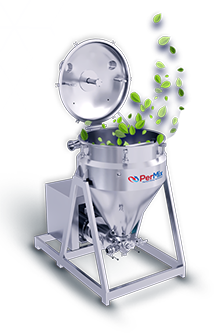
A vacuum emulsifying mixer or universal vacuum mixer processor is often the preferred direction because it combines several needed functions in one platform. It can disperse powders, create high shear where needed, and help manage entrapped air at the same time. That reduces dependence on workarounds and improves scalability from development to production.
For many manufacturers, the real gain is not only product quality. It is throughput and confidence. When operators do not have to compensate manually for slow hydration, inconsistent vortex formation, or poor oil incorporation, the process becomes easier to schedule and easier to scale.
Low-fat mayonnaise that performs in a small development vessel may still face trouble in production. Scale changes residence time, shear exposure, powder feeding behavior, and thermal profile. Those changes can alter texture even when the formulation remains exactly the same.
This is why process design should be treated as part of product development. Equipment geometry, rotor-stator performance, vacuum level, and ingredient addition strategy all affect the final result. A scale-up plan that ignores these variables often leads to unnecessary reformulation work.
Manufacturers that approach scale-up correctly usually focus on preserving process conditions, not just ingredient ratios. That means matching the energy input, powder wetting performance, and emulsion-building steps as closely as possible. It also means selecting equipment with enough flexibility to handle future formula changes without rebuilding the line.
PerMix focuses on this application-specific approach because low-fat mayonnaise is not a generic mixing task. It is a controlled emulsification process that requires the right combination of machine design and process knowledge.
When evaluating equipment for low fat mayonnaise processing, the best questions are practical ones. Can the system induct dry powders directly without lumping? Can it maintain stable emulsification as viscosity rises? Can it process under vacuum consistently at the required batch size? Can it support cleaning standards and product changeovers without excessive downtime?
It is also worth asking how the system performs across neighboring products. Many manufacturers do not run low-fat mayonnaise alone. They also produce dressings, sandwich spreads, flavored mayonnaise variants, and reduced-fat sauces. Equipment that is too narrow in capability may solve one issue while creating another elsewhere in the plant.
The strongest investment is usually the one that improves batch consistency, reduces operator dependence, and supports commercial growth. That is what turns a technically acceptable process into a profitable one.
Low-fat mayonnaise can absolutely deliver the texture and stability the market expects, but only when the process is engineered for the formula rather than forced into a standard production setup. If the goal is reliable quality at scale, the smartest place to start is with the process conditions your equipment can control every day.

Get in touch with us today and learn how to we can help your business.