PerMix Mayonnaise Production
PerMix News
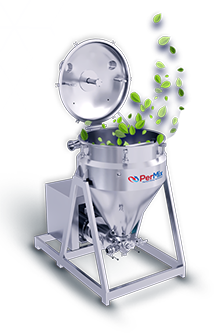

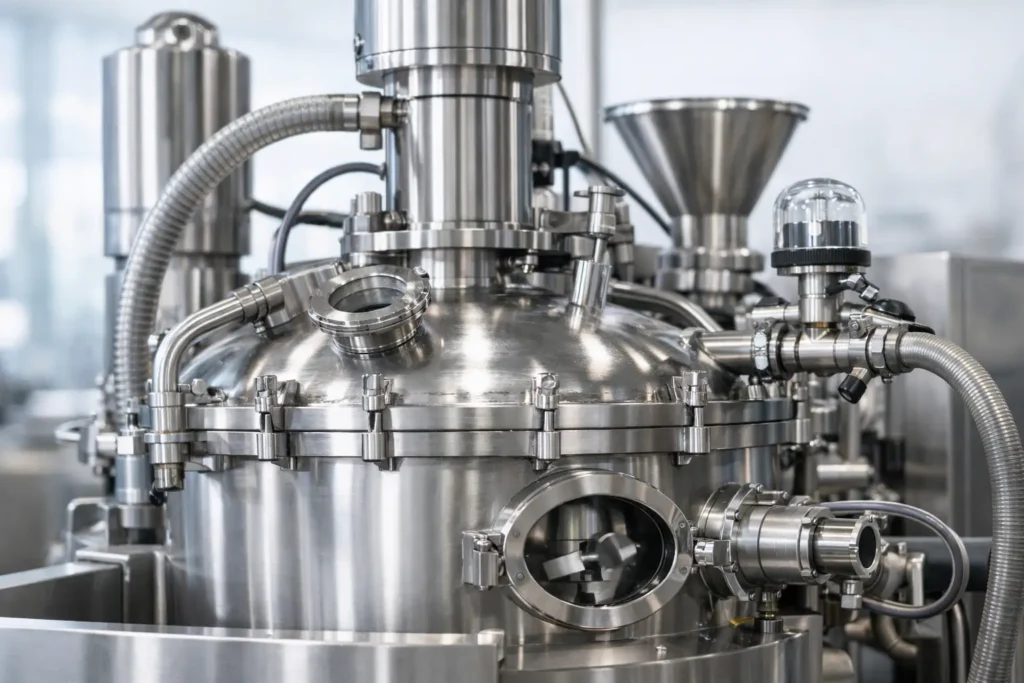
A broken batch rarely starts with one dramatic failure. More often, it starts with air trapped during mixing, powders that refuse to wet out, or a cleaning standard that looks acceptable on paper but creates risk in production. In mayonnaise, dressings, sauces, and other sensitive emulsions, a sanitary vacuum mixing system is built to control those variables before they become waste, downtime, or customer complaints.
For food manufacturers, the value is not just cleaner design. It is process control. When vacuum, shear, ingredient induction, and sanitary construction work together, the result is more consistent texture, better emulsion stability, faster batch turnaround, and a system that is easier to validate in a real plant environment.
At its core, a sanitary vacuum mixing system combines three critical functions in one production platform. It mixes under vacuum, it handles ingredients in a hygienic process environment, and it is engineered to create uniform dispersion or emulsification at commercial scale. That matters because these are not separate challenges in sauce and condiment manufacturing. They affect one another in every batch.
Vacuum reduces entrapped air. That alone can improve product appearance, density control, and shelf stability. In emulsified products, less air in the system often means a smoother texture and a more controlled process during oil incorporation. It can also reduce foaming, which is a common source of inconsistency when operators are dealing with proteins, gums, starches, or high-speed mixing.
The sanitary side is just as important. In food production, equipment must do more than contact product safely. It needs to support repeatable cleaning, reduce hold-up areas, and minimize the chance of contamination between batches. A system may mix well, but if it creates sanitation headaches, it will eventually create operational headaches too.
A sanitary vacuum mixing system is not simply a sealed tank with an agitator. The difference is in the details – surface finish, weld quality, gasket selection, drainability, dead-leg reduction, and the overall geometry of the vessel and piping.
For products like mayonnaise and dressings, sanitary design directly affects uptime. Sticky, viscous emulsions can cling to poorly designed surfaces and leave residue behind after discharge. If the mixer does not drain effectively or cannot be cleaned thoroughly, operators lose time to manual intervention. That increases labor cost and adds variability to sanitation outcomes.
There is also a product quality side to sanitary engineering. Residual product from a previous batch can create flavor carryover, color contamination, or microbiological risk. In facilities producing standard, low-fat, fat-free, and vegan formulations on shared equipment, that risk becomes more serious. Cross-contact is not just a food safety issue. It is a brand protection issue.
Air is often underestimated during scale-up. In pilot work, a formulation may appear stable enough. In production, larger batch sizes, faster ingredient addition, and different mixing dynamics can introduce more air than expected. That changes the way the emulsion forms.
A sanitary vacuum mixing system helps control this by pulling air from the vessel during processing. In mayonnaise production, for example, vacuum can support smoother oil incorporation and reduce the visual defects that come from foam or aeration. In dressings and sauces, it can improve gloss, texture uniformity, and filling behavior.
That does not mean vacuum solves every emulsion problem. Shear profile, ingredient order, phase ratio, and stabilizer hydration still matter. But vacuum gives process engineers a more controlled environment, and that is often the difference between a process that works occasionally and one that works every shift.
One of the most common production bottlenecks in viscous food manufacturing is powder addition. Starches, gums, proteins, and functional blends can float, clump, or hydrate unevenly when they hit the batch. Once fish-eyes form, operators may need extra time and shear to recover the product, and sometimes the batch never fully recovers.
This is where system design matters more than motor size alone. A sanitary vacuum mixing system with effective powder induction can pull dry ingredients directly into the liquid phase under controlled conditions. That shortens wet-out time and improves dispersion. It also reduces dust in the processing area, which supports both cleanliness and ingredient yield.
For manufacturers working with low-fat or fat-free mayonnaise, this matters even more. These formulations often rely on starches, hydrocolloids, and protein systems to replace the mouthfeel typically delivered by oil. If those ingredients are not dispersed correctly, the final product can show graininess, poor body, or unstable viscosity.
The strongest case for a sanitary vacuum mixing system is not a single feature. It is the way the system improves plant performance across multiple points at once.
The first gain is batch consistency. When ingredient incorporation is controlled and air is minimized, the process becomes less dependent on operator correction. That leads to tighter product uniformity from batch to batch.
The second gain is production efficiency. Faster powder induction, shorter deaeration time, and more predictable mixing behavior can reduce cycle time. In high-volume operations, even modest time savings per batch have a measurable annual impact.
The third gain is sanitation efficiency. Equipment designed for hygienic processing is easier to clean and easier to inspect. That supports faster changeovers and stronger confidence during audits.
The fourth gain is product quality. Stable emulsions, smoother texture, and repeatable viscosity are not abstract benefits. They directly affect filling, packaging, shelf life, and customer acceptance.
Not every sanitary vacuum mixing system fits every application. Buyers should be careful about assuming that all vacuum mixers deliver the same process result. Vessel geometry, mixing head configuration, shear intensity, vacuum level, heating or cooling capability, and discharge design all change how the system performs.
For mayonnaise and emulsified sauces, the right configuration depends on formulation strategy and production targets. A plant producing high-oil mayonnaise at large volume may prioritize rapid emulsification and controlled oil addition. A manufacturer producing vegan spreads may need stronger powder handling and tighter control over hydration and viscosity development. A co-packer with frequent SKU changes may place more value on cleanability and shorter turnaround.
That is why equipment selection should start with the product, not the brochure. The real question is how the system handles your ingredients, your batch size, your sanitation protocol, and your production schedule.
A frequent mistake is focusing too heavily on maximum batch volume. Capacity matters, but usable performance matters more. A mixer that meets volume requirements but struggles with powder incorporation or cleaning will create long-term cost in labor, waste, and downtime.
Another mistake is treating vacuum as a marketing term instead of a process variable. The quality of the vacuum system, the integrity of the vessel, and the interaction between vacuum and mixing design all affect results. Poor integration can limit the actual process benefit.
A third issue is underestimating formulation diversity. Many plants are no longer producing one flagship product. They are producing full-fat, reduced-fat, vegan, and specialty lines on overlapping assets. If the equipment cannot handle that range effectively, expansion turns into compromise.
A sanitary vacuum mixing system should support growth, not just current demand. That includes the ability to scale recipes, maintain quality across larger batches, and adapt to product extensions without constant process workarounds.
This is where specialized process knowledge matters. A supplier that understands mayonnaise, dressings, ketchup, and similar emulsified foods can usually identify issues earlier – whether that is oil phase timing, starch hydration, shear exposure, or discharge behavior at higher viscosities. Good equipment is essential. Application knowledge makes it perform the way it should.
PerMix approaches this category with that production mindset. The focus is not generic mixing. It is helping manufacturers run stable, sanitary, high-performance processes for emulsified and viscous food products where consistency and efficiency directly affect profitability.
A well-designed system will not eliminate every formulation challenge. But it should remove the equipment-related barriers that make those challenges harder than they need to be. That is what buyers should expect from a serious sanitary vacuum mixing platform.
If your process depends on stable emulsions, clean powder incorporation, and reliable sanitation, the right system earns its value every day it runs – not in theory, but on the plant floor.

Get in touch with us today and learn how to we can help your business.