PerMix Mayonnaise Production
PerMix News
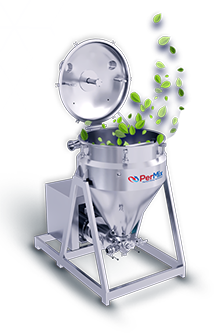

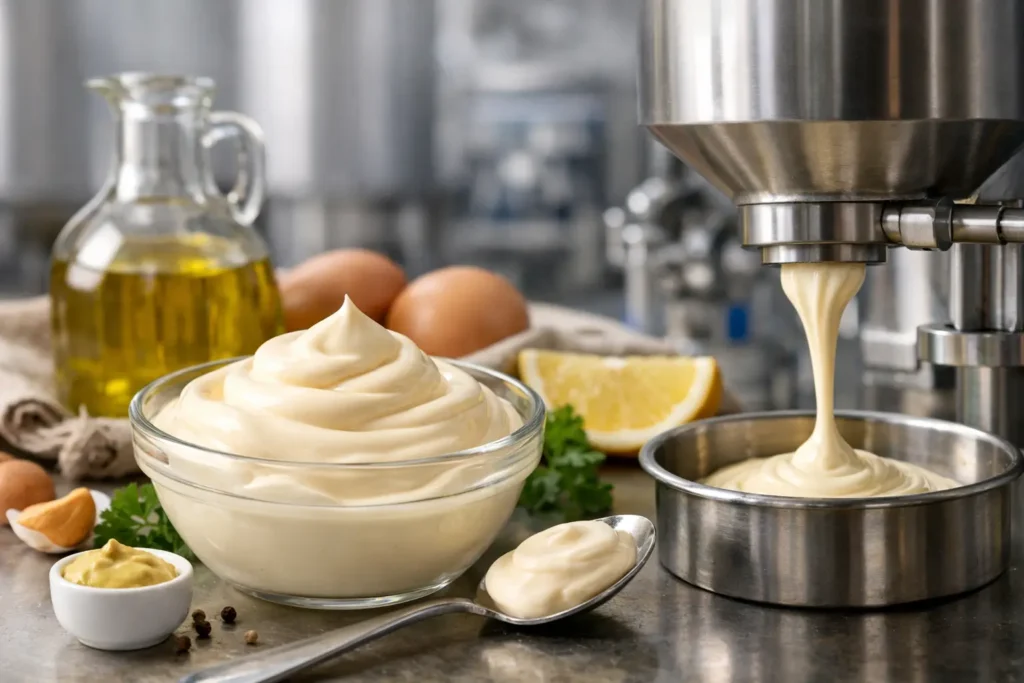
A mayonnaise line rarely fails because of one dramatic mistake. More often, yield loss, oiling off, poor spoonability, or batch-to-batch variation starts with small formulation decisions that stop working once production speed, batch size, or ingredient variability increases. That is why an industrial mayonnaise formulation guide needs to look beyond the recipe and focus on how ingredients, process conditions, and equipment perform together at scale.
For food manufacturers, mayonnaise is not just an emulsion. It is a commercial product that has to hold texture through filling, transport, shelf life, and consumer use while still meeting cost, label, and throughput targets. A lab formula that looks good in a beaker can become unstable in a plant if powder hydration is incomplete, oil addition is too aggressive, or vacuum control is inconsistent.
At industrial scale, formulation is a process design issue as much as an ingredient issue. Oil percentage drives richness, viscosity, and margin. Water phase composition affects acidity, microbial control, mouthfeel, and hydration behavior. The emulsifier system, usually based on egg yolk or an alternative for vegan products, determines how much process stress the emulsion can tolerate before it starts to break.
A standard full-fat mayonnaise commonly contains vegetable oil, water, egg yolk or whole egg, vinegar, salt, sugar, mustard, and stabilizing or thickening components as needed. That sounds straightforward, but the performance window is tight. Small changes in acid balance, egg solids, starch type, or gum level can shift texture from glossy and stable to pasty, thin, or unstable.
Manufacturers also need to formulate for plant realities. If your line runs high throughput, the formula must tolerate faster oil incorporation and shorter cycle times. If your process handles dry starches or hydrocolloids, the formulation must account for powder induction and complete dispersion. If your business serves multiple markets, the same base system may need to support full-fat, reduced-fat, and egg-free versions without creating excessive cleaning or changeover complexity.
Most mayonnaise systems are dominated by oil, but successful formulation starts in the water phase. Water carries the acid, salt, sugar, preservatives if used, and many functional ingredients. If the water phase is not properly built before emulsification begins, the rest of the batch becomes harder to control.
Acid level matters for both flavor and product safety, but it also affects protein behavior and finished texture. Too little acid can leave the product flat and microbiologically vulnerable. Too much can create sharp flavor and destabilize some starch or protein systems depending on the rest of the formula.
Salt and sugar do more than season the product. They influence water activity, taste balance, and phase behavior. Mustard can contribute flavor and support emulsification. In industrial production, these ingredients must be fully dissolved before oil addition starts, or the batch can develop local concentration differences that show up later as inconsistency.
Oil selection is not just a cost decision. Different oils influence flavor release, color, oxidation stability, and cold-temperature texture. A formula designed around soybean oil may not behave exactly the same when switched to canola or sunflower. That does not mean substitution is impossible. It means the process may need adjustment in shear rate, oil addition profile, or stabilizer system.
Egg yolk remains the classic emulsifier in mayonnaise because it provides strong emulsification and a familiar eating profile. At industrial scale, though, the form matters. Liquid egg yolk, frozen yolk, and powdered yolk each bring different handling requirements, solids levels, and consistency considerations.
When manufacturers move into low-fat or fat-free products, the job becomes more demanding. Reducing oil changes the entire structure of the product. In full-fat mayonnaise, the packed oil droplet network creates much of the viscosity and body. In reduced-fat systems, that structure weakens, so formulators often rely more heavily on starches, gums, proteins, and tailored hydrocolloid systems to rebuild texture.
That creates trade-offs. More starch can improve body but may dull flavor or produce a cooked note depending on the system. Gums can help suspend water and improve stability, but too much can create stringiness or poor breakdown on the palate. Protein-based systems can improve structure, yet they may become sensitive to pH or heat history. There is no single fix. The right answer depends on your target viscosity, label position, filling conditions, and storage profile.
Vegan mayonnaise adds another layer. Without egg yolk, the formula needs alternative emulsification and stabilization strategies, often using plant proteins, starches, hydrocolloids, or tailored emulsifier blends. These systems can perform well, but they are usually less forgiving if powder dispersion or hydration is incomplete.
A recipe on paper is only half the formulation. The process defines whether those ingredients become a stable commercial product.
Order of addition is critical. Dry ingredients typically need controlled incorporation into the water phase to avoid fisheyes, lumping, or incomplete hydration. Acids may need staged addition depending on how the stabilizer and protein system responds. Oil must be added at a rate the emulsifier system can absorb. If oil enters too quickly, droplet size distribution becomes uneven and the emulsion can break before the batch reaches final viscosity.
Shear level also has to match the formula. Too little shear can leave a coarse emulsion with weak stability. Too much shear can damage the structure, particularly in formulas with sensitive starch or protein systems. Vacuum processing is often a major advantage because it reduces entrapped air, improves product appearance, supports powder wet-out, and helps create a denser, smoother finished texture.
This is where equipment specification becomes commercially important. A vacuum emulsifying system with strong homogenizing capability and effective powder induction does more than speed up the batch. It expands the practical formulation window and makes difficult products more repeatable. For manufacturers scaling beyond pilot level, that repeatability is what protects margin.
Most plant-level issues follow recognizable patterns. One is incomplete powder hydration. Starches, gums, milk proteins, or plant proteins that are not fully dispersed can create lumps, texture defects, or late-stage viscosity drift. Another is poor oil incorporation, which shows up as thin texture, gloss loss, or visible oil separation.
Temperature is another hidden variable. Even when mayonnaise is processed cold or ambient, ingredient temperature affects viscosity, hydration, and emulsification behavior. Cold oil may slow incorporation. Warm water can change hydration speed. If incoming raw materials vary by season or storage conditions, your process has to absorb that variation.
Ingredient quality shifts also matter. Egg solids, vinegar strength, starch performance, and hydrocolloid consistency all influence the finished product. A formula that is stable with one supplier may become marginal with another. That is why experienced manufacturers validate both the formulation and the acceptable raw material range.
Scale-up is where many promising formulas become expensive problems. Mixing time does not increase in a simple linear way from pilot to production. Nor does shear exposure. Larger vessels change circulation patterns, powder wetting behavior, and the rate at which oil sees the emulsifier system.
A practical scale-up plan starts by identifying the non-negotiables: target droplet size, viscosity profile, pH, batch time, and filling behavior. From there, the equipment has to deliver the same functional result, not just the same nominal RPM. That distinction matters. Matching tip speed, vacuum level, and powder induction performance is often more relevant than copying a lab procedure step by step.
This is also where specialized mayonnaise processing equipment proves its value. Systems designed specifically for emulsified food production make it easier to control air, dispersion, and shear across a wider range of formulations, including low-fat and vegan variants. For operations managing multiple SKUs, that flexibility reduces risk during new product introduction and line expansion.
The best use of an industrial mayonnaise formulation guide is not to chase a fixed formula. It is to build a controlled relationship between ingredients, process, and equipment. Start with the market target – full-fat, reduced-fat, fat-free, or vegan. Define the required viscosity, flavor, pH, shelf-life expectations, and filling conditions. Then confirm that the process can hydrate powders, control oil addition, remove air, and reproduce the emulsion structure batch after batch.
When those pieces align, mayonnaise production becomes more predictable, more scalable, and more profitable. That is the point where engineering stops being a support function and becomes a product quality advantage. For manufacturers investing in higher throughput or more complex product portfolios, the right formulation strategy and the right processing system should be developed together, not separately.
A strong mayonnaise product does not come from guesswork. It comes from treating formulation as a production system, then building every batch around consistency, stability, and output you can trust.

Get in touch with us today and learn how to we can help your business.