PerMix Mayonnaise Production
PerMix News
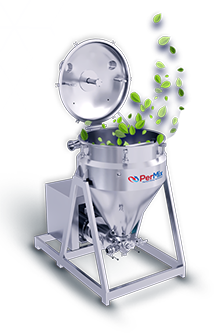


A mayonnaise batch can look finished in the vessel and still fail the real production test. A weak powder pull can leave hydrated starch lumps. Insufficient shear can produce an unstable emulsion that separates in storage. Poor circulation can create batch-to-batch texture variation that becomes obvious only after filling. High viscosity mixing solutions are designed to prevent these costly problems at the point where they begin: inside the process.
For manufacturers of mayonnaise, dressings, ketchup, and similar viscous foods, the mixer is not simply a vessel accessory. It determines how quickly ingredients hydrate, how reliably oil is emulsified, how uniformly stabilizers are distributed, and how consistently the finished product performs on the shelf. The correct system must match the formulation, batch size, viscosity profile, sanitation requirements, and intended production rate.
Viscosity changes the physics of mixing. Thin liquids circulate readily under modest agitation. Thick emulsions, starch-based sauces, and high-solids dressings resist movement, creating slow-moving zones near vessel walls, the bottom dish, and the surface. If the agitator produces only a central vortex, material may rotate without receiving the shear or turnover required for complete processing.
This becomes more demanding as the batch develops. A mayonnaise formula may begin as an aqueous phase with dispersed dry ingredients, then increase sharply in viscosity as oil is introduced and the emulsion forms. A system that appears adequate at the beginning of the batch may lose effective circulation when the product reaches its final texture.
The operational results are familiar: long batch cycles, inconsistent viscosity, incomplete powder hydration, excess air, temperature variation, and rework. In severe cases, the emulsion breaks during production or loses stability after packaging. These are not isolated quality issues. They affect throughput, ingredient loss, labor demand, and customer confidence.
High rotor speed alone does not solve a difficult formulation. Effective processing depends on the combined action of bulk agitation, high shear, vacuum capability, and controlled ingredient addition. Each function addresses a different part of the batch.
A properly selected anchor or sweep agitator moves dense material from the vessel wall and returns it to the active mixing zone. Scrapers help maintain heat transfer at the vessel surface, which matters when a product requires heating, cooling, or controlled processing temperature. The high-shear emulsifying head then breaks down droplets and disperses fine particles where intensive mechanical energy is required.
The geometry of the system matters as much as the motor rating. An oversized motor attached to an unsuitable impeller can still leave dead zones. Conversely, a correctly engineered agitation package can deliver efficient turnover without subjecting a shear-sensitive formula to unnecessary mechanical stress.
That distinction is especially relevant for products containing particulates, delicate flavor inclusions, or texture-building hydrocolloids. Some formulations need maximum shear for emulsion formation but gentler final blending. Others require continuous high shear until a specific particle size or texture target is reached. The process should be designed around the product, not around a generic mixing claim.
Vacuum processing is a practical advantage for many emulsified and high-viscosity foods. It helps remove entrained air introduced during charging, powder incorporation, and agitation. Reduced air can improve product appearance, density control, filling accuracy, and finished emulsion stability.
Vacuum also supports cleaner powder incorporation. When dry starches, gums, proteins, or seasoning blends are added into a wet phase, they can form fish eyes or surface rafts before they are fully wetted. Pulling powder into the liquid through a controlled induction arrangement reduces dust, improves wetting, and shortens the time needed to achieve a uniform dispersion.
For mayonnaise and dressings, vacuum can also help limit oxidation exposure. The exact benefit depends on formula composition, process temperature, oil type, headspace conditions, and packaging method. It is not a replacement for sound formulation or hygienic processing, but it is a valuable control point in a well-designed production system.
Dry ingredient handling is where many viscous product lines lose efficiency. Operators may need to add starches, thickeners, stabilizers, sugar, salt, or protein powders slowly to avoid clumping. Manual addition can extend the batch, generate dust, and create variability between shifts.
A powder induction system draws ingredients into a recirculating liquid stream under controlled conditions. The powder is wetted and dispersed before it has time to form persistent agglomerates. This is particularly useful with ingredients that hydrate rapidly at the surface, including modified starches, xanthan gum, guar gum, and certain protein systems.
However, powder induction should be specified carefully. The required feed rate depends on powder bulk density, particle behavior, formulation concentration, liquid temperature, and the product’s viscosity at the point of addition. Adding material too quickly can overload the recirculation loop. Adding it too slowly may protect quality but undermine production capacity. Equipment selection should balance both requirements.
Traditional full-fat mayonnaise benefits from oil-phase emulsification, but reduced-fat and fat-free products often depend more heavily on starches, gums, fibers, proteins, and water-binding systems for body and mouthfeel. These formulas can be more difficult to disperse and more sensitive to process order.
Vegan mayonnaise introduces additional variables. Plant proteins, modified starches, and alternative emulsifiers can have distinct hydration and shear requirements. Some systems need a tightly controlled temperature window. Others require staged ingredient addition to prevent viscosity from rising too early in the process.
This is why a single mixer configuration is not automatically the right answer for every condiment line. A manufacturer producing both conventional mayonnaise and vegan dressings may require flexible controls, multiple addition points, and an agitation design that handles different viscosity curves without compromising batch consistency.
The right high viscosity mixing system starts with process data, not just vessel volume. Batch size is essential, but it is only one part of the specification. Engineers should review the starting and final viscosity, ingredient order, powder loading, oil addition rate, heating and cooling needs, target cycle time, and cleaning method.
Production planning also matters. A pilot-scale unit can establish a workable formula but may not reproduce the circulation pattern, heat-transfer behavior, or powder induction performance needed at industrial scale. Scale-up should account for more than proportional volume. Shear intensity, recirculation capacity, residence time, and surface-to-volume ratio all change as vessel size increases.
When evaluating equipment, manufacturers should ask practical questions. Can the system process the highest-viscosity product in the portfolio? Can it incorporate dry ingredients without manual intervention? Does it offer the necessary vacuum level and recirculation performance? Are contact surfaces sanitary and accessible for cleaning? Can the controls repeat critical steps such as oil addition, mixing time, temperature, and vacuum sequence?
A well-specified PVC Vacuum Emulsifying Mixer or Universal Vacuum Mixer Processor can combine these functions in one controlled platform. PerMix designs these systems around the actual production challenge: producing stable, uniform, commercially repeatable emulsions without forcing operators to compensate for equipment limitations.
A mixer should be evaluated by what leaves the line, not by motor horsepower alone. The strongest indicators include consistent viscosity, stable emulsion structure, reliable powder hydration, repeatable batch times, reduced air content, and fewer operator interventions. These outcomes translate directly into better filling performance, lower waste, and more predictable scheduling.
There are trade-offs. Higher shear may improve dispersion but can increase temperature or alter a sensitive texture. More aggressive scraping improves wall heat transfer but must be matched to vessel design and product characteristics. Faster powder addition can reduce cycle time, provided the induction system maintains complete wetting. The best configuration is the one that achieves the required product standard at a commercially sound operating rate.
For a new line, a reformulation, or a capacity expansion, start with the hardest product you need to make rather than the easiest one. When the mixing system is built to handle that process with control, your entire condiment portfolio has a stronger foundation for consistent growth.

Get in touch with us today and learn how to we can help your business.