PerMix Mayonnaise Production
PerMix News
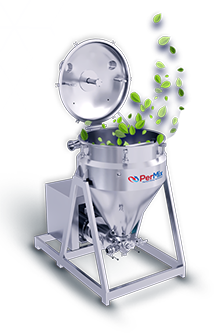


A mayonnaise line usually reveals its weak point fast. It shows up as broken emulsion after hold time, fisheyes from poorly wetted starch, oiling off in low-fat formulas, or a texture that looks acceptable in the tank but fails in the package. That is why the question of mayonnaise mixer versus colloid mill is not just about machine preference. It is about process control, product stability, and how reliably your plant can hit specification batch after batch.
For food manufacturers, the right choice depends on what the machine must actually do. A mayonnaise mixer is designed to build the emulsion in the vessel under controlled conditions, often with vacuum, high-shear mixing, and powder induction. A colloid mill is typically used for particle size reduction and post-homogenization through a rotor-stator gap. Both can play a role in production, but they are not interchangeable in every application.
The simplest distinction is this: a mayonnaise mixer is generally a full process system, while a colloid mill is generally a finishing device.
In mayonnaise production, the critical step is emulsification while water phase, oil phase, acids, gums, starches, proteins, and other functional ingredients are being combined. This stage demands controlled shear, reliable circulation, fast powder wetting, and often vacuum to reduce air incorporation. A dedicated mayonnaise mixer is built for that environment. It creates the emulsion and develops the final structure in one controlled vessel.
A colloid mill, by contrast, forces product through a narrow mechanical gap at high speed. That can reduce droplet size and improve uniformity, but it does so after the product has already been mixed or pre-emulsified. In some plants, that is useful. In others, it adds heat, complexity, and recirculation without solving the root process issue.
If your current problem is unstable emulsion formation, poor ingredient dispersion, or inconsistent batch development, a colloid mill may treat the symptom rather than fix the cause.
For most commercial mayonnaise applications, the mixer is the primary machine because mayonnaise is not just a milled product. It is a sensitive emulsion system that depends on timing, shear profile, and ingredient incorporation.
When oil is added into the aqueous phase, droplet formation and stabilization must happen immediately. The machine has to generate enough shear to disperse the oil, but not so much that it damages the product structure or creates unnecessary heat. A vacuum emulsifying mixer gives operators tighter control over that window. It can pull powders into the batch, circulate material through a high-shear workhead, and remove entrained air that would otherwise affect texture, density, and shelf appearance.
That matters even more in low-fat and vegan mayonnaise, where the formulation has less margin for error. These products often depend on starches, hydrocolloids, plant proteins, and stabilizer systems that must hydrate and disperse correctly. A weak powder incorporation step can create lumps, poor viscosity build, and downstream instability. In that situation, a colloid mill is not the ideal first answer.
Air is a common but underestimated problem in mayonnaise manufacturing. It can change color, affect specific gravity, interfere with accurate filling, and shorten the clean glossy appearance customers expect. Vacuum processing helps control that. It also supports faster powder wetting and can improve repeatability from batch to batch.
That is one reason vacuum emulsifying mixers are widely preferred for premium and industrial-scale mayonnaise production. They are built around the process requirement, not adapted from a generic size-reduction task.
A strong mayonnaise mixer can often eliminate the need for excessive recirculation or secondary homogenization. If the emulsion is formed properly in the vessel, the plant gains a simpler process path, less product handling, and fewer chances to shear the formula beyond what it needs.
For operations focused on throughput and sanitation, that matters. Fewer transfer points usually mean lower cleaning burden and less operator intervention.
A colloid mill is not the wrong machine. It is simply more limited in what it should be expected to do in mayonnaise production.
In some formulas, especially where solids need final refinement or where a pre-emulsion is already stable, a colloid mill can improve smoothness and reduce coarse particles. It may also help standardize texture in a process where upstream mixing is acceptable but not yet optimized.
This can be relevant for certain dressings, sauces, and lower-viscosity emulsified products. It can also be useful when a plant already has mixing capacity and needs an additional mechanical step to tighten particle distribution.
Some manufacturers use colloid mills because they are fitting new capability into an existing line. If the installed tank system cannot be replaced immediately, a mill may provide a short-term process improvement. It can sometimes help extend the usefulness of older equipment.
That said, retrofit value should not be confused with best-process design. If your line repeatedly depends on a colloid mill to rescue inconsistent batches, the real issue may be inadequate emulsification upstream.
This is where the difference becomes most visible. Standard full-fat mayonnaise is demanding enough, but alternative formulations quickly expose equipment limitations.
Low-fat and fat-free systems need precise hydration and structure development. Vegan mayonnaise often relies on non-egg emulsifiers and plant proteins that behave differently under shear. Starch-heavy systems can agglomerate if powders are not inducted and dispersed fast enough. High-viscosity dressings can develop dead zones in poorly designed vessels.
A mayonnaise mixer with strong vessel design, high-shear circulation, and powder induction is far better suited to these realities. It gives process teams the ability to handle multiple product types on one platform with fewer compromises. That flexibility has direct commercial value for manufacturers managing SKU expansion or contract production.
A colloid mill can support some of these products, but usually as a secondary tool. It does not replace the need for proper ingredient incorporation and controlled emulsification from the start.
Procurement decisions are often framed around capital cost, but line performance is where the decision pays back or fails.
A mixer built for mayonnaise production can shorten batch time by combining vacuum, powder induction, emulsification, and deaeration in one system. A colloid mill may require extra recirculation loops or additional passes, which can slow the process and increase operator attention.
Every extra pump, pipe, and pass creates another surface to clean and another location where product can remain. For plants with strict sanitation targets, integrated processing is usually easier to validate and manage than a fragmented setup.
More shear is not always better. Overprocessing can change viscosity, damage texture, and create heat that affects flavor or stability. A colloid mill can be very effective, but it can also be unforgiving if used as a blanket solution. A mayonnaise mixer gives more balanced control over how shear is applied during each phase of the batch.
This is a major point for R&D and operations teams. A process that works in a small tank with a colloid mill does not always scale cleanly to commercial volumes. Dedicated mayonnaise mixers are generally easier to size around real production targets, ingredient behavior, and desired throughput. That reduces scale-up risk and supports more predictable commissioning.
It is which machine matches the process objective.
If your goal is to build stable mayonnaise efficiently, manage powders without agglomeration, maintain smooth texture, and scale production with confidence, a mayonnaise mixer is usually the better core investment. It is purpose-built for emulsion formation and process control.
If your goal is narrower – final refinement, texture adjustment, or making incremental improvements to an existing line – a colloid mill can have value. But it should be evaluated as part of the process, not as a universal substitute for proper emulsification equipment.
For many manufacturers, the highest-performing setup is not mixer or mill in isolation. It is a process design that starts with the right emulsifying mixer and only adds downstream milling when the product truly benefits from it. That approach avoids unnecessary equipment while protecting product quality.
PerMix works with manufacturers facing exactly these decisions across mayonnaise, dressings, and related emulsified foods. The right system should do more than run. It should reduce failure points, support formulation flexibility, and keep production moving at commercial speed.
When you evaluate mayonnaise equipment, look past generic horsepower claims and ask a harder question: where is your emulsion actually being made, and how much control do you have over that moment? That answer usually points to the right machine.

Get in touch with us today and learn how to we can help your business.