PerMix Mayonnaise Production
PerMix News

A mayonnaise batch can look perfect at discharge and still fail days later in the tank, in the filler, or on the shelf. For food manufacturers, that is the real issue behind how to make stable mayonnaise – not just creating an emulsion, but building one that holds viscosity, resists separation, and performs consistently across production scale.
Stable mayonnaise is the result of formulation discipline and process control working together. Oil phase ratio, emulsifier system, ingredient hydration, droplet size distribution, powder incorporation, temperature, shear profile, and deaeration all affect the final structure. If one variable drifts, the emulsion may still form, but it becomes fragile. That fragility shows up as oiling off, poor body, gloss loss, water release, or texture changes after filling.
In commercial production, mayonnaise stability starts with the continuous phase before significant oil is added. Water, vinegar, salt, sugar, stabilizers, and functional powders must be fully dispersed and hydrated so the system can support the incoming fat phase. When this foundation is weak, high shear alone will not save the batch.
Egg yolk remains the benchmark emulsifier in traditional mayonnaise because its lecithin system adsorbs effectively at the oil-water interface. But the emulsifier is only part of the answer. The process must create small, uniform oil droplets and hold them apart. That requires enough energy to reduce droplet size without overprocessing the product into unnecessary heat or structural damage.
At plant scale, the challenge is not whether mayonnaise can be made. It is whether every batch can reach the same viscosity curve, the same particle distribution, and the same shelf behavior under real production conditions. This is where mixing technology, vessel design, and process sequence become commercially significant.
A stable emulsion depends on a balanced formulation. Oil level affects not just richness, but the internal packing of droplets that gives mayonnaise its body. Too little oil can produce a thin, weak system. Too much oil can overload the available emulsifier and increase the risk of breakage, especially during scale-up.
Acid phase composition also matters. Vinegar contributes flavor and pH reduction, but pH must be controlled within the target range for both food safety and protein functionality. If pH shifts too far, the emulsifier performance and final texture may change. Salt, sugar, mustard, starches, gums, and proteins also influence viscosity and water binding, but each comes with trade-offs. A gum system can improve suspension and reduce syneresis, yet excessive use may create an elastic or pasty mouthfeel. Modified starch can support low-fat structures, but poor dispersion can lead to fisheyes and inconsistency.
For low-fat, fat-free, and vegan mayonnaise, the margin for error is narrower. These systems often rely more heavily on hydrocolloids, starches, plant proteins, or alternative emulsifiers to replace the structure normally provided by oil and egg yolk. Stability is achievable, but it becomes more process-sensitive.
Manufacturers often focus on ingredient selection while underestimating the effect of sequence. In practice, process order has a direct impact on emulsion quality.
Dry ingredients should be incorporated under conditions that prevent lumping and ensure complete wet-out. Powders such as starches, gums, and proteins can be especially difficult because partial hydration creates agglomerates that are hard to break later. If these materials are not dispersed correctly before oil addition, the batch may show local viscosity variation and inconsistent stability.
Oil addition rate is equally important. Adding oil too quickly can overload the emulsification zone before the interface is properly stabilized. The result may be a coarse emulsion that appears acceptable initially but separates under storage or pumping. Controlled oil introduction allows the mixer to create a tighter droplet distribution and a stronger final structure.
This is where many plants see the difference between lab success and production problems. Bench formulations often look stable because they are made in small volumes with close operator control. Once the same product moves to larger batch sizes, the limits of generic agitation become clear.
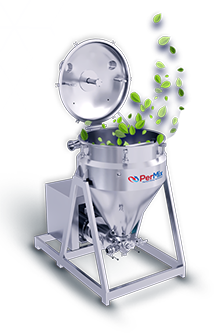
A stable mayonnaise process requires more than circulation. It requires reliable emulsification, efficient powder induction, and air management. High-performance vacuum emulsifying systems are designed for this exact application. They combine rotor-stator shear, strong product turnover, controlled ingredient incorporation, and vacuum deaeration in one process environment.
Vacuum matters because entrained air weakens visual quality and can interfere with apparent viscosity, filling accuracy, and shelf stability. Air also reduces process consistency when powders are added. By mixing under vacuum, manufacturers improve deaeration while supporting cleaner hydration and smoother texture.
Rotor-stator design matters because droplet size reduction must be consistent throughout the vessel, not just near the mixer head. Vessel geometry, recirculation pattern, and shear intensity all affect whether the batch reaches a uniform endpoint. Incomplete emulsification often shows up as broad droplet distribution, reduced gloss, and weak resistance to separation.
For manufacturers processing difficult powders, powder induction capability is not a convenience feature. It is a process control advantage. Fast, controlled powder incorporation reduces lump formation, shortens batch time, and improves repeatability, especially in formulations that include starches, gums, or protein systems.
More shear is not always better. High shear is necessary to create and refine the emulsion, but excessive exposure can heat the batch, damage sensitive ingredients, or push texture beyond the target. Stable mayonnaise depends on sufficient shear at the right stage, followed by controlled finishing.
That is why equipment selection should match product range. A plant making standard full-fat mayonnaise has different process demands than one producing low-fat and vegan variants on the same line. The broader the product portfolio, the more important it becomes to use a mixer platform that gives operators control over shear intensity, vacuum level, and batch turnover.
When a mayonnaise emulsion fails, the root cause is usually traceable. Separation is not random. It is typically the result of one or more process gaps.
One common issue is incomplete hydration of functional powders. Another is oil addition that outpaces the emulsifier system. Temperature drift can also affect viscosity development and ingredient functionality. In other cases, the problem is mechanical: dead zones in the vessel, poor recirculation, inadequate shear, or excessive air incorporation.
Scale-up introduces another layer of risk. A formula that works in pilot quantities may lose stability in larger volumes if mixing time, tip speed, or ingredient addition sequence is not adjusted. This is why process engineering matters as much as formulation. Stability is a system outcome, not a single ingredient feature.
A stable batch should not be judged only by appearance at the end of mixing. It should be evaluated by how it behaves through the full production cycle.
The right process produces a mayonnaise with consistent viscosity, smooth and uniform texture, controlled droplet size, low entrained air, and predictable performance during transfer and filling. It should hold up under normal storage conditions without rapid oil separation, water release, or texture collapse. For manufacturers, that means fewer rejects, better line efficiency, and more reliable shelf performance.
In practical terms, process validation should include viscosity checks, pH confirmation, visual assessment, hold testing, and where appropriate, droplet size analysis. If the product range includes low-fat or vegan SKUs, those should be validated separately because their structure-building mechanisms differ from traditional mayonnaise.
The most effective answer to how to make stable mayonnaise is to stop treating stability as a last-step quality check. It has to be designed into the process from the beginning – through formulation, ingredient handling, controlled oil addition, vacuum mixing, and equipment that can reproduce the same emulsion every batch.
For manufacturers under pressure to improve consistency, reduce waste, and scale specialized products, that process discipline becomes a competitive advantage. Systems engineered for mayonnaise and related emulsified foods, such as those developed by PerMix, are built around that reality: stable product quality depends on stable process performance.
If your target is a mayonnaise that runs cleanly through production and stays intact beyond the mixer, the strongest improvement usually comes from tightening the process where instability starts, not where it finally shows up.

Get in touch with us today and learn how to we can help your business.