PerMix Mayonnaise Production
PerMix News

A mayonnaise formula can look simple on paper and still fail on the production floor. That is why the question, what are the ingredients used in mayonnaise, matters well beyond a basic recipe. For commercial manufacturers, each ingredient affects emulsion stability, viscosity, flavor release, shelf life, and how the product behaves in a high-throughput mixing system.
Mayonnaise is an oil-in-water emulsion. In practical terms, that means oil is dispersed into a continuous water phase with the help of emulsifiers, shear, and process control. The ingredient list is short compared with many other prepared foods, but the interaction between those materials is highly technical. Small changes in oil level, egg source, acid type, or stabilizer system can change the finished product and the production demands behind it.
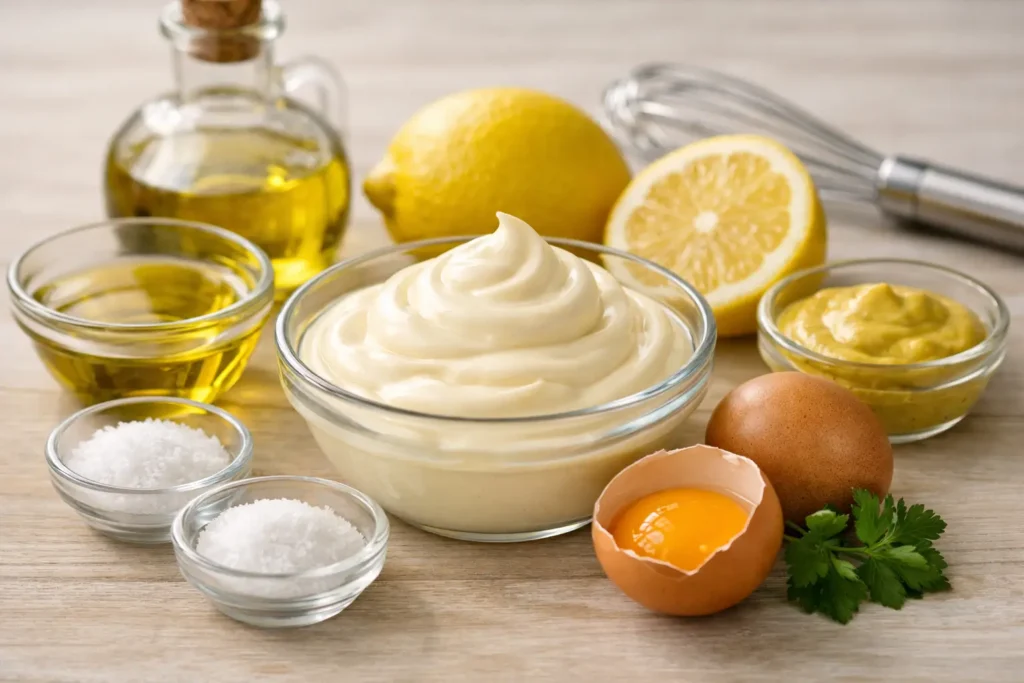
At its core, mayonnaise is built from vegetable oil, egg yolk or whole egg, water, an acid such as vinegar or lemon juice, and seasonings such as salt, sugar, and mustard. Commercial formulas may also include preservatives, stabilizers, thickeners, and functional ingredients tailored to low-fat, fat-free, or vegan targets.
Each of these ingredients has a defined job. Oil provides body, richness, and the main dispersed phase. Egg contributes emulsification and texture. Water carries dissolved ingredients and forms the continuous phase. Acid shapes flavor and pH, which directly affects food safety and shelf stability. Seasonings complete the flavor profile, while secondary functional ingredients help manufacturers hit consistency, cost, and processing targets.
Oil is usually the largest component in conventional mayonnaise. It drives mouthfeel, opacity, viscosity, and overall richness. Common choices include soybean oil, canola oil, sunflower oil, and blended vegetable oils.
The choice depends on cost, flavor neutrality, oxidative stability, label goals, and regional preference. Soybean oil remains common in large-scale US production because it is cost-effective and widely available. Canola oil may be selected for a cleaner flavor profile. Sunflower oil can support certain positioning goals, but raw material economics and supply continuity still matter.
From a processing standpoint, oil concentration has a direct effect on emulsion density and viscosity. Higher oil systems can produce the thick, spoonable texture consumers expect, but they also place greater demands on droplet size control and mixing efficiency.
Egg is the classic emulsifying system in mayonnaise. Egg yolk contains lecithin and other surface-active compounds that help keep oil droplets dispersed in the water phase. It also contributes color, flavor, and a characteristic creamy texture.
Some manufacturers use liquid egg yolk, while others use whole egg or dried egg materials depending on supply chain, microbiological controls, storage needs, and formulation economics. Egg yolk generally delivers stronger emulsification than whole egg, but the right choice depends on the target profile and process design.
This is also where formulation begins to branch. If the goal is a traditional full-fat mayonnaise, egg yolk is often central. If the goal is cost reduction, allergen management, or vegan labeling, the emulsifier system shifts substantially.
Water is not a filler ingredient. It is the continuous phase of the emulsion and the carrier for acids, salt, sugar, gums, starches, and other water-soluble materials. Water quality can influence flavor, microbial control, and ingredient hydration.
In production, water phase preparation is a critical step. Powders must disperse correctly, hydrocolloids must hydrate fully, and dissolved ingredients must be uniform before oil addition progresses too far. Poor water-phase preparation is a common source of lumps, inconsistent viscosity, and unstable emulsions.
Acid gives mayonnaise its sharpness and brightness, but flavor is only part of the story. Acids also reduce pH, which is essential for product safety and shelf-life management.
Distilled vinegar is widely used because it provides consistent acidity with a clean and predictable flavor. Some manufacturers blend vinegar with lemon juice for a rounder taste. Others adjust acid types to match regional preference or private-label requirements.
The pH target is not something manufacturers can treat casually. Too high, and the product may fall outside microbiological safety expectations. Too low, and the flavor can become harsh or the formula may need balancing with sugar, mustard, or flavor modifiers.
Salt enhances flavor and helps balance acidity. Sugar offsets sharp acid notes and can support a more rounded taste, even in savory formulas. Mustard contributes flavor and, depending on type and usage level, can also support emulsification and visual identity.
Spice systems may include white pepper, paprika, garlic, onion, or proprietary seasoning blends. In commercial production, dry ingredient handling matters as much as ingredient selection. Fine powders can agglomerate, especially when added into liquid phases without proper induction or vacuum-assisted dispersion.
A standard retail label may appear straightforward, but industrial mayonnaise often includes additional functional ingredients to improve processability and performance. These ingredients are especially relevant when manufacturers need high batch consistency, extended shelf life, or formula flexibility.
Potassium sorbate, sodium benzoate, and calcium disodium EDTA may be used depending on formulation goals, regulatory requirements, and distribution conditions. These ingredients support shelf life, oxidative control, or mold and yeast management.
Whether preservatives are necessary depends on pH, water activity, packaging, cold chain assumptions, and target market expectations. A clean-label approach may reduce some options, but it usually raises the demands on process hygiene, ingredient quality, and filling control.
Modified food starches, xanthan gum, guar gum, and similar hydrocolloids are often used to control viscosity, suspend phases, and improve stability. They become especially important in reduced-oil systems where egg and oil alone no longer provide the expected body.
These ingredients solve real manufacturing problems, but they also introduce process sensitivity. Gums can fisheye, starches can clump, and poor hydration can create visible defects. This is one reason why powder induction and controlled emulsification are critical in commercial lines.
When manufacturers ask what are the ingredients used in mayonnaise, the answer changes significantly once the product moves away from full-fat traditional composition.
Reducing oil lowers cost per batch in some cases, but it also removes the main contributor to texture, richness, and opacity. That gap is usually filled with starches, gums, protein systems, and flavor-balancing ingredients.
The challenge is not only achieving thickness. A reduced-fat mayonnaise must still feel creamy, remain stable over shelf life, and tolerate pumping, filling, and temperature variation. This is where formula and equipment become tightly linked. A system that handles full-fat mayonnaise well may not automatically perform the same way with high-powder, high-water, reduced-oil formulas.
Vegan mayonnaise removes egg entirely, so emulsification must come from alternative ingredients. Common systems include pea protein, soy protein, modified starches, aquafaba derivatives, and plant-based emulsifiers. Oil, water, acid, salt, sugar, and stabilizers remain central, but the functionality package changes.
Vegan systems can be more sensitive to flavor masking, protein hydration, and final texture. Some formulas have excellent stability but a less desirable mouthfeel. Others taste clean but struggle in high-shear production or long-term storage. The right balance depends on the intended price point, label claim, and channel.
The best ingredient deck will not compensate for poor process control. Mayonnaise depends on proper phase sequencing, controlled shear, efficient powder incorporation, deaeration, and repeatable batch parameters. If powders are not dispersed correctly or oil addition is poorly controlled, the emulsion can break, the texture can drift, or air can compromise appearance and shelf life.
For food manufacturers scaling from pilot to production, this is where engineering has a direct commercial effect. Stable emulsions are built through both formulation and equipment capability. Vacuum mixing, effective homogenization, and reliable powder handling help turn a good formula into a repeatable product.
PerMix focuses on that production reality. In mayonnaise manufacturing, ingredient behavior and mixing technology cannot be separated if the goal is consistent quality at commercial scale.
A practical evaluation starts with the product target. If the goal is a classic full-fat mayonnaise, the key questions are oil type, egg system, acid profile, and sensory balance. If the goal is reduced-fat or vegan, the evaluation expands to texture-building systems, emulsifier alternatives, powder dispersion requirements, and process tolerance.
Procurement teams may focus first on cost and availability, but operations and R&D need to look at the full picture. Ingredient substitutions that appear minor can change viscosity curves, droplet size distribution, and batch time. They can also increase the risk of lumping or destabilization. The right formula is the one that performs consistently in your actual equipment environment, not just in a benchtop trial.
If you are reviewing a mayonnaise formula or planning a new product line, treat ingredients as a process system rather than a shopping list. That is where better texture, stronger stability, and more predictable production usually begin.

Get in touch with us today and learn how to we can help your business.